
National Issues
My AFCON 2025 Observatory: Nigeria Didn’t Lose to Morocco, we Lost to Football Culture -By Sola Fanawopo
Morocco did not win because of home support. They won because their country invested deliberately in infrastructure, aligned their league structure with a national philosophy, and ensured their coaches spoke a unified language from the youth ranks to the senior squad.

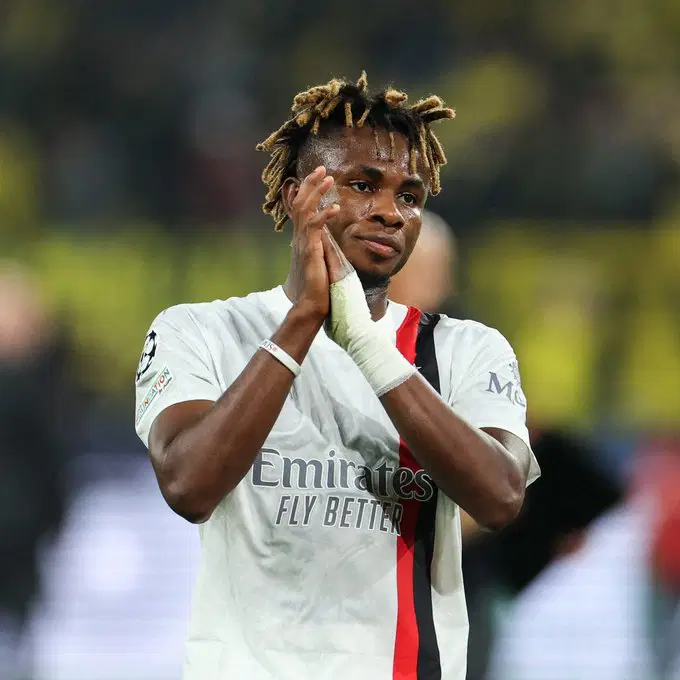
Nigeria’s exit from the Africa Cup of Nations at the hands of hosts Morocco will be lazily reduced to the lottery of penalties by some analysts. That framing would be comforting; it is also false. This semi-final was not a shootout story. It was a culture story. Culture eats everything else, it imposes itself when you are stressed.
Culture isn’t about perks or posters. It’s the decision-making system a football team rely on when uncertainty hits.
Culture as in the invisible system that determines how players behave when the plan breaks down. When priorities collide. When leaders aren’t in the room to make the call.
At the elite level, football is no longer merely a contest of tactics and technique. It is a manifestation of national DNA, how a country conceptualizes, funds, teaches, and emotionally relates to the game. On that count, Morocco and Nigeria were playing two different sports.
Strategy vs. Survival
From the opening whistle, Morocco executed a national idea; Nigeria negotiated for survival. Morocco pressed with collective timing rather than raw enthusiasm. Their full-backs advanced with institutional permission, not individual bravado. Achraf Hakimi was not improvising; he was following a script refined through years of continuity.
Nigeria, by contrast, relied on instinct: courage, recovery runs, and emergency defending. These are virtues celebrated in Nigerian culture: resilience, improvisation, endurance. While admirable, they are insufficient at the pinnacle of the sport. This match exposed a painful truth: Nigeria’s football identity is emotional; Morocco’s is ideological.
The Midfield Mirror
The absence of Wilfred Ndidi was more than a tactical setback; it revealed a shallow developmental pipeline. Morocco produced multiple midfielders fluent in spatial awareness, tempo management, and tactical discipline. Nigeria produced one elite ball-winner and built an entire national system around his availability.
This is no coincidence. Morocco’s players arrive at the national team already fluent in the language of modern football. Nigeria’s players often arrive to learn on the job, tasked with mastering complex systems in the heat of a continental semi-final.
The Trap of “Resilience”
Nigeria defended heroically, with Calvin Bassey embodying the Super Eagles’ spirit: confrontational and relentless. But herein lies the cultural blind spot: Nigeria venerates suffering.
We romanticize blocks, tackles, and last-ditch interventions as “African resilience.” Morocco, meanwhile, views defending as a temporary inconvenience on the road to control. You cannot build dominance on a foundation of survival, yet Nigeria continues to glorify endurance over elegance.
Penalties: Institutional Habit, Not Luck
When the match reached penalties, the outcome was already culturally tilted. Morocco approached the spot like professionals completing a routine. Yassine Bounou didn’t guess; he read technique.
Nigeria betrayed doubt through body language. The penalties were not rehearsed; they were hoped for. One system trains for the worst-case scenario; the other prays to avoid it. Penalties are not lottery, they are institutional habits under extreme pressure.
The Mirror of Progress
Morocco did not win because of home support. They won because their country invested deliberately in infrastructure, aligned their league structure with a national philosophy, and ensured their coaches spoke a unified language from the youth ranks to the senior squad.
Nigeria, meanwhile, continues to outsource development to foreign academies, celebrating individual escapes to Europe while confusing raw talent with system building.
Nigeria did not lose because Morocco was unbeatable. They lost because Morocco reflected back what Nigeria refuses to confront:
Passion without planning is noise.
Resilience without control is survival, not progress.
Talent without culture is unfinished football
Until Nigerian football decides what it wants to be, rather than just how hard it wants to fight, semi-final exits like Rabat will continue to repeat themselves. Unfortunately, football alone cannot address cultural issues.
How do you create a culture flexible enough to adapt, resilient enough to absorb shocks and disciplined enough to execute in constant change?
This is a national question Nigerian elites must address immediately.
Sola Fanawopo, Chairman Osun Football Association


Putin Receives Newly Appointed Foreign Ambassadors in Bolshoi Kremlin Palace -By Kestér Kenn Klomegâh
According to him, the foundations of these relationships were laid back during the struggle of African peoples for freedom and...


Why Obi Cubana Shouldn’t Have Given His Life to Jesus (Part 1) -By Ugochukwu Ugwuanyi
But then, why the fuss about Obi Cubana's repentance, what with the American Rap King, Snoop Dog, repenting from gangsterism...


Invincible Defence Technology: Consciousness-Based Solutions to Interstate and Intrastate Violence -By Dr. David Leffler
Technology refers to the systematic application of knowledge and tools. In the case of IDT, this brain-based “technology” is the...


Amnesty International’s Selective Outrage And The Sowore Narrative -By Kelvin Adegbenga
Amnesty International also appears to suffer from institutional amnesia. It is on public record that the Nigerian Army once called...


Russia’s Future Outlook With Africa Depends On Strategic Action Plan (2023-2026) -By Kestér Kenn Klomegâh
So many Russian speaking African experts who were trained by the Soviet Union can still bolster a Russian re-engagement with...