
Economic Issues
Naira’s New Era: Embracing Monetary Independence -By Ibrahim Bukar Tijjani
But the potential benefits are too great to ignore. This bill has the potential to revolutionize Nigeria’s monetary policy and position the Naira at the center of the country’s financial system.

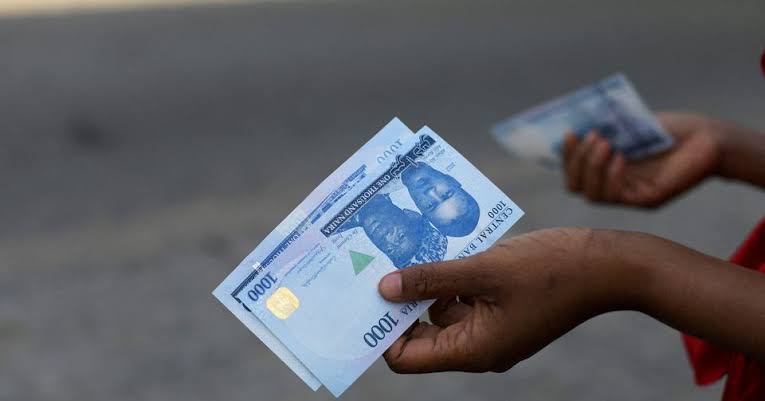
As I read about the bill seeking to ban the use of foreign currencies for transactions in Nigeria, I couldn’t help but feel a sense of hope and excitement for the country’s economic future. This legislation, introduced by Senator Ned Munir Nwoko, has the potential to revolutionize Nigeria’s monetary policy and position the Naira at the center of the country’s financial system.
The bill’s aim to eliminate the practice of conducting domestic transactions in foreign currencies is a bold step towards economic sovereignty. By mandating that all workers, including expatriates, be paid in Naira, the government can drive demand for the local currency and reduce its reliance on foreign currencies.
This move would also help to reduce the pressure on the Naira, which has been subject to fluctuations in value due to its reliance on foreign currencies. By making the Naira the sole currency for domestic transactions, the government can help to stabilize its value and make it more attractive to investors.
Furthermore, the bill’s requirement for Nigerian exports to be sold only in Naira is a clever move. This would compel international buyers to purchase the currency, thereby increasing its value and stability.
In addition, this move would help to increase the demand for the Naira, which would in turn help to drive up its value. This would make Nigerian exports more competitive in the global market, which would help to boost the country’s economy.
The bill’s measures to promote economic growth through affordable loans and reforms to manage Nigeria’s foreign reserves domestically are crucial steps towards achieving economic independence.
By providing affordable loans to businesses and individuals, the government can help to stimulate economic growth and create jobs. This would help to reduce poverty and inequality, which are major challenges facing the country.
Moreover, the bill’s reforms to manage Nigeria’s foreign reserves domestically would help to reduce the country’s reliance on foreign currencies. This would help to stabilize the Naira and make it more attractive to investors.
It’s time for Nigeria to take control of its economic destiny and make the Naira the pride of the nation. For too long, the country has been held back by its reliance on foreign currencies.
This bill is a step in the right direction towards achieving economic independence. It’s a bold move that would help to stabilize the Naira and make it more attractive to investors.
However, it’s not going to be easy. There will be challenges along the way, and it will require careful planning and implementation.
But the potential benefits are too great to ignore. This bill has the potential to revolutionize Nigeria’s monetary policy and position the Naira at the center of the country’s financial system.
I urge the Senate to pass this bill and pave the way for a stronger, more resilient Naira.
It’s time for Nigeria to take control of its economic destiny and make the Naira the pride of the nation.
Let’s make this happen.
Ibrahim Bukar Tijjani, Department of Mass Communication, Borno State University.



When Nations Break Their Reformers: Why EFCC Cannot Carry Nigeria’s Burden Alone — And Why Power Must Fear God -By Prof. John Egbeazien Oshodi
Public frustration with the EFCC over perceived selective enforcement is understandable. Nigerians see some arrests carried out suddenly and forcefully,...


Poor, Poor, Maduro -By IfeanyiChukwu Afuba
Little wonder his ouster elicited celebrations. The ease of his capture is telling. There is only one explanation for the...


Why African Leaders Must Fix Governance Before Crying Sovereignty -By Isaac Asabor
One of the great contradictions of African leadership today is selective morality. Leaders speak passionately about international law while violating...

Baba Has Entered The Classroom -By Isaac Asabor
If what Trump is doing is walking into a noisy global classroom and insisting on discipline, then let us be...

As Trump Exposes Why Tinubu Must Go Sooner -By SKC Ogbonnia
The Nigerian president is not only culpable of heinous crimes, but he is also weakened beyond redemption. His continued stay...