
National Issues
Need for Speedy Passage of the Electoral Law Amendment Bill by the Senate -By Tochukwu Jimo Obi
In the interest of Nigeria’s democracy, the Senate should, as a matter of urgency, take up and pass the pending Electoral Act Amendment Bill. Doing so will empower INEC to prepare adequately and conduct free, fair, and credible elections in 2027. An outcome that is not just desirable, but essential for the country’s democratic future.

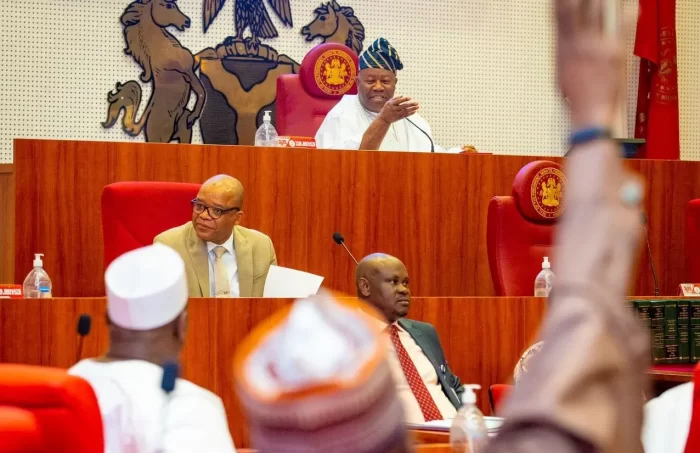
The lingering delay in the passage of the Electoral Act Amendment Bill by the Nigerian Senate is not just worrisome; it constitutes a clear and present danger to the successful conduct of the 2027 general elections. Electoral reforms are time-sensitive, and any hesitation at this critical stage threatens to undermine public confidence in the democratic process. With memories of the controversies that trailed the 2023 elections still fresh, Nigeria can ill afford another cycle of uncertainty caused by legislative inertia.
It is important to note that the House of Representatives has already done its part by passing the amendment bill. The burden now rests squarely on the Senate, whose inaction raises serious concerns about institutional commitment to electoral credibility. When one arm of the legislature moves ahead while the other stalls, the entire reform process is weakened, and the country pays the price.
More troubling is the fact that the timeline for political party primaries, as stipulated by law, is fast approaching. With only a few months left before these primaries are expected to commence, the absence of a clear and updated legal framework creates confusion for political parties, aspirants, and electoral managers alike. This uncertainty opens the door to legal disputes, inconsistent interpretations of the law, and avoidable conflicts.
The delays also place the Independent National Electoral Commission (INEC) in an extremely difficult position. Electoral management is not an event but a long process that requires early planning, legal clarity, and timely execution. INEC ought to have begun resolving key operational and technical issues by now, especially those that depend on the amended provisions of the law.
Of particular concern is procurement. Election materials, technology, logistics, and training all require substantial lead time. Delays in passing the amendment bill restrict INEC’s ability to plan effectively, initiate procurement processes, and align its operations with the anticipated legal framework. This not only strains the commission administratively but also increases the risk of last-minute arrangements that could compromise efficiency and transparency.
The passage of the Electoral Act Amendment Bill is, therefore, not a routine legislative task but a critical national assignment. The Senate must recognise that its actions—or inactions—have direct consequences for democratic stability. A failure to act promptly sends the wrong signal to citizens who expect lessons to have been learned from past electoral shortcomings.
There is little doubt that if the amendment bill is passed in good time and subsequently assented to by President Bola Tinubu, the 2027 general elections stand a real chance of being an improvement on what Nigerians witnessed in 2023. Electoral reforms, when properly implemented, strengthen institutions, reduce disputes, and enhance voter confidence.
The Senate must therefore rise above partisan interests and procedural delays. National interest demands urgency, focus, and responsibility. Electoral credibility is a shared obligation, and history will judge harshly any institution that fails to act when the stakes are this high.
In the interest of Nigeria’s democracy, the Senate should, as a matter of urgency, take up and pass the pending Electoral Act Amendment Bill. Doing so will empower INEC to prepare adequately and conduct free, fair, and credible elections in 2027. An outcome that is not just desirable, but essential for the country’s democratic future.
Tochukwu Jimo Obi, a public affairs commentator writes from Obosi, Anambra state.



Museveni’s Uganda: Family Company Limited -By Isaac Asabor
Museveni will not be remembered for the ideals he once espoused. He will be judged by how long he clung...

Africa Experiencing New Stage of Reawakening -By Kestér Kenn Klomegâh
The Russia-Africa summits earlier took place in Sochi (October 2019) and St. Petersburg (July 2023). Russia and Africa are currently...

The New York Times Misses the Forest for the Trees in Nigeria -By Nnamdi Prince
If the Times is so concerned about accurate data, perhaps it should direct its considerable resources toward independently investigating and...


The Pragmatism of Principle: Redefining Loyalty in an Age of Change -By Florence Ozor
While I do not endorse political nomadism, one must acknowledge that strategic realignment can be expedient. Take Peter Obi: after...


Lessons for Today: MLK for Continental African Leadership – A Psychoafricalytic Mirror for Power, Dignity, and Continental Renewal -By Psychologist John Egbeazien Oshodi
When African leaders abandon indigenous wisdom, they often adopt the colonial logic of control. Citizens become subjects. Protest becomes treason....