
Breaking News
Niger Military Coup: Nigeria must not fight surrogate war against any African country — Okpaku
There are key issues here. One is Africa. The other one is West Africa and the third is the global situation. Already, we are dealing with French colonial legacy. Nigeria must not be dragged into any situation where we may appear to be partnering with people whose legacy in Africa is indefensible. Nigeria is not going to be used by France to regain its indefensible loots that are now being reclaimed.

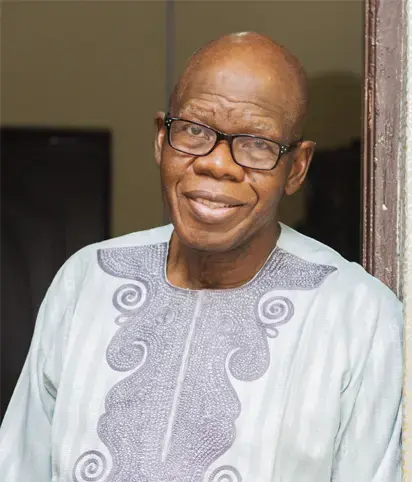
As Nigerians remain apprehensive over the threat by the Economic Community of West African States, ECOWAS, to use military options in restoring democratic governance in Niger Republic, a strategic expert, Dr Joseph Okpaku Snr, in this interview, suggests measures for de-escalation of tension among parties. He proposes alternatives to the options being considered by the regional group.
Okpaku is also a renowned scholar, author, publisher and one of the most respected African intellectuals in the world.
ECOWAS under the leadership of President Bola Tinubu seems persistent in using the military option to restore civil rule in Niger Republic…
We have a sudden crisis that is taking place in the midst of so many other crises in Nigeria. At home, we are preoccupied with so many problems—the economy, unemployment, poverty, high cost of living, insecurity and more. Normally, when you are leading a regional or international organisation, there is always the presumption that you have some spare time. My sense is that our own serious challenges cannot but have an effect on our tolerance for what might otherwise be seen as a distraction. But having said that, it is, of course, a regional obligation since we are chair of ECOWAS.
I think it is not even a matter of who is doing the right thing or the wrong thing. It is a matter of what exactly is the problem. And what exactly is our response? The problem, quite clearly, is that ECOWAS protocol is firmly against all military coups. So, of necessity, ECOWAS heads of state have to respond, and they did. The challenge we have is that in the response —I don’t know if it was deliberate or not —we threatened military intervention as a last resort.
One of the problems with power is that the efficacy of power lies in its potential but not in its deployment. The moment you deploy power, you lose. When confronted by a much weaker opponent, you are forced to either back off from your threat and risk losing face, or you are pushed into doing what you really do not want to do, which is destroying lives. This is why we should be very circumspect about issuing threats and ultimatums.
I think ECOWAS got itself into that situation under the pressure of the moment. It was clear in the statement by the President while opening the second emergency meeting of the Authority of Heads of State and Government on this crisis last Thursday that he was indicating that we would like to avoid confrontation. Quite frankly, we are overwhelmed as Nigerians with our problems. And ideally, we don’t need anyone else’s “wahala”. I use “wahala” deliberately because there is no English word to capture the phenomenon we call wahala. Wahala is a unique word. It suggests the kind of conflict that you don’t need, you don’t want. You can’t concentrate. It represents a psychic ordeal, a trauma. We are overwhelmed as Nigerians.
In Nigeria, we have always sacrificed a lot in trying to bring peace to many African countries. That is our legacy and that legacy cannot be compromised. When there is such an issue, you learn not to threaten because if the other side is recalcitrant or mischievous, you will be forced to deliver on your threat, or rather, into believing that you have to. At this point, it is important to understand that no Nigerian is putting pressure on government to prove that it can go to war. We know the strength of our armed forces. We know that they will emerge victorious if they go to war, but the issue should be treated as a family affair, which it is. There are apologies to be issued on all sides. What West Africa needs to do right now is to embrace diplomacy and not confrontation. We are family.
Relationship
Nigeria and Niger have a special relationship. When you think about it, how many Nigerians cross the Niger border every day? How many Nigeriens cross our border every day? You can’t separate Niger from northern Nigeria. And already, you can see from public statements that there is resistance from the Senate and several groups against any confrontation. This is why I am curious as to what happened between President Tinubu’s opening remark at the ECOWAS meeting and the final resolution. In the opening remarks, the President was offering an olive branch but the final resolution of the meeting said something else. The President’s opening remark was that he would like to back off the threat of confrontation. It implied that they were taking a modified approach.
The final communiqué came as a surprise. In Nigeria, we are overwhelmed with our burden. We do not need anyone’s burden. Such a burden is distracting. Note that we have a new government that is yet to put together its cabinet. Some issues have been worsened by the removal of fuel subsidy. All these put together, the last thing for us to do is to lead a military action against Niger.
Are we going to send troops to attack Niger? If the idea is to intervene, using the military to remove the coup leaders and replace them with the ousted President, that kind of operation is a commando operation. And that should never have been made public, even though I believe that even that would not be necessary.
Are you saying that disclosing it was less strategic?
I would say it was probably a statement that should have been put differently. Nigeria is the eldest son of Africa. And in a way, this is a family affair. I think that something blew out of control. But the best approach is to tone down the public cacophony and send our best minds in and out of government to discuss the issue with the Nigerien government. Others who have shown active interest like Mali and Burkina Faso should be included in the discussion.
But there are precedents to what West African leaders are doing…
We don’t want an armed conflict with our neighbour for any reason. Armed conflict defeats the whole purpose of ECOWAS and the African Union, AU, which are peaceful coexistence, collaboration and development. We do not want to be seen as people who are throwing our weight around against our neighbours. We have never been that.
We have to be careful to avoid being pushed into war. We are in a fragile state right now and we need every ounce of energy we have to get our country back on track. When you begin an armed conflict, you cannot tell how far it will go and when it will end. Already, the coup leaders have Mali, Burkina Faso and others saying they are ready to go to war in support of Niger. We are faced with a situation where you wake up one morning and find African countries at war with each other. Where does that lead us? And Nigeria is the leading country on the continent.
I know we would be doing this on behalf of ECOWAS, but I know that it is never intended that one African country or a group of African countries will go to war against one another. In fact, Article 4(d) of the ECOWAS Treaty (Revised), includes “non-aggression between member states” as one of the organisation’s “Fundamental Principles” I know that some presidents like Obasanjo have deployed our troops to troubled places in the past, but it was to restore peace. When Obasanjo intervened to restore a duly elected president overthrown by the military, what he deployed at the time was the prestige of Nigeria.
Prestige and respect are more critical in the 21 Century than power.
There are key issues here. One is Africa. The other one is West Africa and the third is the global situation. Already, we are dealing with French colonial legacy. Nigeria must not be dragged into any situation where we may appear to be partnering with people whose legacy in Africa is indefensible. Nigeria is not going to be used by France to regain its indefensible loots that are now being reclaimed.
We cannot be surrogates in any conflict among Africans, or amongst anyone for that matter. The issue of losing face should be handled in camera. I think apologies are due. We have to resist the temptation to act out of fear of losing face.
But it seems many people do not get the drift. What ECOWAS is seeking is the removal of the coup leaders and not to wage war on Niger…
People react the way they understand what they hear people say. But the threat was the first mistake in the immediate response of ECOWAS when the coup took place. The group said it would respond with measures including military options.
And we saw the Nigerien coup plotters saying they would fight back if attacked. A handful of people overthrew the legitimate President. Who are you going after? And we have seen that one of the reasons for the coup was the claim that the President was planning to retire his head of security. This is purely personal and shouldn’t be the basis for ECOWAS to use military options in resolving the matter.
Coups happened recently in Burkina Faso, Mali, Guinea Bissau and three other countries, ECOWAS didn’t act as it is doing on the Niger issue. People want to know why this response to the Nigerien case…
When President Tinubu was elected the Chairman of ECOWAS in July, he made a statement that coups won’t be tolerated. In that statement, the President was particular about preventing a coup d’état. If I were to advise the President, I would tell him that he has so many things to deal with. One of the problems of governance is that problems jump from nowhere and distract you. For instance, immediately after inauguration, the President had to deal with the issue of fuel subsidy. That led to labour union strikes.
While dealing with that, this one comes from Niamey. I suspect the President was taken by surprise and he acted immediately. Don’t forget that he doesn’t yet have ministers, who would have offered their advice. If for example, the Ministry of Foreign Affairs had a substantive minister, I am sure the issue would have been approached differently. We shouldn’t allow the fear of “being shamed” to take over common sense. That is why Sanusi Lamido talked about public diplomacy.
One of the problems we have in Africa is legitimacy. And one of the lessons to be learnt in this matter is the importance of legitimacy, which is why everyone is opposed to coup d’etats. Legitimacy has to do with what the masses believe and not what the big boys sit down to decide. It is so because, at the end of the day, democracy is one man one vote.
After decades of military rule, African nations commenced the democratization process in the late 90s and early part of this century, but coups are suddenly returning in Africa. What do you think could be the likely reasons for that?
The return of military intervention is an ambush.
There are several reasons. One is that our democracy has left a legacy that is significantly less than what it ought to be by now. The most important thing in governance is to show complete empathy towards the lives, dreams, ambitions, stress and anguish of the people.
The people must see that their leaders are one with them. In fact, I have written a lot about the ownership of problems. I have written about the right of ownership of problems as intellectual property.
If the leadership presumes to have all the expertise, knowledge and authority over the management of national problems, then the people will sit back and watch them lead, and simply say, “show us”. But they have all fumbled.
Who understands poverty in any country more than the poor? But if you sit down with the people who own the problem, who own the anguish and discuss it, there will be better results. In Africa, in the last three decades or more, governance became a deeply flawed exercise. The democratically elected leaders kept moving away from the people. In some places, even the political leaders became totally misguided.
They focused on self-enrichment. They forgot that we have millions of people who are severely disenfranchised and unhappy. They don’t talk quite often, but control the authority by which they put you in charge. That lost conversation is at the core of our governance problems in Africa.
These problems are not just about the coups. There is a need to revisit the fundamentals of democratic governance.
And it is the people who own the authority to choose their leaders and who freely give them the authority to govern. If elected people continue to become more distant from the people who elected them, they begin to act in isolation. Initially, the people would complain, grumble and protest. After a point, they become tired of trying to complain without being listened to.
Then they become silent. This silence is often mistaken for acquiescence. The danger at that point is that leaders no longer know what the people think and how they feel. Suddenly, when one irrelevant issue happens, they explode and we are shocked.
But we don’t need coup d’états. It is sad that more than 60 years after independence, practically every African country is way behind the dreams of our founding fathers at independence. We are still the poorest even with “owning” the greatest natural resources in the world.
The leadership question is at the core of the Niger issue. A school of thought suggests that for African countries to get it right, they need benevolent dictators in the mould of Lee Kwan Yew of Singapore…
Good leadership cannot come out of people who don’t respect your authority as a citizen, your right to be heard, and your right to demand accountability from your leadership. What we need basically is to return to the fundamentals of democratic governance. I am deliberately not saying democracy because it is another problem. Democracy was sold to us at independence, not with complete goodwill and transparency.
Those who sold democracy have proved over time not to be the best examples of democracy. In Nigeria, we have some of the best minds in the world. It is the role of that class that shaped at independence the policies upon which we built the Nigerian dream to now help us get out of the quagmire. Over time, those minds have been unplugged from the system.
They are on the sidewalk of the Nigerian journey, watching their country go down. For me, the best kind of leadership is that in which the leaders are humble, understand their limitations and are committed to doing their best and saying sorry now and then when things go wrong.
We need to re-engage our intellectual class as key players in the pursuit of building a Nigeria and an Africa more worthy of our capabilities, resources and heritage.
There are arguments that even if the military option becomes inevitable that it may require the affirmation of the AU…
I don’t think the ECOWAS protocol talks about the invasion of any country. In fact, respect for the sovereignty of member states was highlighted by the ECOOWAS Treaty.
If the right of intervention is implied, the major purpose of ECOWAS from inception is to create an economic community. It talked about sanctions and not military intervention. Sanction was the main instrument set up for enforcing compliance.
ECOWAS is an institution of members of equal status, authority and power. No country was given the right to invade another country. I don’t think the AU even has the power to invade another country. The expectation is that sanctions will bite enough to compel a resolution. This is why the bottom line of all these is diplomacy, preferably quiet diplomacy.


Africa’s Crisis of Military Coups and Insecurity -By Safiya Zakari Muhammad
The erosion of democracy has also weakened regional and international security cooperation. In some cases, juntas have expelled traditional partners...

Governor Uba Sani’s Resolute Commitment On Rural Development -By Abdulrashid Sani Gimi
In the long run, the 2026 fiscal strategy transcends conventional budgetary practice. With a total outlay of ₦985.9 billion, a...

Lack of Financial Support Holding Back Russia’s Economic Influence in Africa: A Case Study of Missed Opportunities in Nigeria -By Kestér Kenn Klomegâh
As Africa's largest economy, Nigeria cannot afford another decade of promises without projects. The future of its development lies with...


The Impact Of Social Media On Youth Mental Health -By Jemimah Hezekiah
Governments and tech companies also have a role to play. Enforcing anti-cyberbullying policies, offering digital literacy programs, and providing mental...

Every Night We Pray to Survive: Voices from Insecure Communities -By Rinret istifanus
As the nation debates policies and strategies, these voices remind us that insecurity is not just a headline it is...