
National Issues
Nigeria and the American Matsuyama Mirror -By Festus Adedayo

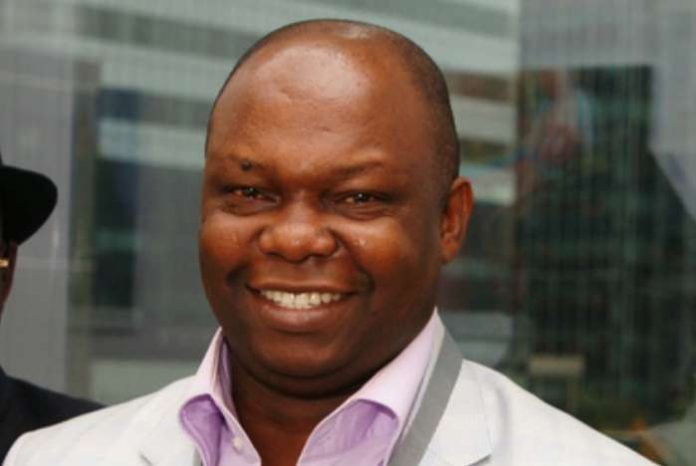
There is this Japanese tale of the Matsuyama mirror. Matsuyama, according to the folktale, was located in the Province of Echigo, somewhere in Japan. It is centered round a couple who lived in a village where there was no trace of civilization. The husband thus planned to travel to “the great city, the capital of Japan,” to embark upon some business. Many people, including the husband, had told the wife of her stunning physique and sultry look. However, she took the commendations with a pinch of salt, believing that since she lived in a society where wry jokes and plastic smiles were the order of the day, such platitudes were over-rated.
The absence of a physical mirror with which to confirm these commendations and self-assess her reflection to the world made her to doubt them all, even as she doubted every word of pleasant description ascribed to her. Her husband eventually journeyed to Japan, becoming the very first to leave Matsuyama and to “the great city.” Upon his return, he brought back a mirror, an alien commodity in Matsuyama, which he handed to his wife. Pleasantly stunned by the pretty image she beheld in the mirror, the mirror became an object of reassurance each time the woman was downcast. In it, she reassured herself that she was a stunning piece of nature’s creation. She even ended up transmitting the Matsuyama mirror to her pretty daughter as well, at death.
Last week, like the Matsuyama mirror brought from “the great city,” America, “the great city” handed Nigeria her own mirror with which to have a first-hand feel of her shape, the contours and how passers-by perceive her. It was an unambiguous, albeit representative of the image that this country, which prides herself the Giant of Africa, saw inside the foreign piece of object that she holds. Unlike the beautiful lady of Matsuyama, what Nigeria saw in that mirror was disgusting. It was the figure of a, though once shapely, beautifully-carved dark woman but who, conversely, mirrored a woman who had literally, totally been eaten up by misuse; a woman beginning to manifest the culmination of several decades of bouts of merciless rape and savage abuses. A very repugnant smell oozed out of her like a putrid meat, to which passers-by cupped their noses and squeezed their faces.
Like the Matsuyama woman whom local commentators had passed unflattering verdict of how she looked but whose estimations of her she disdained as unreal, similar representative assessments of Nigeria’s look had been handed her by local assessors. Now that the mirror came from the “Great City,” will this woman, who looked at herself as a stunning beauty, for once, believe that she is a haggard-looking, rebarbative and ugly woman, a laughing stock among similar women who make up womanhood?
Nigeria’s own Matsuyama mirror should make a lady who is confronted by similar image she sees in the mirror, and mindful of how the world sees her, to be downcast on end. In which case, the moment she rises from this mournful moment, she is confronted by two options: One, do a self-assessment of the rapacious sex maniacs who had, over the decades, reduced her to a commodity with which they excited themselves.. Second, make up her mind not to lend herself to such maniacs any longer and third, begin a recuperative process to restore her fading beauty. Unfortunately, after being handed the Matsuyama mirror last week, Nigeria literally went on a binge, attired her sagging effigy in the best of clothes, wore the most arresting cologne and continued a life of selling dross to an on-looking world.
In the Matsuyama mirror, America had said, in a warning to her nationals in Nigeria or anyone desirous of visiting the country: On health, and while cautioning her nationals to be wary, it said: “Nigeria has a number of well-trained doctors, yet medical facilities are generally poor. Many medicines are unavailable, including medications for diabetes and hypertension. Caution should be taken when purchasing medicines locally, as counterfeit pharmaceuticals are a common problem and may be difficult to distinguish from genuine medications. Hospitals often expect immediate cash payment for health services. Emergency services comparable to those in the United States or Europe are non-existent, and the blood supply is unreliable and unsafe for transfusion. For serious medical problems, you should consider travelling to the United States, Europe, or South Africa for treatment. Emergency numbers may not be reliable. Ambulance services are not present throughout the country or are unreliable in most areas. Adequate health facilities are available in major cities, but health care in rural areas may be below U.S. standards; Public medical clinics lack basic resources and supplies; Private hospitals usually require advance payment or proof of adequate insurance before admitting a patient; Generally, in public hospitals, only minimal staff are available overnight (in non-emergency wards).”
On Nigeria’s water index, it said: “No areas (in Nigeria) have safe tap water. Bottled water and beverages are generally safe, although; you should be aware that many restaurants and hotels serve tap water unless bottled water is specifically requested. Be aware that ice for drinks may be made using tap water. Air pollution is also a significant problem identified by the embassy to be a major problem in several major cities in Nigeria.”
On roads, America’s Matsuyama mirror says: “Roads are generally in poor condition, causing damage to vehicles and contributing to hazardous traffic conditions. There are few working traffic lights or stop signs, and few traffic control officers to manage traffic during power outages. The rainy season, generally from May to October, is especially dangerous because of flooded roads and water-concealed potholes. Driving between 6:00 p.m. to 6:00 a.m. should be done with extreme caution. Automobiles, trucks, or okadas (motorbikes) often drive on the wrong side of the road or on sidewalks.”
Traffic control officers, America said, “may occasionally seek bribes when citing drivers for traffic violations. If stopped by traffic police, drivers should stop as instructed,” and “Motorists seldom yield the right-of-way and give little consideration to pedestrians and cyclists. Chronic fuel shortages have led to long lines at service stations, which disrupt or block traffic for extended periods,” and “Public transportation vehicles, such as buses and motorbikes, are unsafe due to poor maintenance, high speeds, and overcrowding.” The Matsuyama mirror also included this advisory to American nationals: “Reconsider travel to Nigeria due to crime, terrorism, civil unrest, kidnapping, and maritime crime, which includes kidnappings, hijackings, boardings, theft, etc. Some areas have increased risk.”
Now is the time to ask this once-stunning beauty some fundamental questions. First is, which of these assessments are not real, or borne out of politics? Granted that some of her local commentators could be making assessments of her depressing outlook and apparent slide into the abyss which are sauced in religious and political colourations, is this American Matsuyama mirror also polluted by local politics and bile? Why this cannot be so is that, in the advisory, America wasn’t even talking to the Nigerian state, it was advising her nationals about what lamentable state the once seductive bride of the globe had become. It was communicating indices of living in a normal human society that are absent in Nigeria and literally saying that those indices have not only fled Nigeria, what we have at hand is an example of an insane society; how a sane society must not live.
Health, for instance. No one needs to tell Nigerians that the “mere consulting clinics” which General Muhammadu Buhari and his power-jacking cohorts claimed was their beef and reason for polluting the Nigerian democratic space in 1984, has, under his watch, transmuted into a human abattoir. The World Health Organization (WHO) in an inventory claimed that though Nigeria “has one of the largest stocks of human resources for health in Africa,” this “is still inadequate to meet the country’s needs.” While medical personnel are still far between, Nigeria’s health architecture is absurdly marred by corruption and lack of equipment. Quack doctors are ten a dime and prognosis and diagnosis miss their targets more than half of the time. It is so bad that people are shuttling more than six decades backwards into the primitive remedies of dibia and babalawo for their health. For you to know that Nigeria is at the cusp of a failed state, health-wise, get ill and be subjected to the eerie state of Nigeria’s private and public hospitals. Buhari himself is a poster of the failure. If a country’s leader escapes to the UK to treat a mere hear defect as easily as the hand travels to the mouth at meal time, what advertisement is that leader making about a country he superintends over? Forget the hogwash that Buhair had been using same hospital since he was in the Army, nothing underscores irresponsible leadership more than this damming and unexampled abdication of leadership responsibility.
Is it the state of our roads, the attitude of the Nigerian to Nigeria that we should examine? Is it the Nigeria where our leaders have promoted the values of a magical getting-rich-syndrome inherent in governmental appointments or elective offices, which those who don’t have same access to government replicate by seeking to make the hearts of their victims into pepper soups for quick wealth? Or the disgraceful state of infrastructure in general? Where is potable water ever drunk in Nigeria? Is it from those rusty public pipes that have not been replaced in over three decades? Or even from the pipes in our homes that are most times cesspit-caked conduits? The ultimate question to ask is, does Buhari know that this is a damming assessment of his fare in office in the last five years or so? Oh, sorry, Goodluck Jonathan, ko? That fisherman folk is responsible, right?
Having said all this, I am convinced that America is merely being hypocritical about Nigeria. Since she emerged on the global stage as the “policeman of democracy” – apologies to late General Sani Abacha – America has been ensuring that irresponsible leaders lead Nigeria. Between her and the UK, since independence, they have both tossed among themselves the unenviable role of ensuring that the worst of us rule the best of us. In foisting the duo of the “clueless” Jonathan and the “lifeless,” as well as nauseatingly cronyistic Buhari on us, what exactly did America expect from this awkward broth that does not meet the standard of leaders in sane world? A good country? She, conversely, eliminates leaders like Mamman Ghadafi who seek to better the lots of their people peremptorily, as well as diffidently eliminates the Qassem Soleimanis of this world, explaining off their murders from her own prism, while in another breath, asks the world to obey the rule of law. So, America is the least of commentators who have the moral right of spelling out the contours of how an ordered society should look like.
What is most lamentable is that Nigerians do not know that, more than the sermon of Karl Maier, the Nigerian house has not only fallen, her rubbles constitute a mess to the world. We are content with the placebo that self-seeking rulers like Buhari and his predecessors administer on the dead Nigerian child. By the time we realize the true state of our country, I pray it is not too late to raise a finger.

Cease The Unchecked Looting -By Abba Dukawa
To address this, the Independent Corrupt Practices and Other Related Offences Commission (ICPC) and the Economic and Financial Crimes Commission...

Moscow University Museum Presents Insights into African Artistic Culture -By Kestér Kenn Klomegâh
In his contribution, Louis Gouend, Chairman of the Commission for Work with African Diasporas at Moscow State University's Russian-African Club,...


Justice, Peace And Integrity Of Creation Prerequisite To Good Living -By Melissa Thomas
There are many ways to promote peace in our world of today but perhaps the best way is to promote...

Africa Squeezed Between Import Substitution and Dependency Syndrome -By Kestér Kenn Klomegâh
The key buyers of Russian grain on the continent are Egypt, Algeria, Kenya, Libya, Tunisia, Nigeria, Morocco, South Africa, Tanzania...

Accelerating Intra-Africa Trade and Sustainable Development -By Kestér Kenn Klomegâh
The AU Private Sector Forum has held several forums, with key recommendations. These recommendations provide valuable insights into the challenges...