
Agriculture
Nigeria Spends $10 Billion Annually on Food Imports – Minister Kyari Calls for Urgent Agricultural Financing Reform
Kyari lamented Nigeria’s low contribution to global agricultural exports — less than 0.5 per cent — despite having significant resources. “Agriculture already contributes 35 per cent of our Gross Domestic Product and employs 35 per cent of our workforce. We sit on 85 million hectares of arable land and have a youth population where over 70 per cent are under the age of 30.”

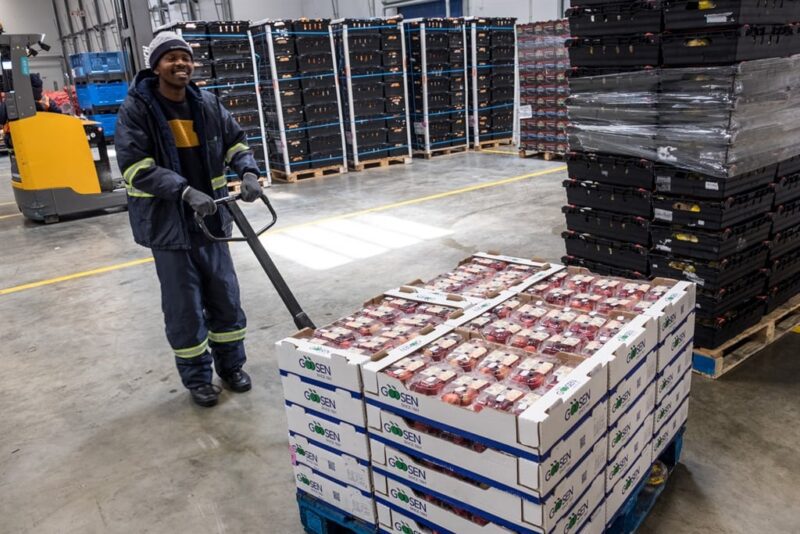
Nigeria spends over $10 billion every year on food imports, including essential items such as wheat, rice, sugar, fish, and tomato paste, according to the Minister of Agriculture and Food Security, Senator Abubakar Kyari.
Speaking at the 2025 Agric and Export Expo organized by First Bank of Nigeria Ltd. in Lagos on Tuesday, Kyari emphasized the urgent need to scale up financing for the agricultural sector to reduce import dependency and boost local production and exports. The minister was represented at the event by his Special Adviser, Mr. Ibrahim Alkali.
“Nigeria spends over $10 billion annually importing food such as wheat, rice, sugar, fish and even tomato paste,” Kyari said. “Yet, we earn less than $400 million from agro exports. To build a non-oil export economy, we must rethink how we finance agriculture.”
Kyari lamented Nigeria’s low contribution to global agricultural exports — less than 0.5 per cent — despite having significant resources. “Agriculture already contributes 35 per cent of our Gross Domestic Product and employs 35 per cent of our workforce. We sit on 85 million hectares of arable land and have a youth population where over 70 per cent are under the age of 30.”
He reiterated President Bola Tinubu’s commitment to achieving national food sovereignty, stressing that the country must not only be able to feed itself but do so on its own terms.
“President Tinubu’s administration has made it clear that food sovereignty is the goal. Nigeria must not only feed itself, but do so on its own terms, free from excessive dependency on imports,” he stated. “Sovereignty means ensuring that no Nigerian goes hungry due to shocks in the global food supply chain, and enabling every community to rely on the strength of our land, our people, and our productivity.”
Kyari argued that increasing domestic agricultural output and supporting export growth should be seen as interconnected objectives.
“Boosting domestic production and building support for exports are not separate agendas — they are two sides of the same coin. We have the land, the labour, and the markets. What we lack is the financing system, value addition, and infrastructure needed to turn potential into prosperity,” he said.
He called for a shift from oil dependency to a diversified economy driven by rural commodity exports and value-added agribusiness. This, he noted, would require structured financial systems, improved youth engagement in agriculture, and reformed credit access for farmers.
Kyari also urged stakeholders to adopt smarter mechanisms to improve agricultural productivity and food security.
“Nigeria can do better if we begin to think critically and improve mechanisms such as revenue sharing, financing linked to performance targets, factoring, forward contracts, and Pay-as-Harvest models. These are not abstract theories — they are already working in real economies,” he concluded.


When Nations Break Their Reformers: Why EFCC Cannot Carry Nigeria’s Burden Alone — And Why Power Must Fear God -By Prof. John Egbeazien Oshodi
Public frustration with the EFCC over perceived selective enforcement is understandable. Nigerians see some arrests carried out suddenly and forcefully,...


Poor, Poor, Maduro -By IfeanyiChukwu Afuba
Little wonder his ouster elicited celebrations. The ease of his capture is telling. There is only one explanation for the...


Why African Leaders Must Fix Governance Before Crying Sovereignty -By Isaac Asabor
One of the great contradictions of African leadership today is selective morality. Leaders speak passionately about international law while violating...

Baba Has Entered The Classroom -By Isaac Asabor
If what Trump is doing is walking into a noisy global classroom and insisting on discipline, then let us be...

As Trump Exposes Why Tinubu Must Go Sooner -By SKC Ogbonnia
The Nigerian president is not only culpable of heinous crimes, but he is also weakened beyond redemption. His continued stay...