
Breaking News
Nigerians Grow Anxious as Petrol Depot Price Rises to ₦889 Per Litre Ahead of New Fuel Tax
Depot petrol prices in Nigeria rise to ₦889 per litre as fears grow that pump prices could exceed ₦1,000 when the government’s new 15% fuel import duty takes effect on November 21, 2025.

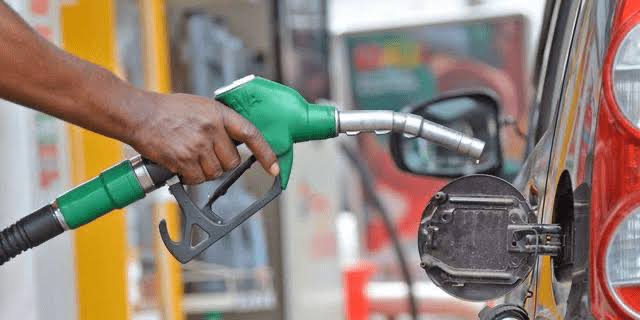
Anxiety is mounting across Nigeria as the depot price of Premium Motor Spirit (PMS), popularly known as petrol, climbed to ₦889 per litre on Friday, up from ₦887 per litre recorded last week.
According to depot data obtained by Vanguard, Matrix Energy sold petrol at the highest rate of ₦889 per litre, while Aiteo offered the lowest at ₦871 per litre. Other major suppliers — including Dangote Petroleum Refinery, Eterna, AA Rano, and AYM Ashafa — sold at ₦877, ₦874, ₦871, and ₦885 per litre, respectively.
Industry operators have warned that pump prices could exceed ₦1,000 per litre once the federal government’s new 15 percent import duty on petrol and diesel takes effect after the current 30-day transition period, which ends on November 21, 2025.
Speaking with Vanguard by phone, Dr. Billy Gillis-Harry, National President of the Petroleum Retail Outlets Owners Association of Nigeria (PETROAN), said his association would cooperate with the government to ensure smooth implementation of the new policy, provided it does not cripple businesses.
“This is a new measure that has not been implemented before. From all indications, the government has good intentions. Our association will work with others to implement it,” Gillis-Harry stated.
According to him, the import duty is intended to strengthen national energy security, safeguard local refining capacity, and stabilize the downstream petroleum market.
Government sources explained that the new tariff became necessary to protect domestic refineries from being undermined by heavy fuel importation.
“While domestic refining of PMS has begun to increase, and diesel production has reached local sufficiency, price instability persists due to misalignment between local refiners and marketers. Import parity pricing often falls below the cost recovery point for local producers,” the federal government noted.
The statement added that uncontrolled imports and unfair pricing practices could jeopardize the survival of Nigeria’s nascent refining sector.
“The government’s responsibility is to protect both consumers and local producers from unfair practices while ensuring a level playing field for domestic refiners,” it said.
Under the new policy, a 15 percent ad-valorem import duty will be applied to the Cost, Insurance, and Freight (CIF) value of imported PMS and diesel. Payments will be made into a designated Federal Government revenue account under the Nigeria Revenue Service (NRS), verified by the Nigerian Midstream and Downstream Petroleum Regulatory Authority (NMDPRA) before discharge clearance.
President Bola Ahmed Tinubu has already approved the policy, directing both the NMDPRA and the Nigeria Customs Service (NCS) to begin implementation after the 30-day transition window.
The President further instructed regulators to prioritize local production when issuing import licenses and to periodically review the tariff rate as domestic refining capacity expands.
“The tariff is not revenue-driven but corrective, aimed at aligning import costs with domestic realities while preserving affordability,” the statement emphasized.
Despite assurances, many Nigerians fear the move will further hike fuel prices, worsen inflation, and increase transportation and living costs, particularly as the festive season approaches.
Opinion Nigeria News


Africa’s Crisis of Military Coups and Insecurity -By Safiya Zakari Muhammad
The erosion of democracy has also weakened regional and international security cooperation. In some cases, juntas have expelled traditional partners...


Governor Uba Sani’s Resolute Commitment On Rural Development -By Abdulrashid Sani Gimi
In the long run, the 2026 fiscal strategy transcends conventional budgetary practice. With a total outlay of ₦985.9 billion, a...


Lack of Financial Support Holding Back Russia’s Economic Influence in Africa: A Case Study of Missed Opportunities in Nigeria -By Kestér Kenn Klomegâh
As Africa's largest economy, Nigeria cannot afford another decade of promises without projects. The future of its development lies with...


The Impact Of Social Media On Youth Mental Health -By Jemimah Hezekiah
Governments and tech companies also have a role to play. Enforcing anti-cyberbullying policies, offering digital literacy programs, and providing mental...

Every Night We Pray to Survive: Voices from Insecure Communities -By Rinret istifanus
As the nation debates policies and strategies, these voices remind us that insecurity is not just a headline it is...