
Breaking News
Nigeria’s Money Supply Rises to N124.4trn in December 2025
Nigeria’s money supply grew 1.2% to ₦124.4 trillion in December 2025, driven by higher narrow money and increased credit to government and private sector, CBN data shows.

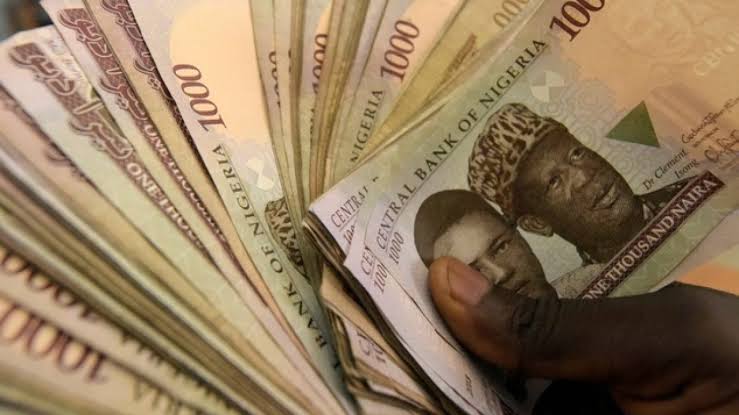
Nigeria’s money supply (M²) increased by 1.2 per cent month-on-month to N124.4 trillion in December 2025, up from N122.9 trillion in November, indicating a modest uptick in economic activity toward the end of the year.
This was disclosed by the Central Bank of Nigeria (CBN) in its Money and Credit Statistics for December 2025. The data showed that most components of money supply recorded growth during the period, with the exception of quasi money.
Narrow money (M¹) expanded by 4.05 per cent month-on-month to N42.14 trillion in December, compared to N40.5 trillion in November. Demand deposits also rose by 3.08 per cent to N36.7 trillion from N35.6 trillion recorded in the preceding month.
Currency outside banks increased sharply by 10.2 per cent month-on-month, reaching N5.4 trillion in December from N4.9 trillion in November.
In contrast, quasi money declined slightly by 0.18 per cent to N82.25 trillion in December, down from N82.4 trillion in November.
The growth in money supply was mirrored in increased banking sector credit to both the government and the private sector. According to the data, credit to the government surged by 29.5 per cent month-on-month to N34.2 trillion in December, from N26.35 trillion in November.
Credit to the private sector also recorded a rise, growing by 1.6 per cent to N75.8 trillion in December from N74.6 trillion in November.
As a result, net domestic credit climbed by 13.9 per cent month-on-month to N115.06 trillion in December, compared to N100.98 trillion in November.
The expansion in money supply was further reflected in currency in circulation, which rose by 9.6 per cent month-on-month to N5.7 trillion in December 2025, from N5.2 trillion in November. This suggests an increase in cash usage despite the growing adoption of electronic payments, expansionary monetary policy measures, and rising gross domestic product.
Opinion Nigeria News



Museveni’s Uganda: Family Company Limited -By Isaac Asabor
Museveni will not be remembered for the ideals he once espoused. He will be judged by how long he clung...

Africa Experiencing New Stage of Reawakening -By Kestér Kenn Klomegâh
The Russia-Africa summits earlier took place in Sochi (October 2019) and St. Petersburg (July 2023). Russia and Africa are currently...


The New York Times Misses the Forest for the Trees in Nigeria -By Nnamdi Prince
If the Times is so concerned about accurate data, perhaps it should direct its considerable resources toward independently investigating and...


The Pragmatism of Principle: Redefining Loyalty in an Age of Change -By Florence Ozor
While I do not endorse political nomadism, one must acknowledge that strategic realignment can be expedient. Take Peter Obi: after...


Lessons for Today: MLK for Continental African Leadership – A Psychoafricalytic Mirror for Power, Dignity, and Continental Renewal -By Psychologist John Egbeazien Oshodi
When African leaders abandon indigenous wisdom, they often adopt the colonial logic of control. Citizens become subjects. Protest becomes treason....