
National Issues
Nigeria’s Schools Closure and the Disease of Rhotacism -By Prince Charles Dickson, Ph.D
Shutting schools may shelter minds briefly. But without strategy that attacks the root—financing of violence, data blindness, local exclusion, and accountability gaps—it only shelters the conscience of policy. Until answers arrive with evidence of execution, Nigeria’s schools are not closed for safety. They are closed for convenience. And convenience, like rhotacism, leaves us unable to pronounce the truth. May Nigeria win.

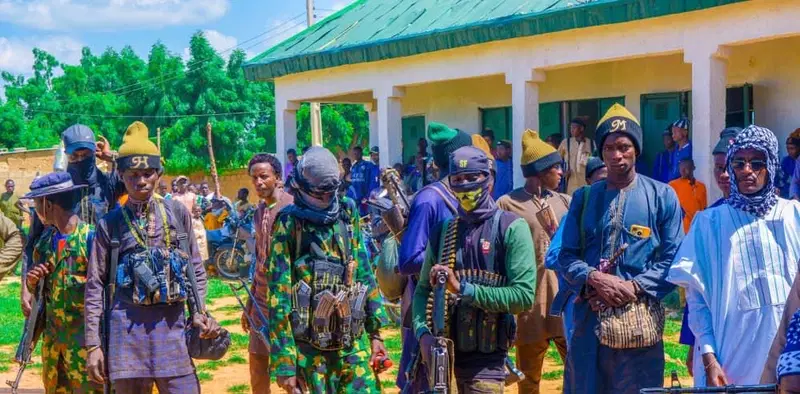
The inability to pronounce the letter r is called rhotacism—a quiet irony in speech pathology, where sufferers lack the tongue to name their condition. Nigeria today appears afflicted by a similar policy disorder: an incapacity to articulate the real threats to learning, safety, and development, while endlessly announcing their symptoms. The reflexive closure of schools across states, often with the Federal Government’s blessing, is not merely a security response; it is a linguistic failure of governance. We cannot pronounce the problem, so we silence the classroom.
At surface level, school closures masquerade as prudence. No leader wants abducted children, grieving parents, viral outrage. But development practice teaches us to distrust surface logic. If classrooms are unsafe, what calculus deems campuses secure? If primary schools are closed in the name of vulnerability, why do lecture halls hum, convocation grounds fill, churches and mosques swell, markets bustle, and political rallies roar? The policy geometry is incoherent. Risk does not dissolve with age brackets or academic levels; it migrates along opportunity lines. Violence, like water, flows where barriers are weakest—not where regulations are loudest.
The headline figures tell a damning story. Over 42,000 schools categorized as vulnerable. A $30 million Safe School Initiative announced, lauded, and then largely evaporated into PowerPoint memory. What exactly has closure achieved in this arithmetic? If risk prompted closure, closure must prompt mitigation. Yet what we witness is substitution, not solution. Strategy is replaced by symbolism. Doors are shut to demonstrate action while the engines of threat, the logistics, financing, intelligence gaps, and ungoverned spaces remain scandalously intact.
The first ethical question is not poetic distrust; it is arithmetic ethics. How many days of learning are lost per closure? How many children drift permanently out of school into child labor, early marriage, recruitment pipelines, or migration traps? Empirical evidence across fragile contexts, from the Sahel to Northeast Nigeria, shows that prolonged closures fracture educational trajectories irreversibly. A classroom shut today becomes a livelihood foreclosed tomorrow. When education systems stall, insecurity does not retreat; it recruits.
Development is not administered by press statements. It is built through boring, relentless infrastructure—data infrastructure, trust infrastructure, and response infrastructure. Consider Community Early Warning Systems (CEWS). Where they exist and function, attacks are anticipated, routes mapped, and escalation interrupted. Where they are absent, closure becomes the blunt instrument of last resort. Yet how many states have meaningfully integrated CEWS into school security architecture? How many have empowered bodies to convene multi-actor protection coalitions that include women, youth, traditional leaders, transport unions, and faith networks? The chalk does not hold risk; the cheque does. And the cheque has been shamefully mute.
Security is not the absence of pupils; it is the presence of intelligence. Closing schools without opening data is policy rhotacism. We cannot pronounce “threat mapping,” so we mouth “shutdown.” We cannot say “transport node vulnerability,” so we say “holiday.” We cannot articulate “perimeter hardening and community interception routes,” so we declare “postponement.” The oxygen of risk—enrolment points, travel corridors, marketplaces abutting school fences requires monitoring in real time. If threat mapping did not intensify the moment schools closed, then the threat merely changed address, not behavior.
The contradiction deepens when worship spaces remain open. Christian Association of Nigeria congregations gather. Nigeria Supreme Council for Islamic Affairs convenes faithful. If the doctrine is crowd risk, the exemptions are indefensible. If the doctrine is youth vulnerability, then universities must not be exempt. If the doctrine is intelligence deficit, then closure is an admission of systemic failure. You cannot claim safety by relocating learning into chaos. Faith spaces recognize a truth policy forgets: protection flows from relationship density. The congregation knows its strangers. Does the school gate?
Globally, contexts plagued by school-related violence have moved in the opposite direction—not toward retreat, but toward smart hardening. Drone reconnaissance over school corridors. AI-assisted risk scoring that fuses incident data, weather, market days, and movement patterns. Platforms to defuse land, grazing, and community disputes before they metastasize into school-adjacent violence. Psychosocial resilience units embedded in schools. Community rangers trained, insured, and supervised, not as vigilantes but as guardians accountable to law. Transparent pilots with public dashboards. Sanctions for local leaders who ignore warning signals. None of this is theoretical.
Because closure is administratively convenient. It transfers responsibility from execution to explanation. Once schools are shut, failure becomes abstract. Metrics blur. When exactly did the risk reduce? Who measures it? At what threshold does reopening occur? Without benchmarks, closure becomes the chief KPI of insecurity governance. That is not security architecture; it is security bureaucracy—forms without force, memos without muscle.
Local Government Areas on volatile frontiers—whether in Niger State or Kogi are living laboratories of conciliation culture. Traditional dispute resolution, faith mediation, women-led early warning, youth intelligence networks; these are not weaknesses to be ignored until Abuja’s biro approves boots on the ground. They are strengths to be funded, trained, and supervised. Development practice demands co-design. Are LGA leaders co-authoring protection protocols, or passively awaiting circulars? Centralization kills time; time kills children’s futures.
The opportunity costs of closure are staggering and gendered. Girls pay first and longest. Distance learning fantasies collapse where electricity, devices, and safety at home are uneven. Boys drift into non-state labor or armed networks promising income and belonging. Teachers disengage. Trust between communities and state frays further. When schools finally reopen—if they do—the damage is cumulative. Closure does not pause risk; it compounds it.
There is also a moral hazard. Normalizing closure teaches adversaries what works. Disrupt learning to extract concessions. Threaten the symbol to paralyze the system. Deterrence requires resilience. A state that keeps schools open while hardening them sends a different signal: intimidation will not erase futures.
To be clear, this is not romantic defiance. There are moments when temporary closure is warranted. But temporary requires temporality: timelines, triggers, alternatives. Closure without an accompanying surge in intelligence, infrastructure, and accountability is futility dressed as care. It is rhotacism—the inability to name and thus cure the disease.
So the unperfumed questions must persist. What exactly is being done differently today that was not urgent yesterday? Where are the transparent pilots funded by the Safe School Initiative? Who owns the dashboards? Which perimeters were hardened, which routes monitored, which sanctions enforced? Who measures risk reduction, and when is bureaucracy upgraded into architecture?
Shutting schools may shelter minds briefly. But without strategy that attacks the root—financing of violence, data blindness, local exclusion, and accountability gaps—it only shelters the conscience of policy. Until answers arrive with evidence of execution, Nigeria’s schools are not closed for safety. They are closed for convenience. And convenience, like rhotacism, leaves us unable to pronounce the truth. May Nigeria win.



Wanted! Where Is Our National Interest? -By Abdu Abdullahi
Indeed, the idea of the national interest is very striking by its pronounced and provocative vacuum in Nigeria.This spells doom...

The ECOWAS Democracy Paradox: A Flawed Arbiter in an Era of Autocratic Drift -By Jeff Okoroafor
As ECOWAS condemns Guinea-Bissau's coup, I analyze how its failure to address "constitutional coups" by elected leaders has eroded credibility...


South Africa Takes A Break From G20 -By Kestér Kenn Klomegâh
The United States this month took over the year-long presidency of the group of leading economies after largely boycotting South...


Did America Happen to Ademiluyi? -By Zayd Ibn Isah
If we must fix Nigeria, it will not be by glorifying foreign lands or demonising our own, but by confronting...


The Children We Hide: Why Society Must Stop Shaming Special Needs Children -By Bello Humulkhair
A small boy sits at the corner of his classroom not because he cannot play, not because he does not...