
Democracy & Governance
Oaths, Cosmology and the Fate of African Democracy -By Patrick Iwelunmor
While the integration of indigenous deities into formal governance may raise questions of constitutional compatibility, these challenges are not insurmountable. Many African countries already maintain plural legal systems in which customary law and statutory law coexist. Voluntary oath-taking frameworks, aligned with individual beliefs, could respect freedom of religion while reinforcing ethical compliance. In this way, indigenous moral instruments would complement rather than contradict formal legal systems, providing additional safeguards against impunity and abuse.

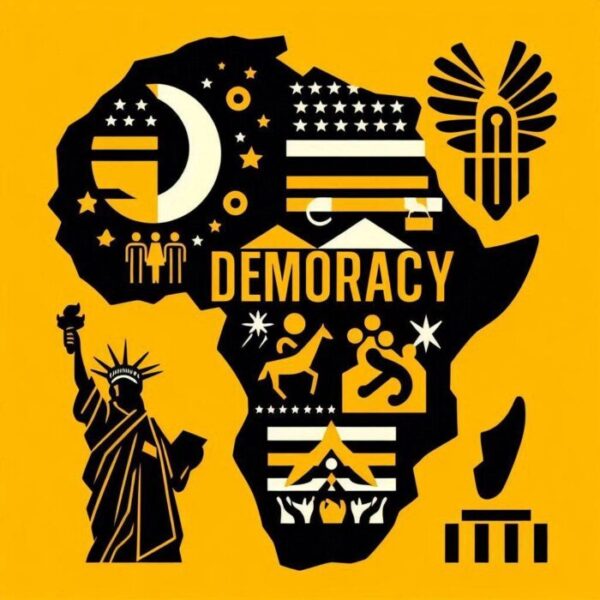
In his Convocation Lecture at UNILAG’s 54th Convocation, Professor Toyin Falola stirred a hornet’s nest when he called for the integration of Ifa and witchcraft into the Nigerian university curriculum. The Jacob and Frances Sanger Mossiker Chair at the University of Texas at Austin also recommended the use of indigenous languages for pedagogy and scholarly engagement between students and lecturers. That lecture, titled Decolonising African Higher Education for Transformational Development, resonated deeply with my view that African politics and democratic culture can similarly benefit from reintegrating the continent’s indigenous epistemologies, particularly its pantheon of deities, into the justice system. This is especially pressing when examining oath-taking for public office, a ritual whose potential to enforce moral discipline remains largely untapped in contemporary African democracies.
The reality that justice in many African states is anchored almost exclusively in foreign religious traditions continues to undermine the pursuit of genuine morality. Politicians exploit these frameworks, manipulating electoral processes and legal instruments with minimal fear of consequence. This systemic weakness has become one of the gravest afflictions of African democracy, where justice is often subordinated to personal ambition and self-preservation. Leaders have internalized the belief that the Christian and Muslim Gods tolerate excesses through doctrines of forgiveness and repentance, yet African deities are historically understood to deliver immediate and uncompromising justice. The difference is not merely theological; it is a question of moral consequence and societal restraint.
Across many African nations, politicians deliberately engineer electoral processes to entrench themselves and their interests in perpetuity. This pattern is transactional rather than ideological, amounting to a blatant abuse of power. Countries such as Cameroon and Uganda exemplify this phenomenon, recycling aged and ineffective leaders while young, capable, and innovative citizens remain sidelined. The judicial and electoral systems that facilitate such continuity often rely on oaths sworn in the names of foreign deities, whose moral authority is framed around forgiveness rather than immediate accountability. This reliance creates a structural tolerance for impropriety, enabling political actors to circumvent both law and conscience.
Consider the case of Paul Biya in Cameroon, who has effectively transformed himself into a life president despite health limitations that make the demands of governance visibly incompatible with his capacities. That a man who struggles to walk unaided continues to occupy the highest office underscores the promotion of incompetence disguised as stability. This situation persists not because African societies lack ethical frameworks, but because indigenous moral instruments—historically embedded in the continent’s legal and cultural consciousness—have been systematically excluded from formal governance structures. African deities, once central to moral accountability, are absent from the oaths, judicial rituals, and ethical protocols that underpin democratic institutions.
Leaders of this kind would scarcely endure in a political climate governed by the impartial wisdom of African deities, whose sanctions are believed to be swift and unavoidable. Integrating indigenous deities into oath-taking protocols could therefore serve as a powerful deterrent against corruption and abuse of office. Whether for public officials or politicians occupying sensitive national positions, swearing by African deities could reinforce accountability, discouraging embezzlement, election manipulation, and the diversion of public resources for personal gain. Litigation surrounding electoral or administrative misconduct could begin with oaths to deities such as Sango and Ogun, whose reputations in Yoruba cosmology are inseparable from truth, justice, and immediate consequence.
Yoruba deities, in particular, resonate with universal moral sensibilities. Ogun, for example, shares notable affinities with the Greek god Dionysus, embodying both creative and destructive forces. For politicians who engage in misappropriation of public funds or abuse of power, swearing an oath in Ogun’s name could instill a constructive fear and moral restraint, cultivating fiscal discipline and ethical governance. This fear is not arbitrary; it is deeply embedded in communal belief, historical precedent, and collective memory. When political actors internalize such moral imperatives, transparency and accountability cease to be rhetorical ideals and become operational necessities.
While the integration of indigenous deities into formal governance may raise questions of constitutional compatibility, these challenges are not insurmountable. Many African countries already maintain plural legal systems in which customary law and statutory law coexist. Voluntary oath-taking frameworks, aligned with individual beliefs, could respect freedom of religion while reinforcing ethical compliance. In this way, indigenous moral instruments would complement rather than contradict formal legal systems, providing additional safeguards against impunity and abuse.
As election seasons approach across the continent, the African Union and national governments should reconsider the moral architecture of democracy, incorporating indigenous oath-taking practices as checks on political excess. Scholars such as Professor Wande Abimbola, Professor Toyin Falola, and Ifayemi Elebuibon offer intellectual resources to guide such deliberations, ensuring that any reform is culturally sensitive, legally defensible, and ethically robust. Properly implemented, this framework would not represent a regression into superstition but a strategic moral intervention, bridging the gap between law, culture, and ethical accountability.
By re-centering African cosmology and indigenous epistemology within public governance, African democracies could begin to shed the pathologies that have long impeded the translation of vast natural and human resources into meaningful developmental outcomes. Until justice is imbued with moral authority grounded in cultural memory, democracy in Africa will remain procedurally sound but ethically hollow, legitimate in form but deficient in practice. Integrating indigenous moral sanctions through oath-taking offers a culturally coherent pathway toward political accountability, ethical leadership and, ultimately, the redemption of African democracy.


Oaths, Cosmology and the Fate of African Democracy -By Patrick Iwelunmor
While the integration of indigenous deities into formal governance may raise questions of constitutional compatibility, these challenges are not insurmountable....

Trans-Africa: A Journey of Freedom, Hope, And The Dream Of One Africa -By Kestér Kenn Klomegâh
Through it all, the campaign underscored that the challenge of visa regimes is not simply bureaucratic red tape but a...

Africa Experiencing New Stage of Reawakening -By Kestér Kenn Klomegâh
The Russia-Africa summits earlier took place in Sochi (October 2019) and St. Petersburg (July 2023). Russia and Africa are currently...
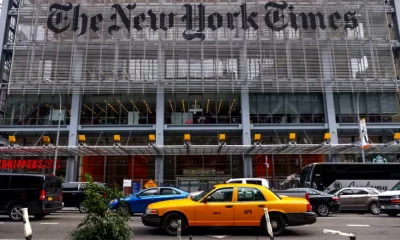

The New York Times Misses the Forest for the Trees in Nigeria -By Nnamdi Prince
If the Times is so concerned about accurate data, perhaps it should direct its considerable resources toward independently investigating and...


The Pragmatism of Principle: Redefining Loyalty in an Age of Change -By Florence Ozor
While I do not endorse political nomadism, one must acknowledge that strategic realignment can be expedient. Take Peter Obi: after...