
National Issues
Oba Ovonramwen And Emir Sanusi: An Unworthy Juxtaposition -By Prince Osagioduwa Eweka

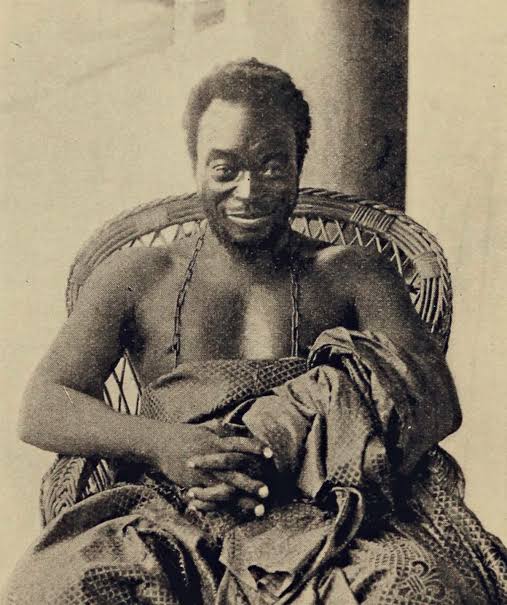
Following the recent deposition of Emir Sanusi of Kano by the Kano state government led by Mr Dollar-Agbada Ganduje, many roadside political analysts have been attempting, to no avail, to compare Oba Ovonramwen of Benin kingdom with Emir Sanusi in terms of how they both left their palaces. What a fatal accident. Au secours !
There’s therefore a need to speak a bit in writing. Oba Ovonramwen was not deposed. He went into exile on a mutual arrangement with the British Colonial Government and remained Oba of Benin in Calabar for 18 years during which a Regent in the person of Chief Agho Ogbeide-Oyo Obaseki of Benin oversaw the kingdom on his behalf while homage was still being paid to him in Calabar by the Benins living there and in faraway Benin.
Ovonramwen established a Palace annexe in Calabar and the British treated him as king there. He had slaves, married more wives, had more children and lived a good, noble life. Until his demise, he was still Oba of Benin though in the diaspora, and he was still being consulted on core traditional matters that overwhelmed the British and their appointed Regent, Obaseki. He never lost the throne but the Benin geographical location for the 18 more years he lived. When he died, his son Oba Eweka II took over the throne, actively, and passed it on to later generations.
Just so we are clear, the British continued to recognize Ovonramwen as Oba of Benin until his death; otherwise, they would have simply crowned Obaseki (their insider before and during the war) as Oba in his lifetime or even beyond. The fact that they did not do this suggests that they must have had plans to assist him in returning to his Benin palace had he not fallen ill and joined his ancestors when he did in Calabar.
Notably, when Oba Ovonramwen joined his ancestors in 1914, it was the British that facilitated the process that led to the coronation of his son, Oba Eweka II, what signifies that they recognized him as Oba until his passage. The British did not replace him with another Oba because he was irreplaceable as long as he was alive and king.
So, I do not see how his history is similar to Sanusi’s. He was an independent monarch and Sanusi was not. Conventional warfare was brought to his domain but not to Sanusi’s. Sanusi was dethroned by a government that enthroned him ab initio, which made him subordinate to it from day one. Ovonramwen was not enthroned by the British and was therefore not subordinate to them from beginning. He fought to defend his territory, warding off external aggression for six solid months before he agreed to a truce to be exiled, so as to bring the war to an end, and he did so to save his people from extenuation; and that’s a noble, prestigious act. No king replaced Ovonramwen once he voluntarily went into exile to save his people and his land but Sanusi has since been replaced with immediate effect.
There’s honestly no basis for comparison. If people must compare, there are more recent, similar and relevant cases in the north like the deposition of Ado Bayero the Emir of Kano and grandfather of the just deposed Emir (1963) and Dasuki the Sultan of Sokoto who was deposed by Abacha. Why Benin?
Benin kingdom is too far, isn’t it? How did these mischievous analysts transport their analysis all the way to Benin kingdom? By flight, by train or by vanishing? They should take it through the same route back to the North, please
Prince Osagioduwa Eweka



Second Ministerial Conference: Shaping Russian-African Strategic Partnerships -By Kestér Kenn Klomegâh
As indicated from above, the most important issues of multifaceted development are included on the Russian-African agenda, with a focus...


When Matrimony Is Dead On Arrival, The Wedding Was Only A Ceremony -By Isaac Asabor
Marriage is not for everyone, and that truth needs to be said plainly. It requires emotional intelligence, self-control, humility, and...


Awards Without Impact: Rethinking ‘Good Governance’ In Bauchi State -By Yasir Shehu Adam
True good governance is not proven in Abuja halls or award plaques. It is proven in functional classrooms, well-equipped hospitals,...


When “Happily Ever After” Starts Expiring: A Deep Dive into the Alarming Rise of Failed Marriages -By Peace Adams Bitrus
Weddings have become theatrical performances. Months of planning, millions spent, lights, cameras, choreographed dances… but very little attention is given...

Cease The Unchecked Looting -By Abba Dukawa
To address this, the Independent Corrupt Practices and Other Related Offences Commission (ICPC) and the Economic and Financial Crimes Commission...