
Forgotten Dairies
Of Saworoide And Today’s State Of Nollywood -By Folorunso Fatai Adisa
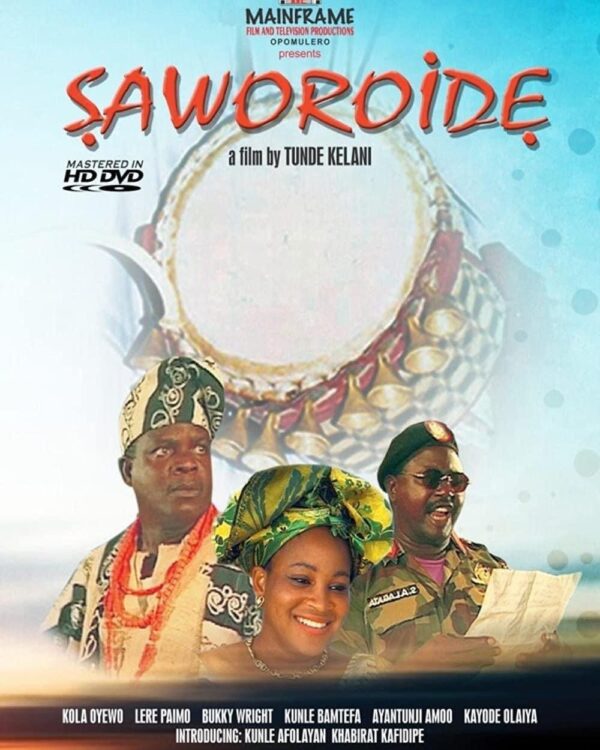
In Saworoide, ritual and folklore were exploited, both as technical frameworks and as conveyers of sociopolitical statements. It embodies the dominant aesthetic of a “complete theatre”— Drama, dance and music. Rich and reasonable dialogues.

Starters on cue, take 1, take 2, ACTION/ROLL THE PLAY. Thespians WORK is our PLAY. The end product of their work is entertainment and education.
Lately, most movies produced lack both entertainment and education as their features. They are nothing but dog breakfast. All thanks to Tunde Kelani, Kemi Adetiba, Kunle Afolayan and a host of others who are still sustaining professionalism.
Two monologues from Saworoide surfaced on my mind, this morning, and I couldn’t help but appreciate how movies that were directed by TK serve as a tool for teaching language/culture. Here are the lines: “Aso funfun ni sukun aro Ipile oro ni sunkun ekeji tantantan (White cloth longs for the indigo dye, the first part of a statement cries for the second)”, “Oro leye ngbo, Eye o deede ba lorule o, oro leye ngbo (A bird doesn’t perch on the roof for nothing, it is gathering information)”. The richness of the Yoruba language used in Saworoidẹ is enough to make you fall in love with our language and culture. It situates you in and brews your love for the talking drum and its creativity. Drum poetry is the core of the play.
Importantly, the statement “Aso funfun ni sukun aro Ipile oro ni sunkun ekeji tantantan” explores and explains the compelling relationship between the king, the authorized drummers, and the citizens of Jogbo— A relationship that is a product of the incision ceremony, which the kings and authorized lead drummers should undergo. While the absence of indigo dye reduces the beauty of the piece of white cloth, the first part of a statement remains incomplete and meaningless without its second half. Consequently, the king is no king without incision, the lead drummer and the people of jogbo, CULTURE and TRADITION that’s situated in UNITY.
It has been said, especially by material thinkers, that unless African theatre shows an acute concern with urgent contemporary issues by interrogating the popular economic and political aspirations of the masses — urban and rural— our drama and theatre, as a vital arm of the cultural superstructure of the economy, stands the risks of consigning itself into permanent irrelevance.
In Saworoide, ritual and folklore were exploited, both as technical frameworks and as conveyers of sociopolitical statements. It embodies the dominant aesthetic of a “complete theatre”— Drama, dance and music. Rich and reasonable dialogues.
Overall, I think the Nollywood industry needs to be rejigged and restructured. Retraining is needed.
Folorunso Fatai Adisa wrote in via folorunsofatai03@gmail.com
phone number:08168380837


Russia Promoting Dialogue with Africa on Implementing 2023-2026 Strategic Action Plan -By Kestér Kenn Klomegâh
On December 19-20, the Second Ministerial Conference of the Russia-Africa Partnership Forum was held in Cairo, Egypt. It was held...

At 72, A Father’s Embrace: Akume, Alia, And The Future Of Benue -By Leonard Karshima Shilgba
As our leader turns 72 in December 2025—a significant and symbolic age—I humbly call on the Benue State Government and stakeholders to initiate...

United States and Russia Resolving Trade Issues and Pursuing New Opportunities -By Kestér Kenn Klomegâh
The American Chamber of Commerce (AmCham) will be working in the system of the Chamber of Commerce and Industry (CCI)...


Nigeria’s Middle Class Is Slipping Into Poverty — And We Are All at Risk -By Abdulhamid Rabiu
What is urgently needed is a shift from abstract economic targets to people-centered policies. Inflation control must be prioritized. Wages...
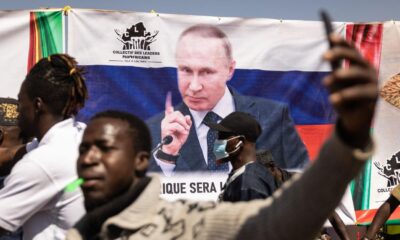

Second Ministerial Conference: Shaping Russian-African Strategic Partnerships -By Kestér Kenn Klomegâh
As indicated from above, the most important issues of multifaceted development are included on the Russian-African agenda, with a focus...