
Breaking News
Oyedele: 98% of Nigerians to Pay Less or No Income Tax from 2026
Presidential tax reform chief Taiwo Oyedele says 98% of Nigerians will see reduced or zero PAYE rates by 2026, as the new tax law exempts low-income earners and cuts corporate tax to 25%.

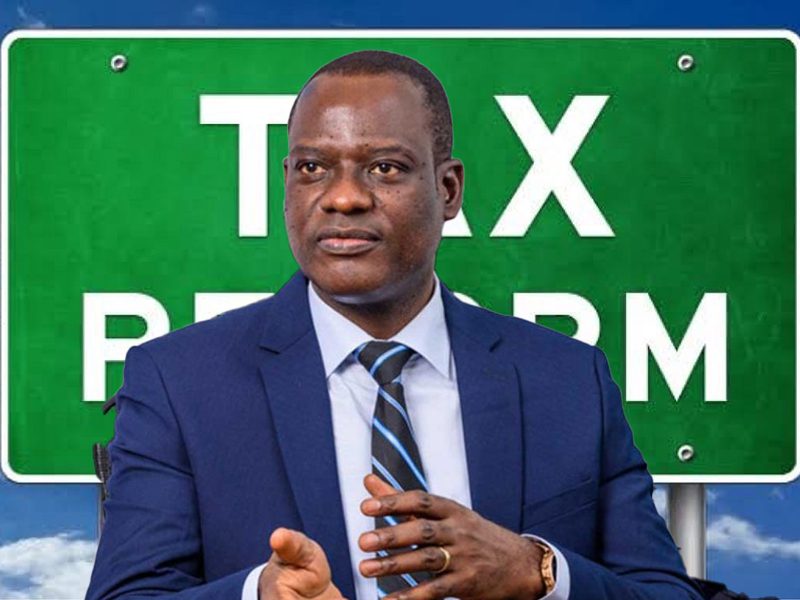
About 98 percent of Nigerians will either be exempted from paying taxes or see their Pay-As-You-Earn (PAYE) rates drastically reduced when the new tax law takes effect in January 2026, according to Dr. Taiwo Oyedele, Chairman of the Presidential Committee on Fiscal Policy and Tax Reforms.
Speaking at a session of the Nigerian Economic Summit in Abuja, Oyedele clarified that the reform aims to ease the financial burden on low- and middle-income earners while ensuring fairness in the tax system. His remarks drew applause from participants, many of whom had expressed concern over rising economic hardship.
According to him, about one-third of Nigeria’s workforce — both public and private — will stop paying PAYE entirely, while those earning slightly more will pay at reduced rates. “Between that 33% to 98% will pay lower PAYE, and the remaining two percent or thereabouts — our rich people — will pay more,” he said.
Oyedele explained that the reform was designed to ensure that people are not “taxed into poverty,” noting, “You can’t be taxed in poverty and then magically become a wealthy country. It’s a contradiction.”
To define the poverty line, the committee examined household income data from the National Bureau of Statistics (NBS). “We found that the average Nigerian household has five members, with about two being gainfully employed. For such a household to stay above the poverty line, their combined income should be around ₦200,000 per month,” he said.
He added that under the new system, anyone earning ₦100,000 or less per month would pay no income tax — a major shift from the current law, where individuals earning as little as ₦30,000 are taxed. “This is a significant improvement, a better deal for the poor,” Oyedele emphasized.
On concerns from state governments about possible revenue losses, he acknowledged that “these are not easy reforms,” noting that state governors had expressed worries about their finances.
Further explaining income categories, Oyedele said, “Above that threshold to around ₦1.8 million monthly is our middle class. Low income earners pay no tax; the middle class pays less; upper income earners pay a bit more.”
He also outlined corporate tax adjustments intended to encourage business formalization. “Currently, informal businesses pay less than 20% in taxes, but once they register as companies, their burden rises to over 40%. That discourages formalization,” he said.
Under the new regime, the corporate tax rate will be reduced from 30% to 25%, while the top personal income tax rate will be capped at 25%. “We’re trying to equalize rates so there’s no disincentive to operate formally,” Oyedele noted, comparing the new rate favorably with those in Ghana (35%), Kenya (35%), and South Africa (45%).
Small businesses with annual turnover of ₦100 million or less will enjoy zero corporate tax. “Some people aren’t sure whether to clap or not — they’re big men, not small business owners,” he joked.
Oyedele also highlighted the committee’s efforts to combat tax evasion, describing Nigeria’s “tax gap” — the difference between what is collected and what could be collected — as a major issue. “Not addressing tax evasion is incentivizing illegality,” he warned. “This system will be no respecter of anyone. If you earn income, you must pay tax.”
Opinion Nigeria News


The ECOWAS Democracy Paradox: A Flawed Arbiter in an Era of Autocratic Drift -By Jeff Okoroafor
As ECOWAS condemns Guinea-Bissau's coup, I analyze how its failure to address "constitutional coups" by elected leaders has eroded credibility...

South Africa Takes A Break From G20 -By Kestér Kenn Klomegâh
The United States this month took over the year-long presidency of the group of leading economies after largely boycotting South...


Did America Happen to Ademiluyi? -By Zayd Ibn Isah
If we must fix Nigeria, it will not be by glorifying foreign lands or demonising our own, but by confronting...


The Children We Hide: Why Society Must Stop Shaming Special Needs Children -By Bello Humulkhair
A small boy sits at the corner of his classroom not because he cannot play, not because he does not...
International Day of Persons with Disabilities 2025: Addressing Africa’s Disability Divide -By Prof. Uche Ofodile
The 2018 Protocol to the African Charter on Human and Peoples’ Rights on the Rights of Persons with Disabilities in...