
Breaking News
PDP Power Struggle: Wike vs. Makinde as Party Faces Make-or-Break NEC on Monday

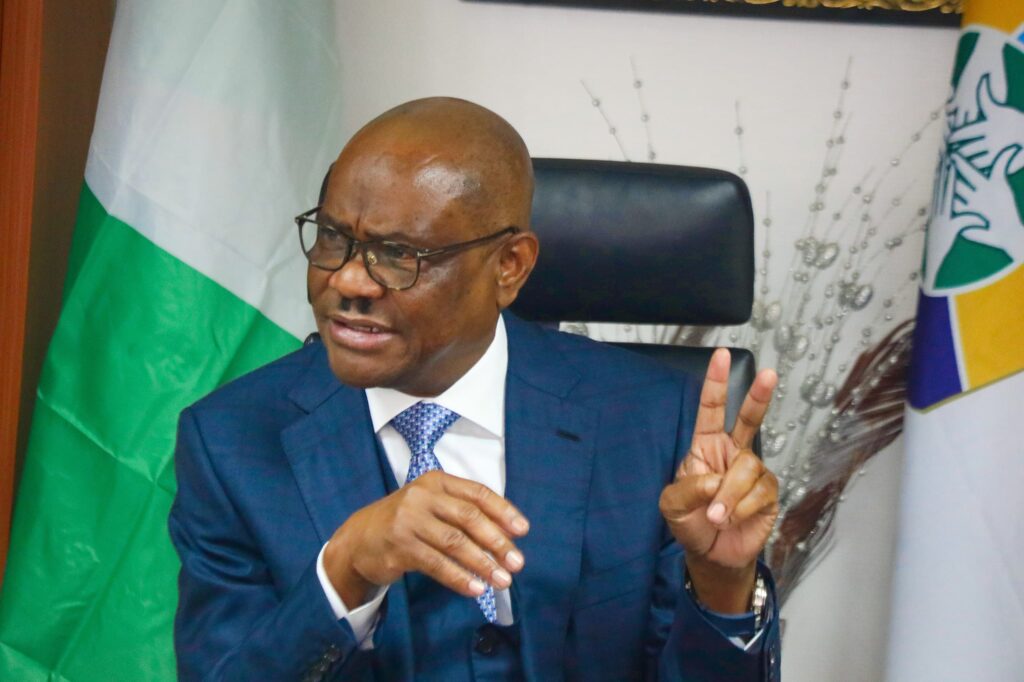
The People’s Democratic Party (PDP) is on the brink of a major turning point as warring factions within the party gear up for Monday’s crucial 102nd National Executive Committee (NEC) meeting in Abuja. At stake is the future of Nigeria’s main opposition party, currently gripped by internal conflict, unresolved zoning disputes, and growing pressure to discipline high-profile members for anti-party activities.
A major item on the NEC agenda is the zoning of the 2027 presidential ticket. Party insiders say three options are on the table: zoning to the South, to the North, or throwing the contest open. A fourth, controversial option—backing APC President Bola Tinubu for a second term—is reportedly being floated by a small group but is widely dismissed by stakeholders as political suicide.
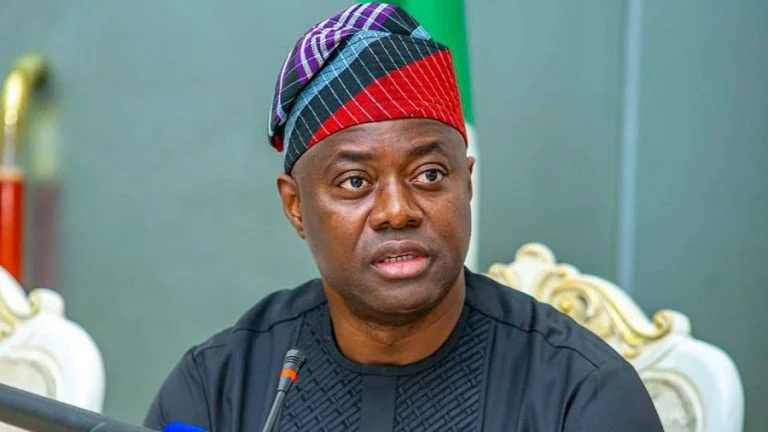
Seyi Makinde
PDP Governors Move to Avert Crisis
In a bid to defuse tensions, PDP governors are meeting today in Zamfara to discuss party unity. A National Caucus meeting will follow on Sunday at the Bauchi Governor’s Lodge in Abuja. The party’s Board of Trustees (BoT) is also expected to convene Monday morning ahead of the NEC. These meetings are part of wider efforts to avoid chaos at the NEC, particularly amid intensifying rivalry between Federal Capital Territory Minister Nyesom Wike and Oyo State Governor Seyi Makinde.
“All these consultations are to ensure that the NEC is calm and decisions are made by consensus,” a senior party source said.
The stakes are high, with the party’s National Elective Convention scheduled for November 15–16, 2025, in Ibadan, Oyo State. Party leaders fear a fractured NEC could weaken the PDP even further ahead of the 2027 general elections.
Wike vs. Makinde: The Battle for PDP’s Soul
At the heart of the crisis is a fierce power struggle between Wike and Makinde, two influential figures charting opposing courses for the party.
Wike, once a leading PDP governor, now serves in President Tinubu’s cabinet and has openly endorsed the APC leader for a second term. His defiance has sparked outrage within the party, with figures like former Jigawa Governor Sule Lamido calling for his expulsion.
Makinde, meanwhile, has positioned himself as a reformist, advocating for transparency and inclusivity. He is leading a bloc determined to reshape the PDP into a credible and unified opposition force.
Their differences came to a head at a recent consultative zoning meeting in Lagos, chaired by Bayelsa Governor Douye Diri. Attended by Makinde, Osun State Governor Ademola Adeleke, and BoT Chairman Adolphus Wabara, the session aimed to reach consensus on the allocation of 19 National Working Committee (NWC) positions.
However, Wike’s allies from the South-South boycotted the meeting, protesting what they described as exclusion and the failure to confirm Chief Dan Orbih as the region’s vice chairman. The boycott exposed the deepening divide between Wike’s camp, focused on regional dominance, and Makinde’s group pushing for structural reform.
“The struggle is no longer just about personalities—it’s about the strategic direction of the PDP,” said a top party official familiar with both camps.
Zoning, Discipline, and the Survival Question
The NEC is expected to ratify a zoning formula—possibly the Douye Diri-led proposal—approve the timetable for the Ibadan convention, and deliberate on sanctions against members accused of anti-party conduct.
The discipline issue is particularly thorny. Ogun PDP Chairman Abayomi Tella recently endorsed Tinubu’s 2027 bid, further complicating the party’s already fragile unity. While many argue for decisive sanctions, others caution that punishing powerful figures like Wike could trigger mass defections and further weaken the party.
“Wike’s financial and political networks have sustained many within the PDP. That’s the reality,” said a party strategist. “But loyalty and party discipline must mean something.”
National Publicity Secretary Debo Ologunagba has warned that actions undermining party unity will attract sanctions, but it remains unclear how far the party is willing to go to enforce discipline.
A Defining Moment
Observers widely view Monday’s NEC as a make-or-break moment. A calm, consensus-driven outcome could restore public confidence and set the stage for a strong convention in Ibadan. A chaotic, divided NEC, however, could deepen the cracks and push the PDP further into political irrelevance.
“The PDP is already in the intensive care unit,” former Benue Governor Gabriel Suswam warned. “Without urgent reforms, the party could collapse before 2027.”
As the party fights to remain relevant, one thing is clear: before the PDP can ask Nigerians to trust it with power again, it must first prove it can govern itself. Monday’s NEC may determine whether that happens—or whether the PDP’s long-standing identity as Nigeria’s main opposition will finally unravel.


The New York Times Misses the Forest for the Trees in Nigeria -By Nnamdi Prince
If the Times is so concerned about accurate data, perhaps it should direct its considerable resources toward independently investigating and...


The Pragmatism of Principle: Redefining Loyalty in an Age of Change -By Florence Ozor
While I do not endorse political nomadism, one must acknowledge that strategic realignment can be expedient. Take Peter Obi: after...


Lessons for Today: MLK for Continental African Leadership – A Psychoafricalytic Mirror for Power, Dignity, and Continental Renewal -By Psychologist John Egbeazien Oshodi
When African leaders abandon indigenous wisdom, they often adopt the colonial logic of control. Citizens become subjects. Protest becomes treason....


The Poverty Crisis: A Global Challenge to Human Dignity and Development -By Jennifer Joab
The poverty crisis is not just an economic problem but a profound human tragedy that affects the social, political, and...

Good Governance as a Tool for National Development -By Blessing Matthew
Good governance prioritizes the interests and welfare of the people above personal or sectional interests. It encourages transparency, accountability, rule...