
Breaking News
PENGASSAN Strike Cuts Nigeria’s Oil Output by 16%, NNPCL Warns of Revenue Loss
NNPCL says PENGASSAN’s strike reduced Nigeria’s oil output by 283,000 barrels per day and gas by 1.7b scf/d, disrupting power supply and risking national energy security despite suspension of the industrial action.

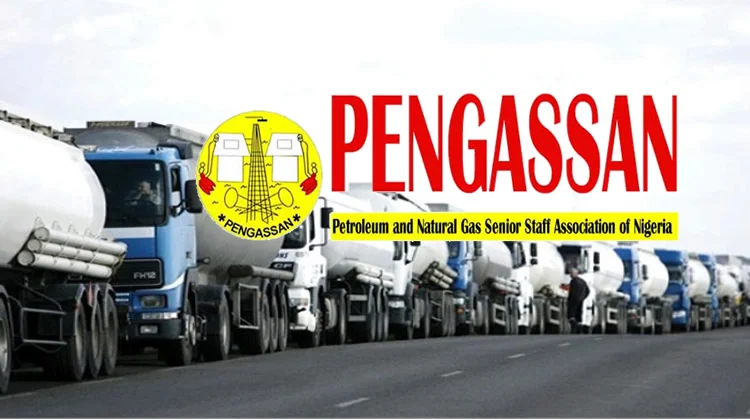
The Nigerian National Petroleum Company Limited (NNPCL) has revealed that the recent strike by the Petroleum and Natural Gas Senior Staff Association of Nigeria (PENGASSAN) caused a steep decline in oil and gas production, disrupting energy supply nationwide.
According to NNPCL, crude oil production fell by about 283,000 barrels per day — representing roughly 16% of national output — while gas output dropped by 1.7 billion standard cubic feet per day. The strike also knocked out over 1,200 megawatts of power generation.
Group Chief Executive Officer of NNPCL, Bayo Ojulari, disclosed the impact in a letter dated September 29, 2025, to regulators. He warned that the industrial action had triggered major production deferments and projected revenue losses due to missed crude liftings and reduced gas sales.
“Significant revenue losses are projected at current deferment levels, driven by missed liftings and gas sales. Cashflow pressures are immediate and compounding,” Ojulari said.
He further noted that the disruption extended beyond the Dangote Refinery, warning of a “material threat to national energy security” if the strike were prolonged.
Within the first 24 hours, oil production fell by 16%, marketed gas by 30%, and electricity supply by 20%. Key facilities, including Shell’s Bonga floating production unit, the Oben gas plant, and Nigeria LNG’s Train 5 and 6, were affected. Cargo loadings at Akpo, Brass, Egina, and Dangote refinery terminals were also delayed, risking demurrage costs.
Ojulari confirmed that NNPCL had activated business continuity plans, deploying non-union staff to sustain operations, but warned of “significant revenue losses” if disruptions persisted.
The strike, which began on September 28, followed the dismissal of about 800 unionised workers at the Dangote Refinery. It was suspended after government-brokered talks, easing immediate supply concerns, though NNPCL stressed that systemic vulnerabilities remain.


The ECOWAS Democracy Paradox: A Flawed Arbiter in an Era of Autocratic Drift -By Jeff Okoroafor
As ECOWAS condemns Guinea-Bissau's coup, I analyze how its failure to address "constitutional coups" by elected leaders has eroded credibility...

South Africa Takes A Break From G20 -By Kestér Kenn Klomegâh
The United States this month took over the year-long presidency of the group of leading economies after largely boycotting South...


Did America Happen to Ademiluyi? -By Zayd Ibn Isah
If we must fix Nigeria, it will not be by glorifying foreign lands or demonising our own, but by confronting...


The Children We Hide: Why Society Must Stop Shaming Special Needs Children -By Bello Humulkhair
A small boy sits at the corner of his classroom not because he cannot play, not because he does not...
International Day of Persons with Disabilities 2025: Addressing Africa’s Disability Divide -By Prof. Uche Ofodile
The 2018 Protocol to the African Charter on Human and Peoples’ Rights on the Rights of Persons with Disabilities in...