
Forgotten Dairies
Pitying Rivers’ Lawmakers For Choosing Godfatherism Over Governance -By Isaac Asabor
What makes this situation even sadder; or rather pitiable is that it is entirely avoidable. The legislature and the executive are not meant to be mortal enemies. Democracy does not require permanent warfare between arms of government. Disagreements are normal; dialogue is essential. Checks and balances are healthy; checks and blockades are destructive. By refusing to engage constructively, Rivers lawmakers are not strengthening democracy, they are strangling it.

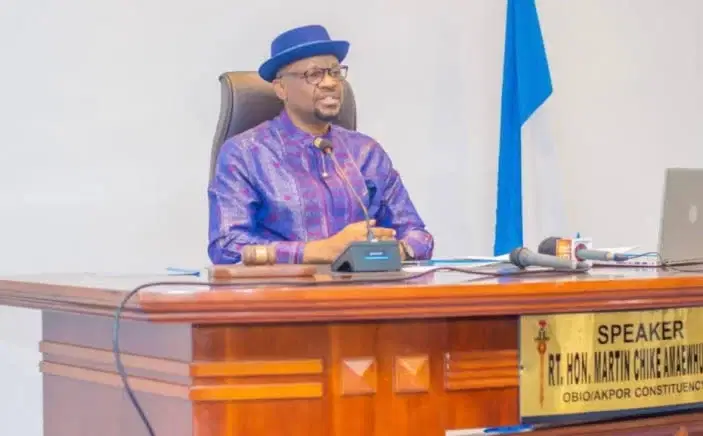
There are moments in public life when anger gives way to pity. What is unfolding in Rivers State today is one such moment. Beyond the noise, the brinkmanship, and the ceaseless political drama lies a sobering reality: the lawmakers of Rivers State are not just failing their constituents; they are walking willingly into a legacy of irrelevance. And for that, they deserve pity more than outrage.
It is tragic to watch elected representatives abandon governance for godfatherism, trading the hard work of lawmaking for the hollow comfort of political loyalty. Rivers State is not poor in resources, ideas, or human capital. What it is currently short of is a legislature courageous enough to remember why it exists in the first place. Instead of legislating, representing, and providing oversight, the lawmakers have chosen to become foot soldiers in a proxy war that does nothing for the people who sent them to the Assembly. This is not democracy in action. It is democracy in distress.
From the onset of the present administration, Rivers State has lurched from one crisis to another. The situation deteriorated so badly that it culminated in a state of emergency and the imposition of an administrator, an extraordinary measure that should have jolted the political class into sobriety. That it did not is telling. Rather than reflect and recalibrate, the lawmakers doubled down on confrontation, paralysis, and legislative grandstanding. Now, unbelievably, there are open conversations urging the National Assembly taking over the Rivers State House of Assembly. That alone is a damning verdict on the lawmakers. A legislature elected by the people should never degenerate to the point where its continued existence is questioned. When such discussions gain traction, it means the Assembly has failed, spectacularly, at its most basic duty.
The painful truth is that Rivers lawmakers have chosen godfatherism over governance, and in doing so, they have shortchanged their constituents. The electorate did not vote for protesters-in-chief. They did not send representatives to Port Harcourt-by-proxy or to perpetual political barricades. They voted for lawmakers who would debate bills, pass laws, attract development, and speak for their communities. What they got instead is a House that spends more time protesting, sometimes loudly, sometimes silently, than sitting to make laws.
In this regard, Rivers lawmakers are following a disgraceful precedent, one that should send chills down their spines: the infamous episode in Edo State where elected lawmakers served out their entire tenure without sitting to legislate. They bore the title of honorable members, yet never honored their mandate. Their tenure was defined not by laws passed or constituents served, but by endless protest and deliberate absence. History has not been kind to them, and it will not be kind to Rivers lawmakers if they continue down this path.
That is why pity is appropriate. To imagine lawmakers spending four years without meaningful legislative work, only to exit office empty-handed and disgraced, is deeply unfortunate. No godfather can return or compensated for those wasted years. No political patron can rewrite history on their behalf.
The reason for the foregoing view cannot be farfetched as the it is no more news that at the centre of the Rivers crisis is the overpowering grip of godfatherism. Rather than act as independent representatives guided by conscience, the constitution, and the needs of their people, many lawmakers have chosen to outsource their judgment. The shadow of Nyesom Wike hangs heavily over the Assembly, and it is increasingly obvious that loyalty to him has eclipsed loyalty to Rivers State. But here is the cruel irony: political godfathers almost always survive these wars. They retreat when necessary, re-emerge when convenient, and reinvent themselves when the dust settles. It is the lawmakers, the expendable foot soldiers, who are left exposed. They will face the voters. They will face history. And they will face the uncomfortable question of what exactly they did with the power entrusted to them.
By refusing to function as a legislature, the Rivers State House of Assembly is creating a dangerous vacuum. And in politics, vacuums invite intervention. That is how calls for a National Assembly takeover gain legitimacy. Such an outcome would not be a victory for Rivers State. It would be a public confession of failure, a loud announcement that the lawmakers could not rise above personal loyalties to serve the common good. If that happens, their record is permanently stained. No amount of political spin can erase the fact that they chose paralysis over productivity.
What makes this situation even sadder; or rather pitiable is that it is entirely avoidable. The legislature and the executive are not meant to be mortal enemies. Democracy does not require permanent warfare between arms of government. Disagreements are normal; dialogue is essential. Checks and balances are healthy; checks and blockades are destructive. By refusing to engage constructively, Rivers lawmakers are not strengthening democracy, they are strangling it.
And while they posture and protest, the people pay the price. Projects stall. Policies gather dust. Investors look elsewhere. Civil servants remain uncertain. Young people watch and conclude that politics is nothing more than elite drama with no tangible benefit for ordinary citizens. This erosion of trust may well be the most lasting damage of all.
Rivers State deserves better than lawmakers who confuse loyalty with obedience and activism with obstruction. It deserves representatives who understand that power is borrowed and that accountability to the people outlives allegiance to any godfather. Political protection is temporary; public judgment is permanent.
The voters may be quiet, but they are not blind. They see who shows up to work and who chooses protest over productivity. They may not shout today, but elections have a way of settling scores without noise.
This moment, though sad and pitiable, is still redeemable. Rivers lawmakers can choose to change course, to return to the chamber, to legislate, to represent, and to govern. Or they can continue on this familiar road, one that ends in irrelevance, regret, and historical condemnation, just like their counterparts in Edo State.
If they persist in choosing godfatherism over governance, Rivers State will lose more than time. It will lose faith in democracy itself. And when history finally records this chapter, it will pity the lawmakers who had power, squandered it, and left nothing behind but noise.
The warning is clear. Rivers deserves better. The people deserve better. And the lawmakers must decide whether they want to be remembered as representatives who rose to the occasion, or as politicians who spent an entire tenure protesting, following orders, and failing the very people they were elected to serve.



Museveni’s Uganda: Family Company Limited -By Isaac Asabor
Museveni will not be remembered for the ideals he once espoused. He will be judged by how long he clung...


Africa Experiencing New Stage of Reawakening -By Kestér Kenn Klomegâh
The Russia-Africa summits earlier took place in Sochi (October 2019) and St. Petersburg (July 2023). Russia and Africa are currently...


The New York Times Misses the Forest for the Trees in Nigeria -By Nnamdi Prince
If the Times is so concerned about accurate data, perhaps it should direct its considerable resources toward independently investigating and...


The Pragmatism of Principle: Redefining Loyalty in an Age of Change -By Florence Ozor
While I do not endorse political nomadism, one must acknowledge that strategic realignment can be expedient. Take Peter Obi: after...


Lessons for Today: MLK for Continental African Leadership – A Psychoafricalytic Mirror for Power, Dignity, and Continental Renewal -By Psychologist John Egbeazien Oshodi
When African leaders abandon indigenous wisdom, they often adopt the colonial logic of control. Citizens become subjects. Protest becomes treason....