
Political Issues
Pooh-Poohing Wike’s Declaration That Only Tinubu Can Sack Him, Not Critics -By Isaac Asabor
The claim that only Tinubu can sack him also underestimates Tinubu himself. Presidents do not operate in a vacuum. They calculate costs. When an appointee becomes more of a liability than an asset, even the most loyal presidents adjust. Tinubu is a seasoned political survivor, not a sentimental godfather. If Wike ever becomes a net political burden, nationally or internationally, no amount of Obio/Akpor votes will save him.

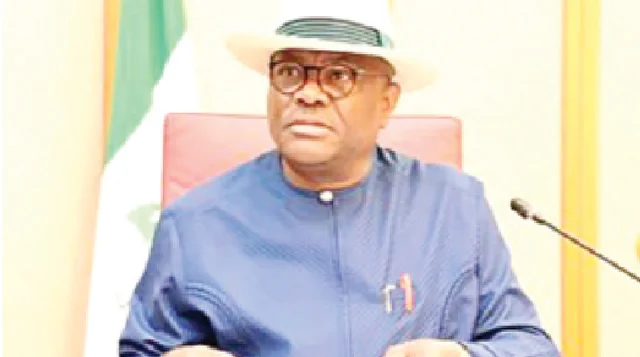
The inspiration for this opinion piece is Nyesom Wike’s latest political bravado, delivered during a thank-you tour of Obio/Akpor Local Government Area, where the Minister of the Federal Capital Territory declared, once again, that only President Bola Tinubu can sack him, not critics, not public pressure, and certainly not voices from “the sidelines.” Framed as a show of strength, numbers, and political muscle, the statement was also delivered against the volatile backdrop of renewed impeachment proceedings against Rivers State Governor Siminalayi Fubara and his deputy, a crisis that has its roots in the bitter fallout between Wike and his successor. In short, the timing could not have been more loaded, nor the message more revealing.
Wike’s declaration deserves to be examined, not applauded. Not because ministers do not serve at the pleasure of the president, that is a constitutional fact, but because his sweeping dismissal of public opinion, civic pressure, and political accountability reflects a dangerous misunderstanding of how power actually works in Nigeria’s post-1999 democratic history. The record is clear, and it is unforgiving to men who mistake proximity to power for immunity from consequences.
Let us be blunt: no public office holder in Nigeria survives on presidential favour alone. Presidents respond, sometimes reluctantly, sometimes belatedly, to pressure. That pressure may come from the streets, the courts, the media, civil society, party structures, or a toxic mix of all of them. To pretend otherwise is to insult history.
Since 1999, several high-ranking officials who once sounded as confident as Wike were eventually forced out, not because the president woke up one morning feeling generous, but because public outrage and political heat made their continued stay untenable. Diezani Alison-Madueke did not leave as Minister of Petroleum Resources in 2015 simply because President Goodluck Jonathan suddenly lost faith in her; she became politically radioactive. The same public pressure that dogged her tenure helped make her retention impossible under a new administration. Babachir Lawal, once Secretary to the Government of the Federation, was removed under President Muhammadu Buhari after sustained public outcry and damning investigative reports over the grass-cutting scandal. Buhari appointed him; Nigerians pressured Buhari to sack him, and he did.
Abdulrasheed Maina did not lose his grip on power because Buhari alone willed it so. His removal followed relentless media exposure, civil society agitation, and national embarrassment that made silence impossible. Even Ibrahim Magu, acting Chairman of the EFCC and once perceived as untouchable because of presidential backing, was eventually suspended and disgraced amid mounting pressure from within the system and outside it. These men were not sacked by critics in a literal sense, but critics created the conditions that made their continued stay politically costly. Wike knows this history. He simply chooses to ignore it.
His argument that power is everything, that politics is raw interest stripped of sentiment, is not new. Nigerian politics has always been transactional. But it has never been as one-dimensional as Wike suggests. Power that ignores legitimacy eventually weakens. Strength that mocks public sentiment often overreaches. And numbers, votes, local governments, party structures, do not remain loyal forever, especially when deployed as instruments of punishment rather than persuasion.
The Obio/Akpor rhetoric is particularly troubling. Threatening to “punish” perceived enemies with votes reduces democracy to a weapon, not a choice. It turns citizens into foot soldiers and ballots into cudgels. That mindset may win short-term battles, but it corrodes the political space and deepens divisions, especially in a state already at war with itself.
More importantly, Wike’s boast rings hollow when viewed against the current Rivers State crisis. If power alone guarantees control, why has Rivers remained politically unstable since he left office? Why the repeated impeachment attempts, presidential interventions, and even a state of emergency? These are not signs of mastery; they are symptoms of unresolved conflict and over-centralized influence. A truly secure political legacy does not require perpetual crisis management.
The claim that only Tinubu can sack him also underestimates Tinubu himself. Presidents do not operate in a vacuum. They calculate costs. When an appointee becomes more of a liability than an asset, even the most loyal presidents adjust. Tinubu is a seasoned political survivor, not a sentimental godfather. If Wike ever becomes a net political burden, nationally or internationally, no amount of Obio/Akpor votes will save him.
History’s lesson is simple: critics matter. Public opinion matters. Pressure works, slowly but surely. The dog that insists it hears only the hunter’s voice often forgets that the forest has its own dangers. Wike may feel secure today, buoyed by cheers, numbers, and presidential proximity. Others before him felt the same. Many of them learned too late that power in Nigeria is not absolute, not permanent, and certainly not deaf to pressure. Threatening critics is easy. Outsmarting history is not.


Manduro: How nations lose territories in peacetime – Lessons for Nigeria -By Ebuka Ukoh
Manduro reflects the same logic. Developing countries do not lose territory because their citizens suddenly change. They lose it because...

Abebe Selassie to Retire as Director of African Department at IMF -By Kestér Kenn Klomegâh
Concessional financing to counter rising borrowing costs, with Africa paying up to 5 times more in interest than advanced economies...

Singapore’s Leaders Built An Economy; Nigeria’s Keep Building Excuses -By Isaac Asabor
Singapore paired economic growth with social stability. Through the Housing Development Board, the government built large-scale public housing, providing affordable...


Tax Considerations for CFD Traders in South Africa: What Experienced Traders Should Know
What looks like a sweet profit on your platform screen can shrink fast once the tax bill hits. When you're...
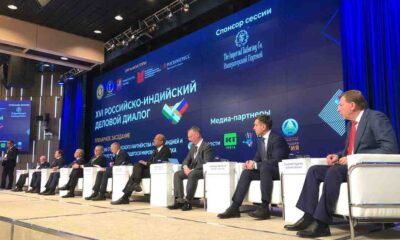

Russia–India Dialogue Provides Platform for Strengthening Bilateral Entrepreneurship -By Kestér Kenn Klomegâh
The Dialogue was organized by the Indian Business Alliance, the Business Council for Cooperation with India, the Government of Moscow,...