
National Issues
Power, Law, and the Judgment of Time: A Historical Reflection on Authority, Accountability, and the Wheel of History -By Ibrahim Muhammad Sabo
This moment, therefore, transcends the fate of one individual or one family. It is a mirror held up to the nation itself. It asks difficult but necessary questions: Did power strengthen institutions or hollow them out? Did authority serve justice or bend it? And when the wheel of time turned, did the system respond with wisdom or with emotion?


History is patient, but it is never silent. It observes events quietly, records them faithfully, and, in time, delivers its verdict. One of its most enduring lessons is simple yet uncompromising: power is fleeting, law is enduring, and time spares no one.
Across civilizations, those entrusted with authority often come to believe that their moment defines permanence. Yet history teaches otherwise. The same hands that interpret the law today may, by the quiet turning of time, stand before it tomorrow. This is not irony; it is the natural equilibrium upon which stable societies are built.
The present circumstance involving a former Minister of Justice, once the highest legal authority of the state and now subject to judicial process, offers a profound illustration of this historical cycle. It reminds us that institutions outlive individuals. Offices expire, titles fade, but the law—however imperfectly applied—remains the backbone of order and continuity.
From the councils of ancient kingdoms to the courts of Islamic civilization, authority was never conceived as immunity. Caliphs appeared before judges; kings submitted to custom; rulers were reminded that leadership was an amanah—a sacred trust, not a personal shield. Modern constitutional democracy draws from the same moral source: equality before the law and access to justice for all.
History, however, is equally unforgiving of another excess—the weaponization of justice. When legal processes are rushed to appease public anger, or when punishment precedes judgment, nations weaken the very foundations they seek to defend. The presumption of innocence, fair hearing, and due process exist not to protect the powerful, but to preserve the integrity of the state and safeguard the future.
This moment, therefore, transcends the fate of one individual or one family. It is a mirror held up to the nation itself. It asks difficult but necessary questions: Did power strengthen institutions or hollow them out? Did authority serve justice or bend it? And when the wheel of time turned, did the system respond with wisdom or with emotion?
History will not only scrutinize the allegations. It will judge the conduct of the process—the restraint of the courts, the discipline of prosecutors, and the maturity of the public discourse.
In the final analysis, history does not side with officeholders, nor does it surrender to the fury of the crowd. It aligns with law observed, justice tempered, and truth pursued without fear or favor.
Power commands the present, but history governs the future.
Ibrahim Muhammad Sabo
Wakilin Tarihin Gabarin



Lack of Financial Support Holding Back Russia’s Economic Influence in Africa: A Case Study of Missed Opportunities in Nigeria -By Kestér Kenn Klomegâh
As Africa's largest economy, Nigeria cannot afford another decade of promises without projects. The future of its development lies with...


The Impact Of Social Media On Youth Mental Health -By Jemimah Hezekiah
Governments and tech companies also have a role to play. Enforcing anti-cyberbullying policies, offering digital literacy programs, and providing mental...
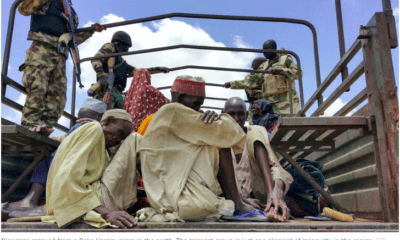

Every Night We Pray to Survive: Voices from Insecure Communities -By Rinret istifanus
As the nation debates policies and strategies, these voices remind us that insecurity is not just a headline it is...


The Cost of Building: Reflections from Inside Northern Nigerian Governance -By Naufal Ahmad
We need a new ethic of engagement. I’m not saying don’t question leaders. I’ve been an internal critic for most...


Genotype Confirmation: Why It Must Be Included As Part Of The Elements Of Marriage -By Tajudeen Abdulrauf Dasuki
Sickle cell is not a mere disease , that we count as minor issue, it is only those have it,...