
Breaking News
Power Sector Debt Jumps 62.5% to N6.5trn, Raising Concerns Over FG’s N1.23trn Bond
Nigeria’s electricity sector debt rose 62.5% to N6.5 trillion in 2025, raising concerns over the Federal Government’s N1.23 trillion power sector bond as GenCos receive just 35% of invoices and liquidity pressures worsen.

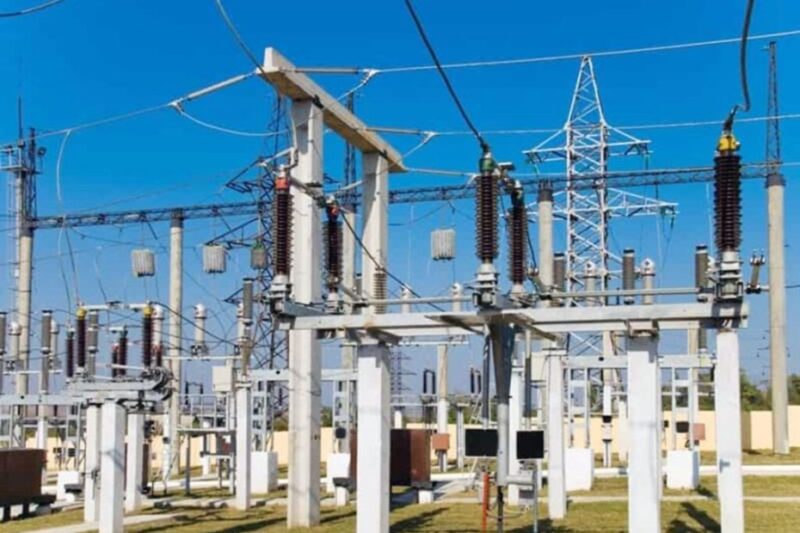
The Federal Government’s effort to settle outstanding debts owed to electricity generation companies (GenCos) is facing mounting pressure as total sector liabilities surged by 62.5 per cent to N6.5 trillion at the end of 2025, up from N4 trillion at the start of the year.
The development poses a significant risk to the Federal Government’s ongoing funding programme, which includes the issuance of a N590 billion Series 1 Power Sector Bond launched in mid-December 2025. The bond is part of a broader plan to raise N1.23 trillion by the end of the first quarter of 2026 to improve liquidity in the power sector.
Nigeria’s electricity sector has long struggled with mounting debts, limiting investment in critical infrastructure needed to boost power supply. However, concerns have emerged over transparency and liquidity performance following the initial bond issuance, which comprised N300 billion Tranche A and N290 billion Tranche B.
Industry data obtained exclusively by Financial Vanguard showed that GenCos were paid only 35 per cent of their invoices for electricity supplied to the national grid, further worsening the liquidity crisis in the Nigerian Electricity Supply Industry (NESI).
GenCos Paid N547bn Out of N1.531trn Invoices in Six Months
Data covering six payment cycles between May and October 2025 revealed that 25 generation companies invoiced N1.531 trillion for power supplied to the grid but received just N547.369 billion, representing 35.74 per cent. The outstanding balance of N984.3 billion is expected to be covered by government electricity subsidies.
A breakdown showed that GenCos issued invoices of N282.139 billion in May and received N96.402 billion (34.17 per cent). In June, invoices stood at N257.261 billion, with payments of N91.357 billion (35.51 per cent). July invoices amounted to N267.999 billion, while payments were N96.287 billion (35.93 per cent). In August, N245.956 billion was invoiced, with N88.593 billion paid. For September and October, invoices were N226.665 billion and N251.649 billion, while payments were N81.783 billion (36.08 per cent) and N92.947 billion (36.94 per cent), respectively.
Why GenCos Are Underpaid — NERC
The Nigerian Electricity Regulatory Commission (NERC) explained that low payments stem from the DisCos Remittance Obligation (DRO) introduced in 2024, which requires distribution companies (DisCos) to remit about 40 per cent of invoices received from the Nigerian Bulk Electricity Trading (NBET) Plc.
In a May 2025 order to Benin Electricity Distribution Company (BEDC), NERC stated:
“The FGN policy on subsidy and electricity tariffs provides for a gradual transition to cost-reflective end-user tariffs, with safeguards for less-privileged electricity consumers. Accordingly, the Federal Government has committed to funding the revenue gap arising from the difference between cost-reflective tariffs approved by the Commission and the actual end-user tariffs during the transition period.”
In its third-quarter 2025 report, NERC added:
“In the absence of cost-reflective tariffs, the government undertakes to cover the resultant gap… in the form of tariff subsidies. For ease of administration, the subsidy is applied only to the generation cost payable by DisCos to NBET at source in the form of a DisCo’s Remittance Obligation (DRO).”
The report showed that DisCos collected N570.25 billion out of N706.61 billion billed to customers in Q3 2025, representing a collection efficiency of 80.7 per cent, boosted largely by the migration of customers to the Band A tariff category despite widespread power outages.
Concerns Over N1.23trn Bond Structure
Despite objections from GenCos over the bond’s structure and payment arrangements, the Federal Government has continued with the programme. An advisory document commissioned by the Association of Power Generation Companies (APGC) and obtained by Financial Vanguard described some provisions in the bond documentation as “death warrants” for GenCos.
“Investigations show that there is no bankable structure underpinning the bond. What is being offered is verbal good faith and Federal Government backing… This makes the bond extremely risky, given that the issuer, NBET Finance Company, is an orphan special purpose vehicle (SPV),” the document stated.
The advisory also warned that the SPV lacks recognition by key regulators and questioned the credibility of proposed mitigation measures:
“The bond designers claim the Federal Government has put in place a sinking fund… However, inquiries show that the proposed sources—DisCo collections and revolving funds—are questionable. ‘If such funds exist, why not use them directly to pay GenCos?’”
Subsidy Policy Blamed for Rising Debt
Stakeholders have blamed the Federal Government’s failure to back electricity subsidies with actual cash payments for the ballooning debt.
Chairman of the Electricity Consumers Association of Nigeria, Chijoke James, said:
“Consumers are unhappy with power sector operators, especially at the distribution level, because of poor service delivery. However, the government must keep its promises. Subsidies cannot simply be removed, as higher tariffs do not necessarily translate into improved supply.”
Energy expert Prof. Yemi Oke described the subsidy regime as unsustainable:
“This is clearly unsustainable. It is undermining national development… Adding another N2 trillion annually in electricity subsidies is not prudent. This is not the path to prosperity.”
Managing Director of Azura Power West Africa, Mr. Edu Okeke, told Vanguard:
“At the end of the day, it is still about money. GenCos are receiving about 38 per cent of their invoices. Has anything changed? The answer is no. As long as suppliers are not paid, no new investment will come in.”
Okeke warned that without resolving structural issues, debts will continue to rise even with the bond programme:
“As President Tinubu announced the N4 trillion bond, it is only a matter of time before another N4 trillion emerges… This year, collections are about 38 per cent.”
Opinion Nigeria News


The Poverty Crisis: A Global Challenge to Human Dignity and Development -By Jennifer Joab
The poverty crisis is not just an economic problem but a profound human tragedy that affects the social, political, and...

Good Governance as a Tool for National Development -By Blessing Matthew
Good governance prioritizes the interests and welfare of the people above personal or sectional interests. It encourages transparency, accountability, rule...


Role of Youths in Nation Building -By Kusompwa Lazarus Motiyedi
It is true that today’s youth did not experience the horrors of the Nigerian Civil War or the severe economic...


Putin Receives Newly Appointed Foreign Ambassadors in Bolshoi Kremlin Palace -By Kestér Kenn Klomegâh
According to him, the foundations of these relationships were laid back during the struggle of African peoples for freedom and...


Why Obi Cubana Shouldn’t Have Given His Life to Jesus (Part 1) -By Ugochukwu Ugwuanyi
But then, why the fuss about Obi Cubana's repentance, what with the American Rap King, Snoop Dog, repenting from gangsterism...