
Political Issues
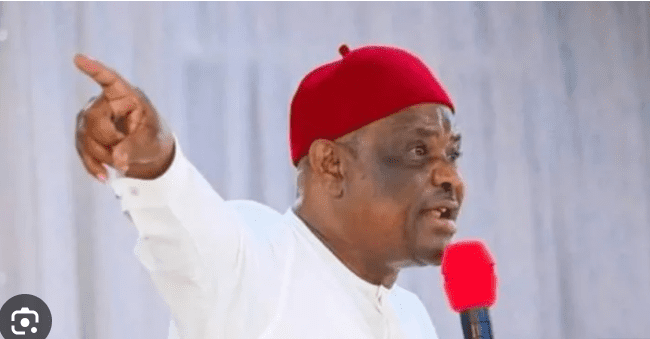
Public Warning Language from Federal Minister Nyesom Wike: Time for Police, DSS, and NSA to Ask Necessary Questions -By Professor John Egbeazien Oshodi
Wike often says there is no APC and no PDP in Rivers, only a Renewed Hope family. On the surface, this sounds like unity. But at a deeper level, he is pulling the President’s central message around himself like protective clothing.

2. The Words That Create a Question
Wike did not whisper. He did not hide his meaning. In open gatherings and political events, he looked at the nation and said:
“Leave Rivers State alone.”
“Rivers is a no go area.”
“I can challenge anybody.”
“Anything you see, take it.”
These are not phrases of caution. They are statements of territory, warning, and control. They are spoken from a place that feels safe, perhaps too safe. When such statements come from a serving minister, the nation hears more than political bravado. The nation hears a man who believes there will be no consequence.
3. A Nation Listening Beyond the Words
Nigerians are no longer just hearing speeches. They are watching behavior. They are reading tone. They see a minister who speaks as if protected by something stronger than institutions. They see applause follow him. They see silence follow him. And in that silence, they begin to wonder.
They ask themselves:
Who corrects him?
Who restrains him?
Who tells him there are limits?
When nobody answers, the silence becomes its own psychological message.
4. “Leave Rivers State Alone” — The Language of Ownership
When Wike says, “Leave Rivers State alone,” he is not advising. He is declaring space. He is claiming emotional territory. He is speaking as one who decides who may enter and who must stay away.
That is no longer the voice of a minister serving under authority. That is the voice of someone who believes he has authority of his own.
And the system around him has not challenged it.
5. “Rivers Is a No Go Area” — Turning a State into a Warning
The phrase “Rivers is a no go area” is not simply political rhetoric. It is psychological signaling. It tells the political class that consequences exist beyond explanation. It tells them there are invisible lines.
When such language is allowed to stand uncorrected, people begin to believe that power is personal, not institutional. They begin to think access is controlled not by law, but by those who speak the loudest.
6. “I Can Challenge Anybody” — Testing the Edges of Power
Wike often reminds the nation that he can “challenge anybody.”
He does not lower his voice when he says it. He does not soften his tone. He presents confidence as certainty. And when that challenge is not answered, it encourages repetition.
This is how testing behavior works in psychology. Each time a boundary is not enforced, the actor becomes bolder. And the people begin to believe the actor has discovered a secret about the system.
7. “Anything You See, Take It” — The Threat Wrapped as Advice
The statement “Anything you see, take it” carries an implicit message. It suggests that whoever enters the field without permission accepts risk. It is a polite way of saying consequences may be coming.
Coming from an ordinary politician, this would simply be political theater. Coming from a serving federal minister, it sounds like authority without restraint.
The silence after such words is what troubles the nation most.
8. Turning Renewed Hope into Political Insurance
Wike often says there is no APC and no PDP in Rivers, only a Renewed Hope family. On the surface, this sounds like unity. But at a deeper level, he is pulling the President’s central message around himself like protective clothing.
By presenting himself as the strongest field defender of Renewed Hope, he creates a kind of political insurance. Anyone who questions him can be accused of attacking the national vision. In this way, hope becomes shield, and loyalty becomes armor.
It may be clever politics. It is unhealthy democracy.
9. The Silence That Speaks
In a healthy political order, such statements would receive immediate clarification. Lines would be drawn. Institutions would assert their authority gently but clearly.
Instead, there is quiet.
Instead, there is avoidance.
Instead, there is psychological hesitation.
And from this silence, a dangerous perception has begun to form in the public mind. Many Nigerians now quietly say that Wike seems to exercise unusual influence. Some whisper that he moves with the confidence of someone who believes he can sway the Presidency, touch the judiciary, and signal to security agencies including the police. Whether this is true or not is less important than the reality that people believe it.
Perception, when left unchallenged, becomes emotional truth. And emotional truth shapes political behavior.
10. What the Public Now Fears
The greatest fear is not that Wike talks. The greatest fear is that the system seems unable to talk back. When defiance becomes routine and leadership remains quiet, the public learns something dangerous.
They learn that noise may command more respect than institutions.
They learn that loyalty may outweigh discipline.
They learn that silence may hide dependence.
And once citizens begin to think this way, confidence in governance fractures.
11. The Question No One Is Answering Out Loud
The nation is no longer asking what Wike is saying.
The nation is asking:
Why does he feel safe enough to say it?
What does he believe he holds?
What undisclosed understanding gives him such calm boldness?
The mystery is not his voice.
The mystery is the lack of response to his voice.
12. A Necessary Psychological Call
This discussion is not about humiliation or anger. It is about order. It is about reminding leaders that words shape the emotional climate of a country. It is about recognizing that when ministers talk like power centers, citizens begin to feel unprotected by the very institutions meant to safeguard them.
Authority is strongest when it is quiet but firm. Silence without clarity is not strength. It is emotional withdrawal dressed as calm.
Nigeria deserves something better than that.
13. Not Hostility, But A Call for Responsible Accountability
Let it be clear. This is not hatred toward Wike, nor a personal attack. I am not against him as a human being or as a political figure. But when a serving minister publicly declares such forceful statements, especially within hours of national tension, democratic systems require clarification, not silence.
Given that he spoke these words openly, the police should at least invite him for conversation. Not to intimidate him, but to understand intent, prevent misinterpretation, and reinforce the principle that no leader speaks above institutional order. His statements directed toward the APC National Secretary in particular deserve clarification, because they carry implications that go beyond political rivalry. They affect public peace, party stability, and respect for constitutional authority.
In healthy democracies, invitation is not punishment. It is reassurance that words from those in power are not beyond review.


Poor, Poor, Maduro -By IfeanyiChukwu Afuba
Little wonder his ouster elicited celebrations. The ease of his capture is telling. There is only one explanation for the...


Why African Leaders Must Fix Governance Before Crying Sovereignty -By Isaac Asabor
One of the great contradictions of African leadership today is selective morality. Leaders speak passionately about international law while violating...

Baba Has Entered The Classroom -By Isaac Asabor
If what Trump is doing is walking into a noisy global classroom and insisting on discipline, then let us be...

As Trump Exposes Why Tinubu Must Go Sooner -By SKC Ogbonnia
The Nigerian president is not only culpable of heinous crimes, but he is also weakened beyond redemption. His continued stay...


How Lavrov’s Philosophy of “Ubuntu” Reflects on the Level of Africa’s Media Presence in Russia -By Kestér Kenn Klomegâh
The December 19–20 Ministerial Conference reaffirmed commitments to fully implement the Russia–Africa Partnership Forum Action Plan (2023–2026), adopted at the...