
National Issues
SABOs vs RUGAs: Essential vs Existential -By Kenny Oladipo


Lost in the midst of all the hues and cries, threats and counter threats emanating from various sections and interest groups across the country spurred by the RUGA saga, is the simple undeniable fact that people of Northern extraction already have non controversial colonies in the South and Middle Belt for decades. Major cities and towns have enclaves called SABO where Northerners reside in large number, trade and contribute meaningfully to the economic development of their host communities. Traders, currency exchangers, and many others do their business under a very peaceful atmosphere without undue external influence or disturbance. SABOs are arguably one of the safest places in any community they are situated, in spite of the sheer magnitude of cash transactions exchanging hands on a daily basis.
To people in the South SABOs are essential to both the economy and commerce of the adjoining localities, a symbiotic relationship that facilitates mutual trust, respect and unity among people of diverse ethnicities. With this realization, the question then is, why was SABO welcomed and RUGA rejected by the same people. Situational awareness to existential threat by host communities triggered an instinctive protective response for which they do not have to apologize for, hence the nearly uniform pushback against RUGAs. These communities have either experienced first hand or heard second hand about the ruthlessness of some killer herdsmen as they wreak havoc all across the country. Gunmen in the cloaks of herders commit heinous crimes under the guise of protecting their cows at the faintest infraction with impunity and uncanny swagger. Thousands of lives had been lost, and once populated areas decimated at the unjust fury of these dangerous individuals, invariably tarnishing the good image of many God-fearing, hardworking and peaceful herdsmen in the court of public opinion.
The collective outcry against the RUGA initiative has nothing to do with intolerance, self-centeredness, or bigotry, rather it has everything to do with self-preservation. Until the federal government brings insecurity, insurgency and militancy under control, mutual suspicion will trail even the best of government’s policies. Oftentimes, the federal government falls into the same trap by rewarding the aggressor at the expense of the victim. Due to lack of political will, the needs of the people are routinely ignored when requested via peaceful means, coupled with the recurring observation that violent actions are proven shortcuts to getting the government’s attention, a combination that ultimately makes adoption of aggressive tactics inevitable. Hence, violence became the default go-to strategy by agitators to get to the negotiating table. The wanton destruction of lives and properties caused by these incessant herdsmen-farmers clashes apparently forced government’s hand in looking at RUGA settlements as a way out, a serious miscalculation that rewarded bad behavior instead of punishing it; a classic negative reinforcement approach to conflict resolution.
To be clear, herdsmen and farmers have co-existed peacefully over many decades since the nation’s founding. Until the strategic balance of power shifted unfairly towards herdsmen’s column, the moment these folks got access to sophisticated weapons of war like AK 47 guns, and farmers only wield machetes, it’s game over there and then. You don’t bring a knife to a gun fight, and this is the present truth, one group is well-armed and well-trained and the other group have only survival instincts and primitive self defense tools to rest on. To reverse this trend, this administration needs to formulate a plan for retrieving all AK 47 guns being carried by herdsmen nationwide. While it’s understandable why nomads will require to bear conventional arms for protection sake as they migrate through dangerous terrain, there is however no justification whatsoever for carrying weapons meant for the theaters of war in peacetime. To meet at halfway point, rifles with limited cache of bullets can be legally issued by the government to licensed and evaluated herdsmen with tracking number and devices to monitor these weapons and also create a gun registry for the group.
The often used talking point by powerful voices in the North was that these killers were foreigners and not natives. And if that assertion is accurate, then we can all agree that foreigners aren’t entitled to any piece of land anywhere in Nigeria. So, if the primary reason for seeking to create RUGA settlements is to address the menace of killer herdsmen who are said to be
Strength; prejudice aside, on the surface this is a good program that can transform the way cattle rearing business is done in modern societies and times in the country. The very idea that nomads can now settle in a location and thrive without having to journey long distances in search of vegetation and water for their animals is a positive one. Herdsmen’s families can now have a settled life by not having to move from time to time. A development that can make basic education more accessible to school age children, and basic health care more readily available to the community. Herders will also see improvement in the overall health and weight of their livestock resulting into higher market value boosting their income potential in the process. And more importantly, this arrangement has inherent capacity to stem the uprisings between herders and farmers, as all parties begin to operate at reasonable distance from each other with well-defined boundaries.
In the US, Texas cowboys and other cowboys in the Plains of the West like Nevada, California and the likes went through similar phase in their own evolution. Until the idea of ranches became widespread and was subsequently formalized as the best way to raise large animals like cows and all sorts. Open grazing was abolished and ranches came into effect. The lesson however is, Texas cowboys didn’t ask for lands to build their ranches outside of their state. This issue is better addressed at the state level and ought to be voluntary with an opt-in, opt-out provision in the establishment clause.
Though there’s been a vehement backlash against this initiative, it ought not be allowed to die. That said, its establishment should be state’s responsibility with federal government providing all the needed support for the initiative. Besides, there’s no point establishing RUGAs in Rivers State or Lagos State or other southern states where there’s never been a single clash between herders and farmers on record. So the push for such settlements in those areas under the facade of seeking for ways to deescalate these types of clashes is counter productive and factually deficient. RUGAs for now should stay in the northern areas and maybe some middle belt areas that are open to the concept. It will amount to a smart move for the federal government to refrain from venturing southward in its RUGA drive and let the process take a natural course. Don’t force it, let the penetration be mutual, voluntary, and organic, just like SABOs are.
Weakness; given the current security situation in the country, establishing RUGA settlements in itself is a security risk to both the herders and host communities at the same time. For instance, if RUGA settlements are foisted on areas that rejected them by federal might then that move could be tantamount to setting up a perfect storm and unintended consequences may ensue as a result. Let’s look at it this way, if herders and their livestock are aggregated into remote areas away from the city centers and in this era of fake news, and maybe some mischievous individuals begin to spread malicious rumors that the herders are planning attacks on host communities. Then the settlements become soft targets for attacks. For the sake of peace-loving herders, government should let RUGAs start in friendly places first and further expansion can drift gradually towards areas that have become more receptive to the concept without compulsion.
Opportunity; the mutual benefits of these settlements to the host communities cannot be overemphasized and from a purely economic standpoint this is a net positive for everyone. An entirely new business model can be carved out and built around these settlements. Abattoirs, cottage industry, new meat market and so on may spring up around successful settlements. The prospect is huge and that’s the part government needs to accentuate to the public, by starting with pilot settlements in states like Gombe, Borno, Yobe, Katsina etc and once the full picture is available, then spread the benefits southward, and let the benefits work their way through currently resistant hearts and minds in these communities.
Threat; this is the underlying reason why the resistance was so profound and nerves are on edges. For the Yorubas the Afonja treatment isn’t lost on the people and a repeat performance will be resisted at all cost. For the rest of the South, the Afonja example is also a warning sign and a barometer of what complacency can do, and as it would be expected of any sane people, rejection of RUGA settlements is a judicious course of action.
Similarly, allowing RUGAs in deep South is a clear and present danger that poses existential threat to the people of these areas. In this atmosphere of insurgency from terrorists, then nothing can be left to chance by vigilant people, and allowing these settlements is inimical to the safety and security of the host communities in the foresight. To them RUGAs could facilitate or accelerate retail terrorism in areas insurgents haven’t had foothold in before the settlements came into the picture. Although, nothing says the situation described could occur but it is within the realm of possibility. And worst-case scenario is the best design template, and policy makers need to be more thoughtful and holistic in their approach to solution development.
In view of the foregoing the government should reinforce both the strength and opportunity in this program, and address the embedded weakness and threat. To interest groups in the North that feel frustrated and disenchanted by the utter rejection of the settlements in the South, it is not about politics or hatred of the president, his government or Northerners in general, it’s all about concerns and gripping trepidation that cannot be discounted, and that must be accounted for before espousing any conspiracy theory. Northerners would have responded in similar fashion if roles were reversed. To interest groups in the South, honest and peace-loving herders are net positive to the economy of the areas they are accepted. Now let everyone be careful in their approach to this delicate matter and allow cooler heads to prevail, as a lasting solution is developed. Before anyone goes berserk in the North because of RUGA rejection in the South, try and take a pause and remember SABOs. And before anyone goes ballistic in the South because of RUGAs remember SABOs as well.
In closing if RUGAs are seen as essential in the South, then the idea will eventually be accepted to certain degree over time the same way SABOs are. Otherwise, if seen as existential threat then there’s no remote chance in view for these settlements in the South.
Kenny OLADIPO
Houston, Texas
@kindodey



When Nations Break Their Reformers: Why EFCC Cannot Carry Nigeria’s Burden Alone — And Why Power Must Fear God -By Prof. John Egbeazien Oshodi
Public frustration with the EFCC over perceived selective enforcement is understandable. Nigerians see some arrests carried out suddenly and forcefully,...
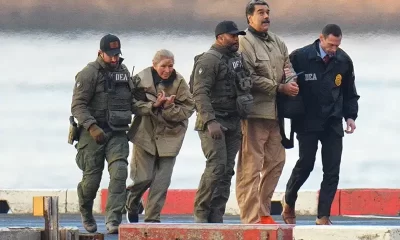

Poor, Poor, Maduro -By IfeanyiChukwu Afuba
Little wonder his ouster elicited celebrations. The ease of his capture is telling. There is only one explanation for the...


Why African Leaders Must Fix Governance Before Crying Sovereignty -By Isaac Asabor
One of the great contradictions of African leadership today is selective morality. Leaders speak passionately about international law while violating...


Baba Has Entered The Classroom -By Isaac Asabor
If what Trump is doing is walking into a noisy global classroom and insisting on discipline, then let us be...


As Trump Exposes Why Tinubu Must Go Sooner -By SKC Ogbonnia
The Nigerian president is not only culpable of heinous crimes, but he is also weakened beyond redemption. His continued stay...