
Breaking News
Sanction Politicians for Early Campaigns or Face Court Action, SERAP Warns INEC
SERAP has urged INEC to penalize politicians and parties violating Nigeria’s electoral laws with early campaigns ahead of 2027. The group warns it will take legal action if INEC fails to act within seven days.

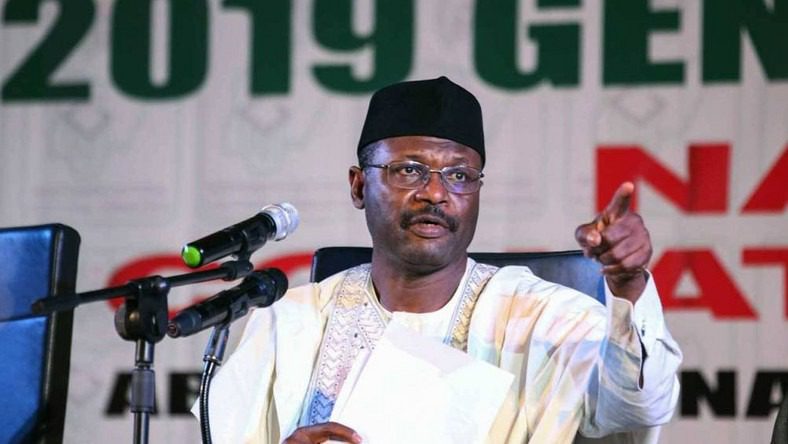
The Socio-Economic Rights and Accountability Project (SERAP) has urged the Independent National Electoral Commission (INEC) to take decisive action against politicians and political parties violating Nigeria’s electoral laws by engaging in premature campaigns.
In a letter dated September 13, 2025, signed by its deputy director, Kolawole Oluwadare, SERAP told INEC Chairman, Professor Mahmood Yakubu, that failure to sanction offenders would leave the organisation with no option but to pursue legal action.
“INEC is not helpless when political parties, candidates and other politicians contravene the legally prescribed period for election campaigns. Early election campaigns are unconstitutional and illegal,” SERAP stated.
The group called on INEC to:
- Identify politicians and parties breaching constitutional and statutory provisions.
- Prosecute perpetrators and their sponsors.
- Develop clear regulations to govern premature campaigns.
SERAP stressed that “INEC constitutional and statutory mandates extend to sanctioning or penalising electoral offences, including early election campaigns.”
According to the organisation, the commission must not be seen as “encouraging or giving legitimacy to political parties, candidates and other politicians carrying out early election campaigns outside the legally prescribed campaign period.”
It added: “Early election campaigns have adverse effects on economic development due to prolonged electioneering frenzy. Since INEC is yet to publish the timetable and schedule of activities for elections, such campaigns are inconsistent with the Nigerian Constitution, Electoral Act, and international human rights obligations.”
The group further alleged that some state governors are diverting increased revenues from the removal of fuel subsidies to fund early campaigns rather than invest in social and economic development.
Citing data, SERAP said: “FAAC shared N28.78 trillion to the three tiers of government in 2024, a 79 percent increase from N16.28 trillion in 2023. Yet, Nigeria still ranked 130th out of 141 countries for infrastructure quality. Over 129 million Nigerians live in extreme poverty, and several governors are failing to pay the new N70,000 minimum wage.”
SERAP noted that politicians began campaigning “almost immediately after the 2023 general elections” instead of waiting until 150 days before the 2027 polls, as stipulated by law.
It warned that INEC’s failure to act would create “a culture of impunity,” allowing public officials to misuse state resources, undermine fair competition, and compromise governance.
The letter also referenced section 94 of the Electoral Act, which restricts campaigns to within 150 days before election day, and section 83 which empowers INEC to demand compliance from political parties.
“We would therefore be grateful if the recommended measures are taken within seven days of the receipt and/or publication of this letter. If we have not heard from you by then, SERAP shall take all appropriate legal actions to compel you and INEC to comply with our request in the public interest,” the group declared.
INEC recently admitted concerns about early campaigns, acknowledging that the practice undermines its ability to track campaign finance. However, it claimed there were no sanctions under current law.
SERAP insists otherwise: “INEC has broad constitutional and legal obligations to uphold the rule of law and defend the public interest. Political parties, candidates and other politicians cannot elevate themselves above the law.”
Opinion Nigeria News



Role of Youths in Nation Building -By Kusompwa Lazarus Motiyedi
It is true that today’s youth did not experience the horrors of the Nigerian Civil War or the severe economic...

Putin Receives Newly Appointed Foreign Ambassadors in Bolshoi Kremlin Palace -By Kestér Kenn Klomegâh
According to him, the foundations of these relationships were laid back during the struggle of African peoples for freedom and...


Why Obi Cubana Shouldn’t Have Given His Life to Jesus (Part 1) -By Ugochukwu Ugwuanyi
But then, why the fuss about Obi Cubana's repentance, what with the American Rap King, Snoop Dog, repenting from gangsterism...


Invincible Defence Technology: Consciousness-Based Solutions to Interstate and Intrastate Violence -By Dr. David Leffler
Technology refers to the systematic application of knowledge and tools. In the case of IDT, this brain-based “technology” is the...

Amnesty International’s Selective Outrage And The Sowore Narrative -By Kelvin Adegbenga
Amnesty International also appears to suffer from institutional amnesia. It is on public record that the Nigerian Army once called...