
Breaking News
SERAP drags governors, Wike to court over alleged failure to account for security votes
SERAP has sued state governors and FCT Minister Nyesom Wike, demanding disclosure of security votes spending since May 29, 2023, amid rising insecurity in Nigeria.

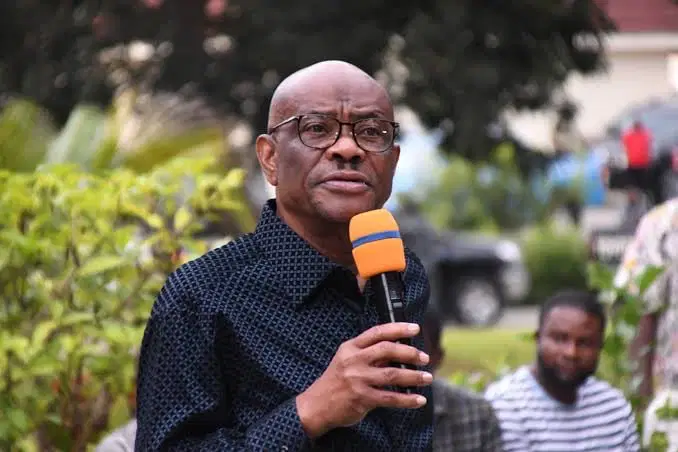
The Socio-Economic Rights and Accountability Project (SERAP) has filed a lawsuit against Nigeria’s state governors and the Minister of the Federal Capital Territory (FCT), Nyesom Wike, over what it described as their failure to account for the spending of billions of naira allocated as “security votes” since 29 May 2023.
SERAP said the suit was prompted by reports of the recent Benue massacre and persistent insecurity across several states and the FCT, despite more than N400 billion reportedly budgeted annually as security votes. The organisation noted that about 10 governors alone reportedly earmarked around N140 billion as security votes in the 2026 budget.
In the suit marked FHC/ABJ/CS/95/2026, filed last Friday at the Federal High Court in Abuja, SERAP is asking the court to “direct and compel the governors and Mr Wike to disclose the details of the spending of security votes by them since 29 May 2023 to date, which are intended to ensure the security of life and property of Nigerians.”
The group is also seeking an order compelling the governors and the FCT minister to “provide detailed reports on the allocation and spending of security votes by their states and the FCT, including information on implementation status and completion reports, and the plans, if any, for improving security infrastructure in the states and the FCT.”
SERAP argued that Nigerians have a right to know how public funds, including security votes, are spent, stressing that “Nigerians ought to know in what manner public funds including security votes meant to ensure the security of life and property of Nigerians, are spent by the governors and FCT minister.”
The organisation further contended that escalating insecurity in several states and the FCT is “taking a devastating toll on socially and economically vulnerable Nigerians, driving up extreme poverty, intensifying hunger and leading to other grave human rights violations.”
According to SERAP, several governors and the FCT minister have continued to fail in their “primary and constitutional responsibility to protect the lives and property of the Nigerian people,” adding that the framers of the 1999 Constitution “never contemplated opaque spending of public funds as security votes.”
SERAP maintained that the constitutional principle of democracy supports citizens’ right to know how security votes are spent, noting that “citizens’ right to know promotes openness, transparency, and accountability that is in turn crucial for the country’s democratic order.”
In court documents filed by SERAP’s lawyers, Oluwakemi Agunbiade, Andrew Nwankwo and Valentina Adegoke, the group warned that “there is a significant risk of embezzlement, misappropriation or diversion of public funds collected by the states and FCT as security votes.”
The suit added that, “Despite the billions of naira yearly budgeted as security votes, many governors and FCT ministers are grossly failing to guarantee and ensure the security and welfare of the Nigerian people, contrary to section 14(2)(b) of the Nigerian Constitution.”
SERAP also argued that prolonged secrecy around security votes has “contributed to large-scale stealing of public funds” and weakened citizens’ ability to hold public officials accountable. It said there is a “legitimate public interest” in compelling governors and the FCT minister to explain how the funds have been spent.
Citing a Supreme Court judgment, SERAP stated that the Freedom of Information Act applies to public records held by states and the FCT, including records on security votes, insisting that governors can no longer claim the law does not apply to them.
“The failure by state governors and FCT minister to disclose and account for the spending of security votes is a grave violation of the public trust,” SERAP said, adding that treating security votes as personal entitlements is “antithetical to the Nigerian Constitution and international standards.”
The organisation also referenced a recent World Bank classification of Nigeria as an economy in fragile and conflict-affected situations, linking insecurity to rising poverty, hunger, and human rights violations.
No date has yet been fixed for the hearing of the suit.
Opinion Nigeria News


Good Governance as a Tool for National Development -By Blessing Matthew
Good governance prioritizes the interests and welfare of the people above personal or sectional interests. It encourages transparency, accountability, rule...


Role of Youths in Nation Building -By Kusompwa Lazarus Motiyedi
It is true that today’s youth did not experience the horrors of the Nigerian Civil War or the severe economic...

Putin Receives Newly Appointed Foreign Ambassadors in Bolshoi Kremlin Palace -By Kestér Kenn Klomegâh
According to him, the foundations of these relationships were laid back during the struggle of African peoples for freedom and...


Why Obi Cubana Shouldn’t Have Given His Life to Jesus (Part 1) -By Ugochukwu Ugwuanyi
But then, why the fuss about Obi Cubana's repentance, what with the American Rap King, Snoop Dog, repenting from gangsterism...


Invincible Defence Technology: Consciousness-Based Solutions to Interstate and Intrastate Violence -By Dr. David Leffler
Technology refers to the systematic application of knowledge and tools. In the case of IDT, this brain-based “technology” is the...