
Breaking News
Soaring Costs Force Nigerians to Improvise for Festive Celebrations
As inflation bites, Nigerians turn to online food savings contributions to fund Christmas and New Year celebrations, but risks of fraud leave many vulnerable.

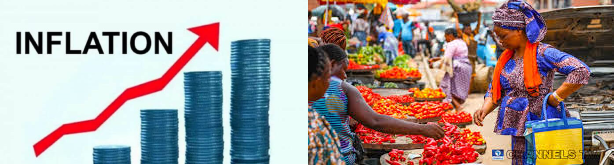
Nigerians’ famed resilience has once again come to the fore as many households struggle to celebrate Christmas and New Year amid rising living costs and dwindling purchasing power.
With food prices and household bills soaring, many Nigerians turned to informal online savings schemes—mostly organised by foodstuff sellers—as a survival strategy to fund festive celebrations.
Economy & Lifestyle findings show that these sellers advertise contribution plans on social media, inviting people to pay fixed monthly amounts toward bulk food purchases ahead of the holidays. Unlike traditional savings groups, many participants join without personally knowing the administrators.
Participants explained that the pooled funds are used to buy food items and meat in bulk, which are later shared among contributors.
Mrs. Bukola Johnson, a fashion designer, said the arrangement helped her family celebrate the season without financial strain.
“I made a monthly saving contribution of N15,000 last year. It was specifically to sponsor my Christmas and New Year celebrations,” she said.
“My husband saved N10,000, and I saved N5,000. It was an online group. But I made sure I visited the shop of the administrator.
“She is a food vendor, and I know she is also using it to attract sales. I was convinced before I started saving with her.”
According to Johnson, the outcome justified the sacrifice.
“I was given a 50kg bag of rice, half a carton of turkey, 5kg croaker fish, 5 litres of vegetable oil, party jollof tomatoes and spices. To me, it was well worth the money,” she added.
Similarly, Mrs. Racheal Adeji, a single mother and chemist shop owner, said the scheme eased the burden of festive spending.
“I made a monthly food contribution of N10,000 per month last year in a group. It helped me a lot because pulling out a huge sum of money at once to celebrate Christmas and New Year is difficult,” she said.
“It wasn’t easy, though. I had to deprive myself of certain needs and wants. But I was very pleased with the outcome because I was given a large quantity of food items that I have never bought in years.
“I will do it this year, and I pray God strengthens me.”
Although informal savings schemes have long existed, contributors traditionally saved to raise business capital rather than to fund Christmas meals. However, worsening economic conditions have changed priorities.
Still, the trend is not without risks. Several Nigerians recounted losing their savings to fraudulent organisers.
Mrs. Hafusat Omoruyi, a wig vendor, said she would never participate again.
“Imagine saving N210,000 in an online group contribution and the convener left with all N6 million contributed before Christmas,” she said.
“She was nowhere to be found. People’s sweat for one year just vanished like that. I have decided to save in a wallet this year.”
Mr. Wisdom Momoh, a fuel attendant, shared a similar experience involving a friend’s family.
“I was hoping to join this group’s food contribution this year, but when I heard what my friend’s wife went through, I changed my mind,” he said.
“She saved N300,000 with her husband. By the 10th month, the convener disappeared. She was devastated and couldn’t cook for Christmas and New Year like before.”
As Nigerians continue to adapt to economic pressures, informal savings schemes remain both a lifeline for festive survival and a potential source of heartbreak, highlighting the fine balance between innovation and risk in tough times.
Opinion Nigeria News



Baba Has Entered The Classroom -By Isaac Asabor
If what Trump is doing is walking into a noisy global classroom and insisting on discipline, then let us be...


As Trump Exposes Why Tinubu Must Go Sooner -By SKC Ogbonnia
The Nigerian president is not only culpable of heinous crimes, but he is also weakened beyond redemption. His continued stay...


How Lavrov’s Philosophy of “Ubuntu” Reflects on the Level of Africa’s Media Presence in Russia -By Kestér Kenn Klomegâh
The December 19–20 Ministerial Conference reaffirmed commitments to fully implement the Russia–Africa Partnership Forum Action Plan (2023–2026), adopted at the...

Why Trump’s Move Against Maduro Makes Sense -By Isaac Asabor
Trump’s decision also invites other nations to step up, to reconsider their passive complicity in the face of egregious abuse....

From Aso Rock To The People: Governance Is Alive -By Danjuma Lamido
Nigerian politics is not for jesters or perpetual protesters; it is for serious-minded people with depth, experience, and a clear...