
Breaking News
Sokoto Moves to Fully Digitalise Basic and Secondary Education Within Two Years
In a bid to raise teaching standards, Prof. Ala highlighted the state’s ongoing teacher training efforts. “We are also radically and vigorously undertaking teacher training because we found out that so many teachers do not have the necessary knowledge, skills, experience, and competence to teach in secondary schools. So far, we have done two sets of training, and we have been able to train 2,500 teachers,” he said.

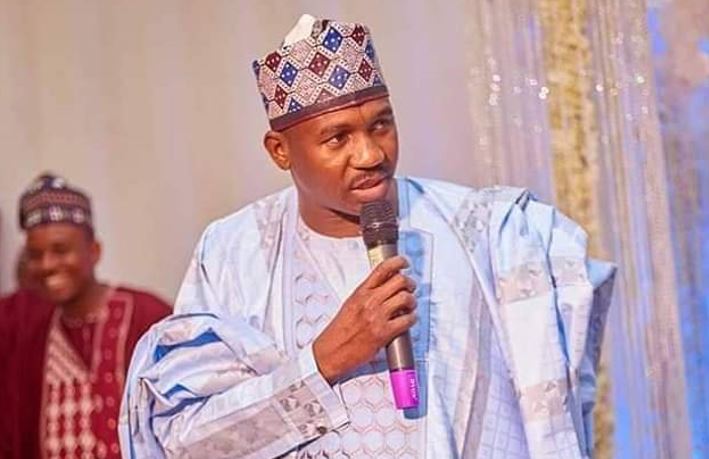
The Sokoto State Government has announced plans to completely digitalise its basic and secondary education system within the next two years, aiming to enhance the quality of teaching, learning, and educational administration across the state.
This was disclosed by the state’s Commissioner for Basic and Secondary Education, Prof. Ahmed Ala, during an interview with the News Agency of Nigeria (NAN) on Monday in Abuja.
“We want to fully digitise the information system in basic and secondary education in Sokoto State,” Ala said. “This will help us to assess teachers’ and principals’ performance on key performance indicators, including teaching and regularity in classes. It will also help us to track how they carry out other functions and keep administrative records.”
According to Ala, the digitisation initiative—driven by the Education Management Information System (EMIS)—is already helping the government monitor school performance. Schools are currently ranked using a points-based system: those scoring 14 points and above are rated as “very good,” while those with six points or below are considered poor-performing.
The EMIS platform also serves as a repository for critical information on infrastructure, ICT, libraries, and other education-related data. “The digitisation will also provide ready information to development partners on our weaknesses and strengths. This will help in planning, execution, and policy implementation,” he added.
Complementing EMIS is the Teachers Management Information System (TMIS), which will specifically track and support the professional development of academic staff.
In a bid to raise teaching standards, Prof. Ala highlighted the state’s ongoing teacher training efforts. “We are also radically and vigorously undertaking teacher training because we found out that so many teachers do not have the necessary knowledge, skills, experience, and competence to teach in secondary schools. So far, we have done two sets of training, and we have been able to train 2,500 teachers,” he said.
The digital transformation and capacity-building efforts reflect the state government’s broader commitment to creating a more effective, accountable, and inclusive education system.


Why African Leaders Must Fix Governance Before Crying Sovereignty -By Isaac Asabor
One of the great contradictions of African leadership today is selective morality. Leaders speak passionately about international law while violating...


Baba Has Entered The Classroom -By Isaac Asabor
If what Trump is doing is walking into a noisy global classroom and insisting on discipline, then let us be...

As Trump Exposes Why Tinubu Must Go Sooner -By SKC Ogbonnia
The Nigerian president is not only culpable of heinous crimes, but he is also weakened beyond redemption. His continued stay...


How Lavrov’s Philosophy of “Ubuntu” Reflects on the Level of Africa’s Media Presence in Russia -By Kestér Kenn Klomegâh
The December 19–20 Ministerial Conference reaffirmed commitments to fully implement the Russia–Africa Partnership Forum Action Plan (2023–2026), adopted at the...

Why Trump’s Move Against Maduro Makes Sense -By Isaac Asabor
Trump’s decision also invites other nations to step up, to reconsider their passive complicity in the face of egregious abuse....