
Forgotten Dairies
Systems Thinking for Sustainable Technology Solutions in Emerging Economies -By Guest Writer – Ayo Nafiu Adisa

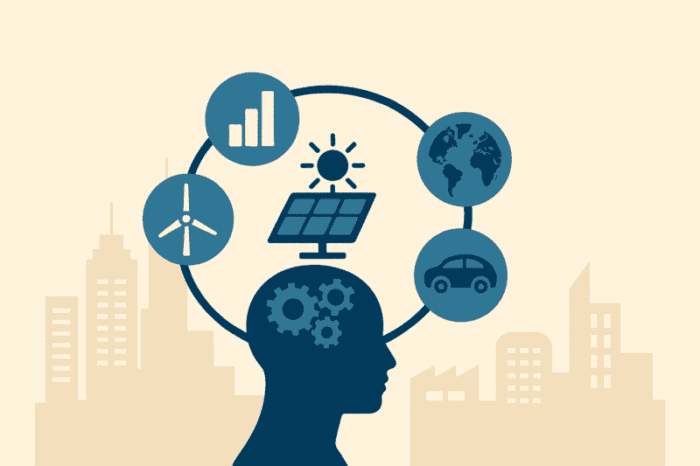
In today’s rapidly evolving world where technology has become the operating force for most day-to-day activities, no doubt that emerging economies stand at a critical crossroads as technological innovation offers unprecedented opportunities for growth and development. However, these developing economies are often faced with deeply rooted challenges such as infrastructural deficits, fragmented governance, socio-economic disparities, environmental vulnerabilities and many more. To address these issues, more is required than applying an isolated intervention approach, rather a holistic and integrated approach that will see beyond specifics becomes more effective and this is where systems thinking becomes not just relevant, but essential.
What is Systems Thinking?
Systems thinking can simply be described as a problem-solving framework that emphasizes the interconnections between various components of a system. For example, a restaurant realized that sales are dropping and this tends to affect the operations of the restaurant, instead of just moving from one advert agency to another or paying huge fees for digital marketing, the restaurant management decide to holistically review the entire operations such as staff professionalism in attending to customers, menu list with respect to the cultural and religious background of where their restaurants are located, payment process, order process, delivery process and more. By applying the systems thinking approach, the management would be able to bring together all inter-connecting factors that could affect their sales and create an enhanced system; where based on location, cultural and religious background, customers are provided with the menus that suite them. In addition, the system can use feedback tools from customers and tailor them into specific trainings for their staff. Also, customers can carry out self-service activities, which will help improve payment, order and delivery processes, amongst others. Unlike linear thinking, which isolate problems and address them in silos, it can be deduced that if the management adopts the use of linear approach, their sales issues may remain unresolved. Nonetheless, reviewing the entire system in-line with systems thinking approach will help the management recognize that issues are often symptoms of deeper or systemic causes. No doubt, systems thinking approach encourages us to look at the whole picture of a situation or system, understand how policies, behaviours, technologies, and environments interact over time and give an efficient result.
To this end, systems thinking is an approach that is particularly valuable in emerging economies, where challenges are rarely singular but interconnected. For instance, improving access to healthcare does not only involve building clinics, healthcare centres or employing additional Nurses and Doctors, instead it involves improving transportation e.g. adequate ambulances, providing an enabling environment for continuous education to ensure that healthcare workers are kept abreast of new medical discoveries, methods and techniques, promoting cultural beliefs among all parties such that consultation service can be rendered to patient in line with their beliefs, improving supply chains such as the process at which medicines are administered to patients, and most importantly, enhancing digital infrastructure that is responsible for bringing all the aforementioned into an efficient and effective process that can then be called a system. Hence, systems thinking approach helps emerging economies identify and hinge on points or areas where small and strategic interventions can lead to significant and sustainable change that help grow and develop such economies.
Does Systems Thinking Matter in Emerging Economies?
Due to the numerous challenges faced by emerging economies stemming from historical, political, economic, and social factors, the ecosystem of these economies has become very complicated, and it has further influenced their development trajectory negatively, to the extent that traditional development models often fail because interdependencies are not properly considered. By applying the systems thinking framework, complexities and complicated challenges can be safely navigated, thereby resulting into design solutions that are resilient, inclusive, and context-aware that will certainly stand test of time.
Citing the introduction of National Identification Number (NIN) in Nigeria and the continuous implementation and enhancement from previous years till date, the success was not just based on the fact that citizens were able to register, got their NIN card and gave the government a view of each citizen’s data, rather the success lies more on how system thinking framework was applied in understanding how NIN interconnects with the country’s financial systems, communication sector, immigration as well as law and enforcement sectors. Not having NIN operate in silos but interconnecting it with various systems and sectors within the country has had more positive impacts than negative such as combating crimes and many more. The recorded success was not just technological but a systemic success, rooted in a deep understanding of user behaviour, regulatory environments, and infrastructure limitations.
How Can Sustainable Solutions Be Built Using Systems Thinking Framework?
Building a sustainable solution is everyone’s priority, be it emerging or developed economies. However, to achieve the required sustainability especially in sectors like health, education, agriculture, and finance, then a structured approach to systems thinking is essential. The underlisted highlights a practical systems thinking framework that can be adopted and applied to technology development in emerging economies:
1. System Mapping:
In building a sustainable solution, it is very important to understand necessary processes that are required of the system in-view and this can be achieved by conducting system map. To achieve this, it is best to start by identifying all relevant stakeholders, processes, and feedback loops of the system. Consequently, visualization modelling techniques such as Causal Loop Diagrams (CLDs) or Systemigrams can be adopted and tools such Kumu, Lucidchart, Microsoft Visio etc. can help visualize how different elements interact and influence one another. The outcome of the visualization helps identify bottlenecks and opportunities for synergy.
2. Identification of Leverage Points & Areas:
It worth to acknowledge that not all parts or features of a system in its entirety are significant or influential aspect of building a sustainable solution or system. Hence, identifying and leveraging on the influential points or areas where a small change can lead to significant improvements helps in efficiently allocating resources, which further results into maximized impact and output.
3. Feedback and Adaptation:
It is essential to note that in designing sustainable systems or solutions, embedding feedback mechanisms should be made a top priority as this allows continuous monitoring, evaluation and iteration. To this end, it makes the system to be more dynamic, capable of learning and evolving.
4. Cross Sector Collaboration & Interoperability:
Fostering cross sector collaboration is another key aspect of systems thinking framework because challenges cannot be solved in isolation to achieve sustainable systems or solutions. Different and required sectors such as governments, private organisations, non-governmental organisations (NGOs), and local communities should always collaborate to co-create systems or solutions that are both technically sound, socially and morally acceptable.
What Are The Technologies That Enable Systems Thinking?
Various technologies both emerging and established ones have been identified to be well suited to support systems thinking and these technologies do not only enable better data collection and analysis but also foster collaboration and transparency to ensure an effective system. Some of the technologies include but not limited to the underlisted.
1. Digital Platforms:
Platforms like fixmystreet developed in the United Kingdon (UK) collects and aggregate reports regarding local problems such as urgent need to fix bad roads, flooded roads or even obstructed car parks. Platforms like this not only provide opportunities for solutions but it also empowers communities to participate in identifying challenges, problem-solving and creating a feedback rich environment.
2. Internet of Things (IoT):
This is another technology that has provided answer to various needs such as monitoring of environmental conditions, infrastructure’s health, public utilities and other day to day human activities. For example, traffic cameras used in most countries have helped enhanced the means of tracking vehicles with expired permits or vehicles that are not worthy to be on the roads. This has in-turn help to ascertain safe roads and revenue generation to various economies.
3. Artificial Intelligence (AI):
The paradigm shift towards the use of AI in our world of today has gained a significant momentum, a very good example is the use of AI to analyse very complex datasets to uncover hidden patterns and make informed decisions such as models developed for automated border control, which uses facial recognition and lie detectors to analyse travellers’ data at board control point. Certainly, the use of AI has positively enabled systems thinking.
4. Geospatial Technologies:
This is another key technology that enables systems thinking and with the use of Geography Information System (GIS), it has enhanced sectors like urban planning and infrastructure sector to design transportation networks and monitor infrastructure development, environment management sector for tracking deforestation and managing natural resources like wildlife habitats, public health sector such as tracking disease outbreak and planning healthcare location, agricultural sector for precision farming and many more.
5. Blockchain Technology:
This technology helps to enhance and promote institutional trust with respect to its transparency and tamper-proof characteristics. It enables systems thinking as it can be used by emerging economies to drive improvement across different sectors such as healthcare for securing medical records, immigration and citizenships for verifiable identity management, electoral commission for tamper-proof voting system, financial sector for fraud prevention and fast cross-border transactions.
What Are The Challenges of Systems Thinking?
In contrast to the advantages of applying the systems thinking approach to sustainable solutions, implementing systems thinking comes with hurdles. In most emerging economies, hurdles such as data incompleteness, data scarcity, institution and sector silos, poor interoperability, inadequate technical expertise and capacity, cultural differences and vague policies are some of the challenges that deters the success of systems thinking approach. However, by emerging economies engaging in more interoperability process by leveraging on secured open data source and platforms, investing in local capacity building to acquire adequate skills and supporting indigenous innovations, promoting sector collaborations, ensuring inclusive design practices and policies, then these will set the right path to successfully implementing and applying system thinking approach in such economies.
In conclusion, systems thinking is more than rules, regulations or methodologies that must be followed, rather it is a mindset that must be exhibited. With the right mindset, emerging economies is sure to move past quick fixes or tactical solutions and lean more towards a strategic, scalable, sustainable, secure, inclusive and interoperable solutions. Finally, it worth to always note that systems thinking is not just a tool for development but also a pathway to resilience and determined progress across all emerging economies.


Africa’s Crisis of Military Coups and Insecurity -By Safiya Zakari Muhammad
The erosion of democracy has also weakened regional and international security cooperation. In some cases, juntas have expelled traditional partners...


Governor Uba Sani’s Resolute Commitment On Rural Development -By Abdulrashid Sani Gimi
In the long run, the 2026 fiscal strategy transcends conventional budgetary practice. With a total outlay of ₦985.9 billion, a...


Lack of Financial Support Holding Back Russia’s Economic Influence in Africa: A Case Study of Missed Opportunities in Nigeria -By Kestér Kenn Klomegâh
As Africa's largest economy, Nigeria cannot afford another decade of promises without projects. The future of its development lies with...


The Impact Of Social Media On Youth Mental Health -By Jemimah Hezekiah
Governments and tech companies also have a role to play. Enforcing anti-cyberbullying policies, offering digital literacy programs, and providing mental...

Every Night We Pray to Survive: Voices from Insecure Communities -By Rinret istifanus
As the nation debates policies and strategies, these voices remind us that insecurity is not just a headline it is...