
National Issues
Taxation in Nigeria and a Question of Trust -By Ike Willie-Nwobu
As Nigerians struggled to comprehend the proposed laws, there were accusations and counter-accusations about what the laws were meant to achieve. In the end, however, after wider consultations, the laws were passed, effectively changing Nigeria’s tax landscape. The laws that came into effect on January 1, 2026, promise to transform the fortunes of Nigeria’s taxation with the understated effects of transforming the lives of Nigerians. But the whispers and outright whiplash that continue to greet the laws tell a familiar and potentially portentous parable.


Nigerians hardly know figures but are also hardly confounded by them. In a country where basic literacy figures continue to take a steep slide, many Nigerians struggle with basic arithmetic. Asking them to have important data at their fingertips is often a step too far into the unknown, even when no consideration is paid to that Nigeria’s huge data gaps.
The fact that Nigerians struggle with many things is reflected in a unique relationship with insecurity, poverty, corruption, civic responsibility, and government failure. In many ways, this struggle also reflects in their unique relationship with tax.
Nigeria’s dwindling education fortunes mean that many Nigerians don’t even understand taxation and aren’t equipped with the basic knowledge to understand an arcane subject that usually mesmerizes even astute professionals.
Sometime last year, the federal government, with the National Assembly pushed through the passage of highly controversial tax laws. The laws led by the Nigeria Tax Act 2025(NTA) which aimed at reforming Nigeria’s tax architecture, broadening the tax base, achieving tax inclusivity, and laying the groundwork for extensive economic development through robust taxation, were immediately met with resistance and recriminations.
As Nigerians struggled to comprehend the proposed laws, there were accusations and counter-accusations about what the laws were meant to achieve. In the end, however, after wider consultations, the laws were passed, effectively changing Nigeria’s tax landscape. The laws that came into effect on January 1, 2026, promise to transform the fortunes of Nigeria’s taxation with the understated effects of transforming the lives of Nigerians. But the whispers and outright whiplash that continue to greet the laws tell a familiar and potentially portentous parable.
Simply put, Nigerians are no tax enthusiasts. As with the ingrained condition that shapes their approach towards many other issues, Nigerians need convincing and even compulsion when it comes to paying their taxes. To be clear, this is not a compliance problem as much as it is a conviction conundrum. Nigerians simply do not trust that the taxes they pay will be deployed for their benefits. More tellingly, Nigerians do not trust the government that collects the taxes.
Decades of systemic corruption have laid waste to any trust Nigerians have in those who collect and account for their taxes. It is a commonly held view among many Nigerians that whatever money they remit to the government by way of taxes has a way of ending up in private pockets. Whether this view is right or wrong is not significant as much as its effect on how people perceive the government.
In a country where infrastructure has suffered years of neglect, with security and the economy taking equally jarring hits, it is difficult to make sense of Nigeria’s crippling underdevelopment and grinding poverty in light of the vast amount of resources that have accrued to successive governments.
Many Nigerians perceive the government to be corrupt, incompetent, and inefficient. Worse still, they do not see the government as capable of transforming their fortunes.
When those who occupy Nigeria’s corridors of power sit to devise means of dealing with the mass murmur of discontent concerning the new tax laws, they should also target improving the image of the government according to Nigerians. Efficiency can go a long way in achieving this.
Ike Willie-Nwobu,
Ikewilly9@gmail.com



Museveni’s Uganda: Family Company Limited -By Isaac Asabor
Museveni will not be remembered for the ideals he once espoused. He will be judged by how long he clung...
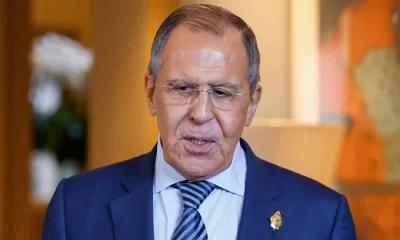

Africa Experiencing New Stage of Reawakening -By Kestér Kenn Klomegâh
The Russia-Africa summits earlier took place in Sochi (October 2019) and St. Petersburg (July 2023). Russia and Africa are currently...


The New York Times Misses the Forest for the Trees in Nigeria -By Nnamdi Prince
If the Times is so concerned about accurate data, perhaps it should direct its considerable resources toward independently investigating and...


The Pragmatism of Principle: Redefining Loyalty in an Age of Change -By Florence Ozor
While I do not endorse political nomadism, one must acknowledge that strategic realignment can be expedient. Take Peter Obi: after...


Lessons for Today: MLK for Continental African Leadership – A Psychoafricalytic Mirror for Power, Dignity, and Continental Renewal -By Psychologist John Egbeazien Oshodi
When African leaders abandon indigenous wisdom, they often adopt the colonial logic of control. Citizens become subjects. Protest becomes treason....