
Political Issues
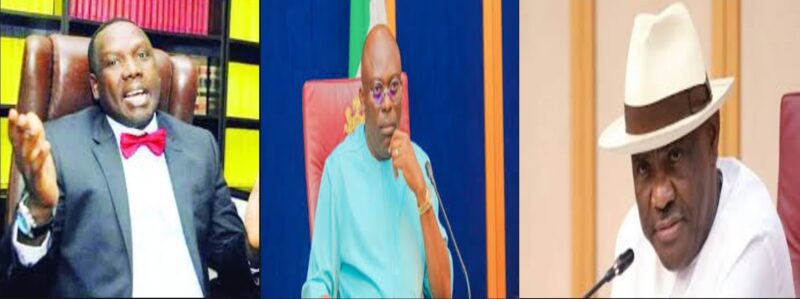
The 1975 Brotherhood: Why Daniel Bwala The Senior Brother Had To Speak For Siminalayi Fubara Against Nyesom Wike The Godfather -By Psychologist John Egbeazien Oshodi
Let me be clear. Daniel Bwala and Governor Fubara are not blood brothers. They are not from the same home. They are not from the same region. Daniel Bwala is from the North, and Governor Fubara is from the South South. They did not grow up eating from the same pot. But in Nigeria, there is a brotherhood that comes from shared burden. Shared maturity. Shared understanding. Shared age. Shared pain.

There are moments in a struggling democracy when politics stops sounding like politics. It begins to sound like pain. It begins to sound like humiliation. It begins to sound like a nation whispering to itself, how did we get here.
January 22, 2026, was one of those moments.
Because what happened in Rivers State did not only injure one Governor. It touched the emotions of millions. It opened a wound that Nigerians have carried for too long, the wound of watching elected power become a toy in the hands of unelected ego, the wound of watching institutions tremble while one man speaks as if the constitution is a suggestion.
This was not merely a power struggle. It was a dignity struggle.
It was the sorrowful spectacle of an elected Governor, Sir Siminalayi Fubara, being treated as though he was hired, not elected. Being spoken to as though he was a boy, not a 50 year old man. Being addressed as though he was a mistake, not a living symbol of Rivers people’s vote.
And when that happens in any democracy, the people start crying inside.
Because it is not the Governor alone that is insulted. The people are insulted. Their ballot is insulted. Their identity is insulted. Their right to choose is insulted.
This is why Rivers became personal.
This is why Rivers became sentimental.
This is why Rivers became tearful.
Because Nigeria is not just watching a Governor being targeted. Nigeria is watching the meaning of citizenship being battered in public.
Not Blood Brothers, But a Brotherhood of the Same January
Let me be clear. Daniel Bwala and Governor Fubara are not blood brothers. They are not from the same home. They are not from the same region. Daniel Bwala is from the North, and Governor Fubara is from the South South. They did not grow up eating from the same pot.
But in Nigeria, there is a brotherhood that comes from shared burden. Shared maturity. Shared understanding. Shared age. Shared pain.
Sometimes brotherhood is not in blood. Sometimes it is in dignity.
Both men were born in January 1975. Bwala was born on the first day of that year. Governor Fubara was born on the 28th. Twenty seven days apart, yet placed by history inside the same generational womb.
And that is why Bwala’s voice this week carried a weight beyond party clarification.
It sounded like recognition.
It sounded like a man saying, I know what it means to be fifty, to be a husband, to be a father, to carry the heavy crown of responsibility, and still be treated like a schoolboy in public.
It sounded like a Senior Brother stepping in, not because he is related by blood, but because he is related by human dignity.
Because it is painful when grown men are degraded for sport.
It is painful when leadership becomes humiliation.
It is painful when power becomes bullying.
And that pain is what Rivers has been living with.
Rivers State: The Place Where a Governor Was Made to Feel Small
For days, Nigerians watched what can only be described as a public campaign of intimidation. Nyesom Ezenwo Wike, the Minister of the Federal Capital Territory, moved across Rivers State like a travelling storm, reportedly going from one local government to another, filling the atmosphere with dominance.
It was not governance. It was conquest.
And in that period, the insults did not just fly. They landed. They sat. They stayed. They shaped the air.
“Boy.”
“Mistake.”
Those words are not ordinary in a fragile democracy. Those words do not end when the microphone shuts off. Those words enter homes. Those words enter families. Those words enter wives and children.
Because when a Governor is called “boy,” what is his wife supposed to feel. When a Governor is called “boy,” what is his child supposed to think. When a Governor is called “boy,” what do the people who elected him become.
They become helpless spectators.
They become people whose votes can be mocked.
They become citizens who are taught that their choice is weaker than one man’s tongue.
That is not democracy.
That is emotional slavery disguised as politics.
And Nigeria saw it.
Nigeria felt it.
Nigeria swallowed it like bitter water.
The Breaking Point at Glory Reign: When a Full Soul Finally Speaks
Then something happened.
Not in a courtroom.
Not in a legislative chamber.
Not in a party office.
Something happened in a place of worship.
At Salvation Ministries during the Glory Reign 2026 service, Governor Fubara stood before thousands, not as a man performing confidence, but as a man fighting to preserve his inner life. His tone carried what many Nigerians recognized immediately, the tired tone of someone who has endured too much and is now standing at the edge of his own patience.
He spoke of hell.
Not the dramatic hell of exaggeration, but the real hell of being trapped inside a political cage while still expected to govern. The hell of the 17 day local government games. The hell of the chaotic suspension of 2025. The hell of impeachment love letters that arrive not as constitutional correction, but as threats.
And then he reached for a metaphor so intimate, so parental, so emotionally Nigerian, that it broke the hearts of people listening.
He spoke of a child being force fed a bottle.
“A time comes,” he said, “when even a child is full… and must push the bottle away.”
That sentence did not feel like speech.
It felt like tears.
It felt like a confession.
It felt like a man revealing that he has been full for a long time, but only now has he gathered the courage to push back.
Because forced feeding is not care.
Forced feeding is control.
Forced feeding is domination pretending to be guidance.
Forced feeding is what godfathers do when they want to keep a man dependent, submissive, and small.
But that day, the bottle moved.
And Nigerians heard something deeper than politics.
They heard a human being fighting for dignity.
Tinubu Returned: The Centre Came Back, and the Room Turned Serious
President Bola Ahmed Tinubu had been away for about 20 days. And during that time, Wike’s confidence appeared to grow teeth. The centre looked quiet, and a certain arrogance expanded like a shadow.
It looked like Wike believed the President would not speak.
It looked like Wike believed that because of 2023, because of Rivers, because of the political calculations and victories secured by all means, the Presidency would remain silent while Rivers burned emotionally.
It looked like one man began to behave like he owned Nigeria.
But then Tinubu returned.
And Nigerians felt something shift, even before words were spoken.
Because in Nigeria, the return of the President is not only the return of a person. It is the return of authority. It is the return of consequences. It is the return of the centre of gravity.
It is hard to believe that Tinubu returned and did not meet with his advisers.
It is hard to believe that they did not sit down, look at the humiliation, look at the tension, look at the attempted capture of institutions, and reach a national conclusion:
This is too much.
This is dangerous.
This is no longer politics.
This is intimidation.
This is a threat to democracy itself.
And then, in that meeting, one can almost hear the instruction that would naturally follow, urgent and direct.
Daniel, you are the tough one.
Go out there.
Say it.
Say it clearly.
Stop this nonsense.
Because sometimes a democracy needs toughness, not to oppress people, but to protect the oppressed.
Sometimes a democracy needs a voice that is not afraid of a loud man.
Sometimes a democracy needs a Senior Brother.
Bwala Spoke: And It Sounded Like Rescue
On Channels Television’s Hard Copy, on Thursday, January 22, 2026, Daniel Bwala stepped forward.
And when he spoke, he did not speak like someone negotiating with ego. He spoke like someone drawing a boundary around the country’s dignity.
He did not whisper.
He did not decorate.
He did not dance around names.
He said it plainly:
“I agree with the point highlighted by the National Chairman that in Rivers State, Governor Fubara is the leader of the APC. Wike is not a member of the APC, so he cannot speak for the party.”
Those words sounded like a crown being lifted off the wrong head.
Those words sounded like a door being shut against illegal entitlement.
Those words sounded like the Presidency telling Nigeria: structure still exists. Procedure still exists. No man’s loudness can override order.
But Bwala did not stop at party structure.
He went into the emotional engine behind the arrogance.
He touched the place where godfather politics hides its power, the hidden invoice, the idea that political assistance becomes permanent ownership.
And then he spoke the sentence that broke the spell:
Wike has been “adequately compensated.”
In Nigerian politics, that sentence is not ordinary. It is explosive.
Because it destroys the chain of gratitude.
It destroys the culture of eternal debt.
It destroys the arrogance that says, I helped you once, so I own you forever.
It was Bwala saying: the account is closed.
And then came the line that sounded like the centre finally raising its voice against a bully:
“The President believes in compensating people, but not at the expense of the interests of Nigeria. Once you cross the line, you will know.”
Not at the expense of Nigeria.
That line was not just warning.
That line was healing.
That line was rescue.
That line was a struggling democracy wiping tears and saying: enough.
The Bottle Was Pushed Away: A New Dawn of Dignity
This is why January 22, 2026 will remain emotional in public memory.
Because the centre finally spoke.
Because the Presidency finally drew a line.
Because a Senior Brother finally stepped into the humiliation and said: stop it.
This was not about perfect leadership.
This was about basic dignity.
This was about reminding Nigeria that a Governor is not a boy.
This was about reminding Rivers people that their vote is not a joke.
This was about reminding godfathers that they cannot own Nigeria.
And let it be said, with the full weight of national exhaustion, Nyesom Ezenwo Wike has attacked and abused almost everyone. He has attacked governors, elders, party leaders, and even those he claims to work with. He has carried himself like a man who believes intimidation is authority. He has spoken in ways that insult not only individuals but institutions, and at times he has even indirectly provoked the Presidency itself, as though the centre of power is too afraid to answer him.
But now, let him try it again.
Let him try it now on this Senior Brother.
Let him raise his voice against Daniel Bwala the way he has raised it against others. Let him talk down on the Presidency again, the way he has done before. Let him test this boundary that has finally been drawn, and let him see what happens to that ministerial job he holds so tightly.
Because Nigeria is watching.
And Wike himself knows something Nigerians know too. He knows that power is not only about microphones and motorcades. Power is also about records. Files. Quiet reports. Dark financial trails that do not vanish because a man is loud. He knows there are people who understand where the bodies of financial secrets are buried. He knows there are agencies that do not argue on television, they investigate in silence. He knows the state is not helpless. He knows that once the centre decides enough is enough, it does not need to fight him in the streets. It can simply instruct the right institutions to do their work quietly, thoroughly, and lawfully.
And that is the difference between noise and consequence.
So if he thinks he is impulsive, if he thinks he can continue to bully everyone, if he thinks he can keep pushing and pushing until Rivers collapses completely, then let him test it now. Let him attempt to humiliate the Presidency again and see how quickly the atmosphere changes.
Because the warning has already been spoken.
Once you cross the line, you will know.
And the knowing will not be emotional only.
It will be legal.
It will be institutional.
It will be the kind of accountability that finally tells every godfather in Nigeria that public power is not personal property.
And that is why this moment feels like rescue.
Because for once, the bottle was pushed away.
And the nation breathed.
About the Author
Prof. John Egbeazien Oshodi is an American psychologist, an expert in policing and corrections, and an educator with expertise in forensic, legal, clinical, and cross-cultural psychology, including public ethical policy. A native of Uromi, Edo State, Nigeria, and son of a 37-year veteran of the Nigeria Police Force, he has long worked at the intersection of psychology, justice, and governance. In 2011, he helped introduce advanced forensic psychology to Nigeria through the National Universities Commission and Nasarawa State University, where he served as Associate Professor of Psychology.
He teaches in the Doctorate in Clinical and School Psychology at Nova Southeastern University; the Doctorate Clinical Psychology, BS Psychology, and BS Tempo Criminal Justice programs at Walden University; and lectures virtually in Management and Leadership Studies at Weldios University and ISCOM University. He is also the President and Chief Psychologist at the Oshodi Foundation, Center for Psychological and Forensic Services, United States.
Prof. Oshodi is a Black Republican in the United States but belongs to no political party in Nigeria—his work is guided solely by justice, good governance, democracy, and Africa’s development. He is the founder of Psychoafricalysis (Psychoafricalytic Psychology), a culturally grounded framework that integrates African sociocultural realities, historical awareness, and future-oriented identity. He has authored more than 500 articles, multiple books, and numerous peer-reviewed works on Africentric psychology, higher education reform, forensic and correctional psychology, African democracy, and decolonized models of clinical and community engagement.



Nigerians Are Always Happy -By Prince Charles Dickson PhD
Living in Nigeria is like being in a relationship with someone who loves you in theory but forgets you in...

Museveni’s Uganda: Family Company Limited -By Isaac Asabor
Museveni will not be remembered for the ideals he once espoused. He will be judged by how long he clung...

Africa Experiencing New Stage of Reawakening -By Kestér Kenn Klomegâh
The Russia-Africa summits earlier took place in Sochi (October 2019) and St. Petersburg (July 2023). Russia and Africa are currently...


The New York Times Misses the Forest for the Trees in Nigeria -By Nnamdi Prince
If the Times is so concerned about accurate data, perhaps it should direct its considerable resources toward independently investigating and...

The Pragmatism of Principle: Redefining Loyalty in an Age of Change -By Florence Ozor
While I do not endorse political nomadism, one must acknowledge that strategic realignment can be expedient. Take Peter Obi: after...