
Global Issues
The Fall Of The Assad Regime: An End Of An Era And A Stark Reminder That No Condition Is Permanent -By Isaac Asabor
The road ahead will be long and fraught with challenges. Rebuilding a nation torn apart by war and authoritarianism requires more than just the removal of a dictator; it demands a commitment to justice, inclusivity, and reconciliation. However, the very fact that the Assad regime, once thought indomitable, has fallen is proof that change is possible, even in the direst of circumstances.


The recent declaration by the Syrian army marking the collapse of the Assad regime is both a seismic shift in the geopolitical landscape of the Middle East and a somber reflection on the transient nature of power. For over five decades, the Assad family has been synonymous with authority in Syria, dominating the nation through a complex mix of military might, political acumen, and often, ruthless repression. The announcement signals the end of an era that seemed unassailable for decades but now serves as a stark reminder that, indeed, no condition is permanent.
The Assad dynasty began with Hafez al-Assad in 1971, whose rise to power marked the start of a tightly controlled autocratic rule. Over the decades, Hafez fortified his position through strategic alliances, suppression of dissent, and the establishment of a cult of personality. When Bashar al-Assad succeeded his father in 2000, the world anticipated a wave of modernization and reform. However, these hopes were quickly dashed as Bashar not only maintained the status quo but deepened the state’s oppressive grip.
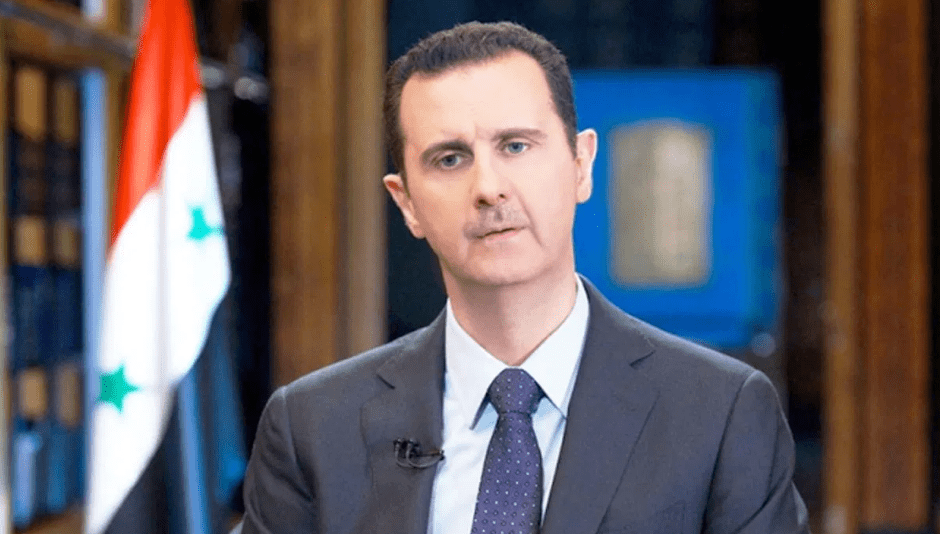
Bashar Al Assad
The Assad regime has long been characterized by its reliance on an extensive intelligence apparatus, a fiercely loyal military, and a readiness to suppress opposition through any means necessary. For years, this combination made the regime appear invincible, cementing its dominance over a fragmented and often fearful populace.
The fall of the Assad regime, while dramatic, is not entirely surprising when viewed in the context of recent history. The Arab Spring of 2011 was the first major crack in the regime’s facade. What began as peaceful protests calling for political reform quickly escalated into a brutal civil war. Despite initial setbacks, the Assad government managed to cling to power through the backing of powerful allies such as Russia and Iran, combined with the fragmentation of opposition forces.
However, the very factors that initially helped the regime survive the civil war eventually sowed the seeds of its undoing. Economic collapse, international isolation, and an ever-widening chasm between the regime and its people created conditions that no amount of military might could resolve. The announcement by the Syrian army underscores this reality: even the most entrenched power structures cannot endure indefinitely when they lack the support of the people and the means to sustain themselves.
The fall of the Assad regime is a potent illustration of the axiom, “No condition is permanent.” History is replete with examples of seemingly unshakable empires and regimes that ultimately succumbed to the forces of change, whether through internal decay, external pressure, or a combination of both. From the Roman Empire to the Soviet Union, history reminds us that even the mightiest of rulers and systems are subject to the relentless tides of time.
For Syrians, the end of the Assad era is both a moment of catharsis and uncertainty. While the regime’s fall offers hope for a future free of autocratic oppression, it also raises pressing questions about what comes next. Can Syria emerge from the ashes of war and dictatorship as a unified and democratic state? Or will the power vacuum lead to further fragmentation and conflict?

Russian President Vladimir Putin delivers his annual address to the Federal Assembly at the Manezh Central Exhibition Hall in Moscow, Russia, 21 April 2021. About 1,100 people including lawmakers of Russian two-chamber parliament, Government members, heads of the Constitutional and Supreme courts, and regional governors, were invited to attend the event. About 435 Russian and foreign journalists were accredited to cover the event. EPA-EFE/MAXIM SHIPENKOV
The international community played a complex role in the trajectory of the Assad regime. While some nations actively supported opposition forces, others opted for neutrality or even bolstered the regime through military and economic aid. The regime’s fall presents an opportunity for the global community to engage more constructively with Syria’s future.
Humanitarian aid, reconstruction efforts, and diplomatic support will be essential in helping Syria rebuild. However, these efforts must prioritize the voices and needs of ordinary Syrians, ensuring that the mistakes of the past are not repeated. A failure to do so risks perpetuating the cycles of violence and instability that have plagued the region for decades.
The fall of the Assad regime also carries implications for other authoritarian governments around the world. It serves as a cautionary tale that no amount of repression, propaganda, or external support can guarantee permanence. Leaders who prioritize their grip on power over the well-being of their citizens should take note: regimes that fail to adapt to the changing aspirations of their people are ultimately doomed to collapse.
For millions of Syrians, the end of the Assad era is a bittersweet moment. The devastation wrought by years of war, displacement, and repression cannot be undone overnight. Yet, there is hope that this marks the beginning of a new chapter, one in which the people of Syria can reclaim their agency and chart a course toward peace and prosperity.
The road ahead will be long and fraught with challenges. Rebuilding a nation torn apart by war and authoritarianism requires more than just the removal of a dictator; it demands a commitment to justice, inclusivity, and reconciliation. However, the very fact that the Assad regime, once thought indomitable, has fallen is proof that change is possible, even in the direst of circumstances.
The fall of the Assad regime is a watershed moment in modern history, not only for Syria but for the world at large. It is a testament to the resilience of the human spirit and a reminder of the impermanence of power. As the dust settles, the task of rebuilding lies ahead, a monumental challenge that will require the collective efforts of Syrians and the international community.
Ultimately, this moment serves as both a warning and an inspiration. It warns those who wield power irresponsibly that their time will inevitably come. Yet, it also inspires those who yearn for freedom, justice, and dignity to persist in their struggle, for history has shown that no condition is permanent, and change, no matter how improbable, is always within reach.



When Nations Break Their Reformers: Why EFCC Cannot Carry Nigeria’s Burden Alone — And Why Power Must Fear God -By Prof. John Egbeazien Oshodi
Public frustration with the EFCC over perceived selective enforcement is understandable. Nigerians see some arrests carried out suddenly and forcefully,...


Poor, Poor, Maduro -By IfeanyiChukwu Afuba
Little wonder his ouster elicited celebrations. The ease of his capture is telling. There is only one explanation for the...


Why African Leaders Must Fix Governance Before Crying Sovereignty -By Isaac Asabor
One of the great contradictions of African leadership today is selective morality. Leaders speak passionately about international law while violating...


Baba Has Entered The Classroom -By Isaac Asabor
If what Trump is doing is walking into a noisy global classroom and insisting on discipline, then let us be...


As Trump Exposes Why Tinubu Must Go Sooner -By SKC Ogbonnia
The Nigerian president is not only culpable of heinous crimes, but he is also weakened beyond redemption. His continued stay...