
National Issues
The Impact Of Inter-party Crises On Democracy In Nigeria -By Lukuman Tajuddeen
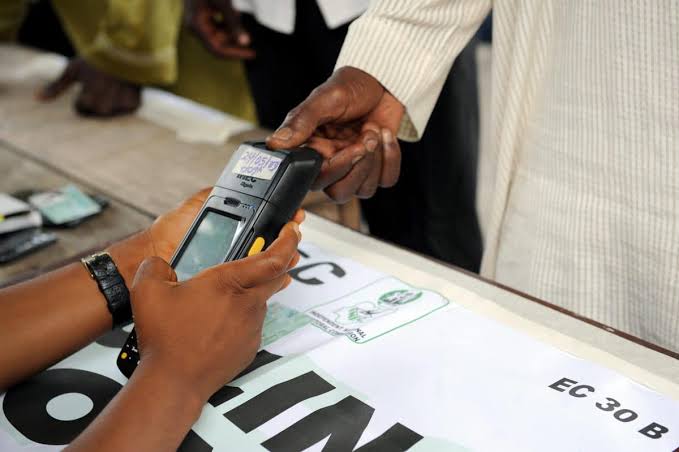
Political parties in Nigeria are basically characterized by certain salient features that undermine the primary functions and performance of an ideal party structure such as the over bearing dominance of personalities, regional inclinations and intense competition via party rivalry. As defined by Abraham Lincoln, democracy is the government of the people by people and for the people. This is to say it is for all and we must embrace it and it is our collective responsibilities to make its principles become reality, established and desirable, in order for us to stand the chance to benefit from its dividend.

ABSTRACT
The research addresses the phenomena inter party conflict by investigating the causes and analyzing the impact of inter -city crises on democracy in Nigeria. Secondary sources of data was used in gathering of information, so textbooks and journals, formed necessary source of information, Content analysis is used (qualitative method of data analysis) for data analysis while elite theory was used for analytical framework. The research identifies ethnicity, political party orientation, political intolerance and poor party ideology as the major factors responsible for inter party crises in our political dispensation. It concludes that it is important for each member of the society to engage in voter education, encourage participation in the electoral process and peaceful acceptance of the result. The research recommends among others that the parties need to ensure internal democracy in their organization, structure and workings, the electoral commission should be free from external control, there is need for the government to collaborate with non-governmental organizations in order to ensure a transparent and peaceful conduct of the elections.
TABLE OF CONTENTS
Abstract…………………………………………………………..……………….
CHAPTER ONE
BACKGROUND OF THE STUDY
Introduction………………………………..………………….…….1
Statement of the problem…………..….……………….……………………….3
Objectives of the study……………………..……………………………….…4
Significance of the study……………………..………………………….……4
Scope Limitation of the study ………………..….………………………….….5
Organization of the study……………. ………………………………………….5
CHAPTER TWO
LITIRETURE REVIEW AND THEORETICAL FRAMEWORK
2.0 Introduction ……………… ………………………………..……………..7
2.1 The concept of Political Parties…… …………………………………………7
2.2 The concept of Democracy………….….………………………………………8
2.3 Democratic consolidation.………..……………………………………………10
2.4 The concept of Conflict…….………….…………………………..………..12
2.5 Inter-party conflict in Nigeria……………………………………………….13
2.6 Inter-party conflict and democratic consolidation in Nigeria…………….…15
2.7 Theoretical framework ……………………………………….…………….16
2.7.1 Elite theory…………………………………..……………..……………….17
2.7.2 Criticisms of the Elite theory…………….………… …………………….18
2.8 Relevance of the elite theory………………………………………………….20
CHAPTER THREE
RESEARCH METHODOLOGY
3.1 Sources of data collection.………………………………………….………..21
3.2 Method of data analysis……………………………………….…………….21
3.3 Geographical location……………………………………………..……………21
3.4 An overview of the Nigerian Political Parties..………………………………..22
3.4.1 Pre independent Nigeria/First republic 1922-1966………………………..22
3.4.2 Political parties in the Second republic 1979-1983…………….…………23
3.4.3 Political parties in the aborted third republic ………………………….….24
3.4.4 Political parties in the Nigeria fourth republic 1999-date………………….24
3.5 Background to the inter-party conflict in Nigeria………………………..…25
CHAPTER FOUR
DATA ANALYSIS
4.0 Introduction …………………………………………………………….….26
4.1 Causes of inter-party conflicts in Nigeria …….……………………..………26
4.1.1 Ethnicity…………………………………………………………………………………27
4.1.2 Monetization, political party orientation and sit-tight syndrome ………….27
4.1.3 Political intolerance..…………………..………………………………….28
4.1.4 Godfatherism ……………………………………………………………….28
4.1.5 Poor party ideology ………………………………………………………29
4.2 Implication of inter-party conflict on democratic consolidation Nigeria……..29
4.3 Measures taken to tackle inter-party conflict in Nigeria…………………….32
4.3.1 Ad-hoc high level panel……………………………………………………..33
4.3.2 Civil society organization think-tanks..……………………………………………..34
4.3.3 Electoral security………………………………………………………….35
4.3.4 Media coverage and electoral awareness……..……………………………36
4.4 Major findings……………………………………….…………..………….37
CHAPTER FIVE
SUMMARY CONCLUSION AND RECOMMENDATIONS
5.1 Summary……………………………………………………………………….38
5.2 Conclusion……………………………………………………………………..38
5.3 Recommendations…………………………………………………………..39
References and Bibliography……………………………………….……………..41
CHAPTER ONE
BACKGROUND OF THE STUDY
1.1 INTRODUCTION
Political parties are essential components of representative democracy; they are the bedrock and stakeholders of any democratic political process. They articulate interest, craft policy alternatives, recruit and socialize new candidates for office, also self policy making agenda, integrate different groups and individuals in to democratic processes and provide basis for coordinate electoral and legislative activities. Umar and Kura (2004) cited in Abbas (2016:pp 177-178), defined political party as an organized body of people with a clearly or roughly defined policy agenda whose primary aim is to win or retain political power through the aggregation and articulation of the diverse views of a nation’s population for further political programmes and actions. In other words, political parties will mean an organised formal avenue of interest aggregation which gives candidates the political and ideological labels that introduced them to the electorates through setting of policy goals and agenda with the sole intend of capturing or maintaining legal power to control government for a particular period of time (Abbas, 2016:pp 177-178). According to Maiyo (2008), political parties are the lifelines of modern day politics which lie at the heart of democracy, representing the crucial link between what citizens want as political demands and what the government provides as democratic outputs (Cited in Abbas 2016:pp 177-178). According to Mbah (2007; 310) political parties are agent of national integration; parties ought not to be divided despite their claims of protecting or advancing of non party-coalition.
However, On the other hand democracy was originated from the ancient Greece; to the Greeks words “demos” mean the people and “kratien” means government or rule. That is to say democracy is people centre. Anifowose (1999.pg:137) defines democracy “ as a system of government under which the people exercise the governing power either directly or through representatives periodically elected by themselves”. Democracy means the acceptance of the basic equality of men as humans and the basic responsibility of all adult men and women for their own destiny (Ogundiya, (2011) cited in Abbas 2016;p 177). Robert Dahl identified three conditions that must be met before democracy could function efficiently. They include high level of civil liberties, political pluralism which allows and encourages competition among contestants and political participation that allows for free choices through free, fair and credible election.
Democracy in this sense cannot therefore be divorced from such universal principles of popular participation in governance, unrestricted competition in electoral contest, respect for equality and liberty of the citizens which signify the basic tenants of true democracy (Abbas, 2016;p 177).
Therefore, this research will endeavour to establish the relevance of party relation in Nigeria’s democracy as well as the extent to which such relationship are characterized and imported on democracy. In the same vein, it is the intention of this work to correlate tendencies of inter-party relations in Nigeria’s fourth republic haven found with inherent conflict tendencies which in turn incapacitated democratic experience. This is because of the intense rivalry and desperate competition, do or die affair which have been formalized and ultimately results into intolerance, violence and other forms of social vices.
1.2 STATEMENT OF THE PROBLEM
Political party is one of the major tools for aggregating and mobilizing various interests and resources for the purpose of nation building. This is normally the tradition that embraces democracy, expectedly when Nigeria gained independence, people were happy that at least the era of colonialism is gone thereby giving Nigeria the opportunity to freely participate in electoral process, and do things in their own ways (Abbas, 2016,p217).
The political parties constitute the bedrock of any democratic government, but are characterize by conflict in their relations. Since the inception of the present democratic experiment in Nigeria, there have been series of inter-Party conflicts, examples of which include among others; The clashes between PDF and ANPP power struggle in Kwara state during the 2003 election processes involving Dr. Olusola Saraki and the then Governor Muhammed lawal over the control of the state Government after the 1999 election (Simeon, 2014 p:259).In 2011, there have been series of conflicts between the PDP and LP in Ondo state, between ACN and PDP in Oyo state and between PDP and ACN in Ogun state; These political parties wanted to get power at all cost by introducing thuggery into politics (Adebayo, 2016 p:244). The 2019 General elections in Nigeria also recorded many inter-Party conflicts which in many states led to the declaration of the elections inconclusive, Bauchi, Benue, Sokoto, Plateau, Kano and Rivers were particularly affected by violence during the March 9 gubernatorial elections. The Independent National Electoral Commission cancelled elections in places where the elections were disrupted, and led supplementary elections later (Human Rights Watch, 2019).
This research work intend to examine inter party conflicts and its impact on democratic consolidation in Nigeria, using the case study of the major political parties in the Nigeria’s fourth republic.
The study therefore, seeks to answer the following questions;
What are the causes of inter-party conflict between and among Political parties?
How does inter-party conflicts affect smooth implementation of democratic principles in Nigeria?
What are the solutions to the identified problems in democratic consolidation in Nigeria?
1.3 OBJECTIVE OF THE STUDY
The broad objective of this research is to examine the inter-party relations and the prospect of Multi-party democracy in Nigeria: the challenges of the fourth Republic. The specific objectives include the following:
To examine the underline causes of inter-party conflicts in Nigeria
To examine the effect of inter-party conflicts on democratic consolidation in Nigeria
To provide relevant and lasting solution to the curbing inter-Party conflicts among Nigerian political parties.
1.4 SIGNIFICANCE OF THE STUDY
This research work will be relevant, in the sense that it will contribute to the existing knowledge on the phenomenon of inter-party relation in Nigeria and will equally add to the volume of research material available for further work. It is equally useful to political office holders and government especially in the formulation of blueprint for the sustenance of democracy as regard to inter-party conflict. The work also would serve as a source of orientation for the members of the community and in Nigeria to understand the consequences, and the needs to have a conflict-free environment.
1.5 SCOPE/LIMITATION OF THE STUDY
This research work titled inter-party relations and the prospect of Multi-party democracy in Nigeria: The challenges of the fourth Republic. Will cover the period from 1999 to date. The research work will examine events that took place during the aforementioned periods, and due to time and financial constraint the study will be limited to major political parties within this period.
1.6 ORGANIZATION OF CHAPTERS
The research work shall be organize and arrange in five (5) chapters:-
Chapter one: consist of the general introduction/background of the study, statement of the research problem, objectives of the study, research questions, significance of the study, scope/limitations of the study, research methodology and organization of chapters.
Chapter two: covers literature review and theoretical framework.
Chapter three: consist of methodology and the historical background of the study area.
Chapter four: This chapter shall contain analysis of inter-party relation and the prospect of multi-party democracy in Nigeria; the challenges of the fourth republic.
Chapter five: this will include; summary of findings, conclusion and recommendations.
CHAPTER TWO
LITERATURE REVIEW AND THEORETICAL FRAMEWORK
2.0 INTRODUCTION
Literatures on inter-Party relations/conflicts and the prospect of democratic consolidation in Nigeria are very rich indeed, and this was unconnected to the fact that inter-party conflict and it’s effects on democratic consolidation have been and would continue to be the topic of discussion, unless a lasting solution is found, and a conflict free atmosphere is put in place. However this chapter will review existing literatures relevant to the topic.
2.1 THE CONCEPT OF POLITICAL PARTIES
Political parties are one of the necessary ingredients and requirements for a healthy democracy world over. Indeed, they are the machinery in which democracy and democratization thrives successfully. Burke clarifies political parties as an assembly of men of common interest for the purpose of promoting their values across the society through power contest in (Johari, 2012:423). Political parties are seen by classical scholars in the field (Lowell 1913, Schumpeter 1942, Michel 1965, Duverger 1966 and Sartori 1976) (cited in Sule, 2019 p:120) as a fraction of a whole society; a section of the state comprising of individuals sharing similar ideology and principles who seek for political power and control to advance their interest and ideology at national and international levels. The views of the scholars above summarized it all because political parties cannot be far from the composition and purpose mentioned above in any type of democracy. Modern scholars (Appadorai 2004, Kapur 2009 and Johari 2011) too perceived political parties in a similar view with above in which they see parties as a group of ideologically oriented men who pursued power through a legitimate means of democratic principles of election in order to pursue their ideology legitimately and authoritatively in the society.
The views of the liberals differ from that of the Marxist on the nature of parties in the sense that liberalist sees parties as organized bodies for public opinion aggregation and democratic pursuance of power while the Marxist views parties as instruments for securing of power and domination of the ruling class by the bourgeoisie which should be replaced with proletarian parties (Johari, 2011 cited in Sule, 2019 p: 121). Parties played vital roles in democratic state including representation, opposition, recruitment and training of leaders, harmonizing different interests, providing alternative choice framework and social services to the society. From the foregoing, the views of the classical and some modern scholars on the concept of political party corroborate while the Marxist and liberals views the concept from a distinctive ways. Therefore, this research work will add more impetus to the Marxist view which sees parties as the instruments for securing of power and domination of the ruling class by the bourgeoisie which should be replace by the proletariat.
2.2 THE CONCEPT OF DEMOCRACY
The concept of democracy is ambivalent and has multidimensional connotation due to the diversity of its nature. Democracy is a Greek word which means ‘people rule’ or ruled by the people. Democracy in this sense is primarily concerned with who should rule and who should decide who rules. By implication, here Democracy means the acceptance of the basic equality of men as humans and the basic responsibility of all adult men and women for their own destiny(Ogundiya,2011) in Abbas, 2016p:177). Similarly, Schumpeter (1990) cited in Simeon (2014 p:253) sees democracy as an institutional arrangement for arriving at a political decision in which individuals acquire the power to decide to decide by means of a competitive struggle for people vote’s. Therefore it is not surprising that a political system is democratic to the extent in which the collective decision makers are elected through fair, honest and periodic elections based on universal adult suffrage and where candidates freely compete for vote. In the same vein, Anifowose (1999, p:137) Describe Democracy as a system of government under which people exercise the governing power either directly or through representatives periodically elected by themselves. This means that a state may be termed a democratic if it provides institutions for expression and the supremacy of the popular will.
Democracy is a claimed by so many systems, with different forms of government. Democracy is therefore a peculiar process of particular system. Enemuo (1999,p:1380 identified these forms of democracy, which include direct or participating democracy as it was obtained in ancient Greece, Marxist democracy or representative democracy which is a system of rule entertaining and embracing elected officials.
Theoretically, these three variant may contest for supremacy, but practically speaking liberal representative democracy is the most document and more realistic form of democracy. Liberal democracy or representative democracy has emerged as the dominant model of democracy. It’s usually what people mean when they now speak democracy. Direct democracy today is impossible because of the magnitude of population and the complex nature of modern government, while the Marxist model has been extended to the level of impracticability by the collapse of Marxist ideologically oriented state. From the foregoing definitions/views on the concept of democracy a number of gaps can be identified thus; the views of the scholars above fall short of some other elements democracy such as the issues of constitutionally safeguarded rights, independent judiciary, effective electoral and party system, an effective parliament and a participatory local governance which were also a prerequisites for democracy.
2.3 DEMOCRATIC CONSOLIDATION
While democracy is regarded “as a regime in which those who govern are elected by the population through meaningful election” (Przeworski, 2000), democratic consolidation is about deepening, institutionalization of political system as well as regime performance (Abbas,2016 p:219). Daimond (1999) cited in Moses (2015, p: 8) sees democratic consolidation as the process of achieving broad and deep legitimation such that all significant political actors believe that popular rule is better for their society than any other realistic alternative they can imagine.
However, while, democratic consolidation is built over generations, which is a byproduct of many democratic processes, the first transition according to O‟Donnell (1996) in Abbas (2016, p:219) begins with an installation of democratic government after an authoritarian regime while the second transition matters on consolidation where the functioning of such installed democratic regime performs in governance. Every democratic system thus depends on its character, composition, organization and institutionalization of democratic process which in turn causes its consolidation (Omotola, 2009 in Abbas, 2016 p:219). Linz and Stepan (1996) are of the view that behaviourally, democracy is consolidated when no major national, institutional, social or political actor or groups strives to utilize any form of non-democratic forces to form or overthrow a government through the promotion of violence to break away from the state territory. Democracy is attitudinally consolidated where majority of the citizens even at the times of socio-economic crisis popularly believe in democratic procedures and its institutions such as the conduct of periodic election considered as the most appropriate means of administrating their collective will. Constitutionally, democracy is consolidated if important stakeholders recognized democratic systems, structures and institutions as “the only game in town” (Linz & Stepan, 1996) cited in (Abbas 2016, p: 220).
In the case of Nigeria, the democratic regression that the nation has been entangled with is also attributable to undeveloped and fractionalized party system (Omotola, 2009, In Abbas, 2016:p220). The emphasis is that political parties usually aggregate various local and national interests together in the political system thereby mobilizing people and resources in supporting the candidates they offer. This further suggest that by the electoral power of the people through the roles and function of the party, government can legitimately be changed and may therefore have an impact on the process of its democratic consolidation (Abbas, 2016 p :220). The scholars above viewed democratic consolidation as the existence of strong democratic institutions were by the system depends on it’s character, composition and institutionalization of democratic processes. They relies on significance of political institutions such as the political parties, neglecting other aspect of democratic consolidation like political competition, advance political participations and representation, all inclusive governance, civil liberties etc.
2.4 CONCEPT OF CONFLICT
In spite of the differing views, a number of themes underline most of the definitions of conflict mostly involves two or more parties in opposition to interests, principles, practices towards achieving particular goal. Conflict thus reflects a class of interest between different parties, which may involve individuals, groups, ethnic groups, communities, political entities, or states. Conflicts may reflect a determined action or struggle over a goal, which may be overt or subtle; manifest or imaginary (Abbas, 2016 p:221). Similarly, Wolff (2006:2) also observes that conflict is a situation in which two or more actors pursue incompatible, yet from their individual perspectives entirely just goals. Rubin, et. al. (1994) defines conflict as a perceived divergence of interests or beliefs that the parties‘ current aspirations cannot be achieved simultaneously. It can manifest itself in many forms, some of which may be violent and inflict pain and suffering on both parties in conflict and to other people who may not be directly involved, due to its spillover effect (cited in Momodu & Matodi, 2013 p: 3). Robbins (1998) in Momodu (2013,p:3) Sees conflict as a process that begins when one party perceives that another party has negatively affected, or is about to negatively affects, something that the first party cares about. From the foregoing therefore we can say that conflict arises if one party perceives that one or more goals or means of achieving a goal is been threatened. Nigeria being a plural society is mostly divided along fragmentations. These cleavages are linguistic, religious, cultural, regional, or sometimes ethnic in nature; which are usually promoted or advanced in their crude forms to achieve certain goals (Abbas, 2013). While it may not be easy to classify conflicts in a categorical way, not all conflicts in Nigeria are of the same kind, form or nature. However, political competition mostly remains significant aspect of Nigeria’s political system over the years. As a result, in the political system with multi-party systems, each of the political party treat other parties in the democratic space as rival and therefore, an enemy towards the struggle to assume and control governmental powers thereby leading to conflicts in the process. The views of the above scholars on the nature of conflict centers mainly on religious, cultural, regional or ethnic, thus neglecting the influence of the personal interest of the actors involving in it, which originally may not be regional religious or ethnic.
2.5 INTER-PARTY CONFLICTS IN NIGERIA
Inter-party conflicts have become the hallmark of party politics in Nigeria. The inter-party violence that we are experiencing now is a manifestation of practices that predated the attainment of political independence in Nigeria (Adebayo, 2016p:243). The marked social differences in ethnicity, religion, region in Nigeria, the relationship between the political parties largely depend on the nature of the relationship between the sectoral groups they represent (Babatope, 2012 cited in Abbas,2015 p:180). This evidently show that political structures and functions usually follow such pre-existing fault lines which invariably influence the nature, composition, structure and functions of the political parties (Aleyomi, 2014 p :98). The evidence is not farfetched from how the political centre stage is taking over by sectional and primordial associations, like the Afenifere, the Ohaneze N’digbo, the Arewa Consultative Forum, the Southern Leaders Forum, the clique of top retired military brass, the Ijaw National Congress etc as each interest group is articulating its own agenda for the nation. Bereft of any fundamental ideological differences, Aristotle (2012) and Tyoden (2013) as cited in Abbas (2015,p:180) opines that, it is mostly the anarchy of selfish ambitions and sectional cleavages reflected in the conflicting personal interests of the leadership of such parties that have been at the core of the party formations. For instance, after the parties’ formations in 1998, electioneering campaigns and voting patterns and results in 1999 clearly manifest themselves on ethnic or regional sentiments. It became obvious for instance, that Alliance for Democracy (AD) became an ethnically inclined political party, because not only were the founding fathers of the party from South West region of Nigeria, but the prevalence and dominance of Afenifere (a tribal association) and Southern Leaders Forum (a regional forum) in the formation of the party signified that AD was indeed a party that represents ethnic and regional agenda (Abbas 2015 p: 183). The confirmation was the outcome of the 1999 general election results where Alliance for Democracy dominated only the six Yoruba speaking states of Lagos, Ekiti, Osun, Ogun, Ondo and Oyo. Therefore, desperate political aspirants who wish to win elections even if they are not qualified to contest such election embrace godfatherism which has become afactor in Nigerian politics such that no politician can achieve success without the backing of a godfather (Atere and Akinwale, 2005 in Adebayo, 2016p:244). So worrisome is the situation in this fourth republic that godfathers create democratic setback by encouraging illegitimate means of seeking political power thereby indulging in corrupt practices such as arms-stockpiling, thuggery, bribery, election rigging and other form of political misdemeanor (s) This issue of Godfatherism in this fourth republic has motivated inter-party conflict in Nigeria since the political parties believe that political system belongs to the political parties that occupied the system (Adebayo, 2016 p: 244). The views of Adebayo (2016) and Babatope (2012) on inter party conflicts in Nigeria was attributable to the fact which predate the foundation of the first political parties in Nigeria at independence which continuo to manifest even today. While others sees the influence of Godfatherism which create democratic set back by encouraging illegitimate means of seeking political power. This research work will dwell on adding to the existing writings on Godfatherism as a factor influencing inter party conflict in Nigeria.
2.6 INTER PARTY CONFLICT AND DEMOCRATIC CONSOLIDATION
IN NIGERIA
Inter party conflicts often overheats a polity which invariably hinders sustainable democracy, for instance the inter-party crisis Between 2010-2015 overheated Nigeria’s politics and it almost truncated the nation’s democracy, example of which include, inter-party conflicts between the PDP and LP In Ondo state, between CAN and PDP in Oyo state and between PDP and CAN in Ogun state during the 2011 general elections all of these happened over the struggle to capture power by all means(Adebayo,2016P244). The time and resources wasted on the management and resolution of party conflicts could have been utilized and channeled toward implementing other relevant developmental initiatives & programmes thus bringing about dividends of democracy and good governance to the people. According to Adebayo (2016 pp; 245-6) although, conflict is bound to happen in every society, but once it is becoming too much, it will definitely lead to the underdevelopment of that society; the intention of political parties to rule at all cost has created too much conflict in Nigeria. Political party’s crisis have altered the affection of an average Nigerian towards party’s activities which have not only affected the legitimacy of the elected incumbent political heads but also the citizens belief in democracy as a sustainable model of government. Inter party conflicts create insecurity of life and properties, many people have died, while some have lost valuable properties in the course of political violence arising from various inter party conflicts across the country(Adebayo, 2016 p;246). For Abbas (2015 p:184) the high incidences of inter party conflicts especially among the dominant parties over the years have rekindled old fears about the prospects of democratic consolidation in Nigeria. Despite many years of uninterrupted party politics and democracy, reports of both domestic and international election monitoring groups on 1999 to 2015 elections, reflect the absence of a level playing field between the ruling and oppositions elements at all levels of governance structure, thereby indicating that party relations have not improve in any fundamental sense (Abbas 2015 p;184). Most worrisome by this development, it made nonsense of the whole democratic process as electoral malpractice the order of the day, as eloquently testified to by many politicians, electorates and national & international election observers over the years (Abbas 2015 p;184). The foregoing discussions on implication of inter party conflicts on democratic consolidation in Nigeria by these scholars fall short in sense that they neglected some other aspect of the impact of inter party conflict on democratic consolidation such as the breakdown of law and order, anarchy and civil disobedience, secret killings, poor party ideology, election rigging to get power and so on.
2.7 THEORETICAL FRAMEWORK
Theories are employed in order to give more meaning to the facts presented in any given research. There are several ways of studying any phenomenon in any scholarly enquiry in order to ensure a systematic and objective analysis which include among others Group theory, Elite theory, Conflict theory etc. Therefore For the purpose of this discourse, Elite theory will be adopted.
2.7.1 ELITE THEORY
Elite concept gained a wider currency within the academia towards the end of the nineteenth and early twentieth centuries through the works of classical Italian political theorists – Vilfredo (1935), Gaetano (1939) and Robert (1911). Since then, the existence and role of elite and its activity has been widely recognized and discussed in the social science literature (Woleola 2017,p:1). This very loose term encompasses all those who through educational exposure, connection and talent, political and economic resources, are materially empowered; they also exercise considerable influence in the nation’s political, economic, cultural, social and intellectual life (Parry, 1976; Bottomore, 1976; Nwankwo, 1997). This group of people (a privileged minority) is imbued with or characterized by organizational skills, leadership abilities, knowledge and information, drive and ambition. Thus, elites are the societal agents through which broader forces such as ethnicity, class and religion are filtered to ordinary people. They play significant role in defining or recognizing important policy issues and deciding which and what should receive priority in relation to others. In other words, when elites uphold a clear picture of what should be done, the public tends to see events from that point of view, suggesting therefore that the society is elite directed. Elite not only control and dominate the commanding heights of the economy, exercise legal monopoly over the means of coercion, dominate the structures and institutions of politics and economy, but also shape the ideological and philosophical direction of society (Woleola, 2017 p:1).
The genesis and development of the Nigerian elite is as interesting as the generic rooting of the Nigerian state. The new Nigerian elite which took over power from the departing colonial authorities also took over from them the development ethos of the colonial administrations (Achebe, 1983 p:116).This could be stated as the self-interested exploitation of the people and the country’s resources for private gain. The self-serving ethos which had been the foundation the colonial state had engrained in the mentality of the emerging Nigerian elite. The devastating effect of this formed the basis of development orientation in the post- colonial Nigerian state (Ayandele, 1974 cited in (woleola, 2017 p:2).Though the elite is meant to play a central role in promoting and designing democracy as it is quite impossible to prosecute any democratic project in any society without the input of the elite, the Nigerian elite have continued to impede and frustrate the democratization trend. They see democracy or governance more as a means to an end, and have a tendency to ‘pious material wooliness and self-centered pedestrianism’ (Achebe, 1983). Consequently, the group remains just like its colonial progenitor that is an instrument of exploitation and suppression of the popular classes and a tool for primitive accumulation and class consolidation for the hegemonic groups. In other words, the few who control the system have access to all imaginable perks while the many who are excluded are victims of all forms of abuse. Perhaps, it is for this reason, the struggle to attain and retain power has become a veritable war fought without restraint and with total disregard for the ethos and conventions of democracy.
2.7.2 CRITICISM OF ELITE THEORY
The elite theorists which had been first advocated against Marxism have been put to searching questions and found lacking. Some of criticisms labeled against this theory has been identified by Woleola (2017 p:3) are:
Firstly, elite cannot control the whole sphere of political activity. The advocates of elite theories wrongly believe that elite can control the whole sphere of political, social and economic activity. An elite may influence one field but it cannot influence all the fields. For example, Dahl holds that economically well-off section of society cannot find any place in the sphere of education. Dahl has beautifully made a distinction between the ‘economic notables’, ‘social notables’, and ‘political leaders.
Secondly, wealth and political position cannot be proportionate. The supporters of the elite theory wrongly hold the belief that the wealthy persons may rise to political power and control the political structure. It is not necessary that the most powerful man of the state may be also wealthiest. Besides that it is also not certain that the wealthiest person may rise to political power. In communist countries the wealth has no role to play even in democratic countries like India, though the wealth has played a notable role in the elections, yet all the wealthy persons have not risen to power. Many big capitalist of India may exercise political influence upon the government directly or indirectly but they have not contested the election so far. Hence there is no proportionate relation between the two.
Thirdly, Elites are concerned about their personal interest than the interest of the whole community. Supporters of the elite theory wrongly lead us to believe that the elites look to the interests of the whole community. In fact they never look to the interests of the entire society but confine themselves to their own interests.
Fourthly, Decision-making does lie solely in the hands of the elites. It is argued by prominent supporters of the elite theory that the decisions in the government are generally taken by the elites. When the government takes decisions, several factors influence it and not only the wishes of the elites.
Finally, Elites do not rule with their inherent ability. It has been held that the elites rule any country because of their inherent abilities but it is not so. The hard fact is that they have to rule the country according to the consent of the masses. Even if a small section of the people is alienated form the political system, then it may resort to protests and demonstrations which may paralyze the elite rule and the theory of the elites.
2.8 RELEVANCE OF THE ELITE THEORY TO THE STUDY
In spite of the foregoing analysis on the weaknesses of the elite theory, it can be said to be applicable and relevant to the subject of our study in the Nigerian political scene.
2.8.1 The power elite are present in any society, no matter how small or large, old or new, the society is. For instance, the power of the elite has been identified with those occupying key positions in the economic, political and military institutions in any country especially African countries.
2.8.2 With the aid of the elite theory, it is much easier and better to understand and appreciate the concept, structure and exercise of power in Nigeria.
2.8.3 The elite theory as a framework will help in illuminating and throwing more light on politics and other related concepts such as elite circulation, re-cycling of leaders and regime elongation or longevity in Nigeria. Through the elite theory, it becomes clear that those in power do not want to surrender power easily but to hold it as long as possible and this had in many cases led to conflicts
2.8.4The governing elite in Nigeria deriving from their social characteristics and privileges of office operate as a formidable team against the mass (people) who are encumbered by daily pressure for sustenance and necessities of life.
CHAPTER THREE
RESEARCH METHODOLOGY AND HISTORICAL BACKGROUND OF THE STUDY AREA
3.1 SOURCES OF DATA COLLECTION
For the purpose of this research, the study will make use of secondary sources of data only. Secondary data are defined as the information sourced from published and unpublished materials. This method is preferred due to the vastness of the study area as it cannot be possible for the researcher, considering tim0 e and financial constraints, to source primary data from the people in six geo-political zones that made up of the study area. Hence, to collect the secondary data, the research obtains information from journals, magazines, text books, Newspapers, encyclopaedia, previous thesis, seminar paper.
3.2 METHOD OF DATA ANALYSIS
The collected data will be analyzed using content analysis (i.e. qualitative method of data analysis). Content analysis is a method of analysis that utilizes a set of procedures to make valid references from text and video documentaries. However, numerical data, charts, and tables obtained from other sources properly presented, analyzed, and acknowledged.
3.3 GEOGRAPHICAL LOCATION
Nigeria is located in western Africa on the Gulf of Guinea and has a total area of 923,768 km2 (356,669 sq mi), making it the world’s 32nd-largest country (after Tanzania). It is comparable in size to Venezuela, and is about twice the size of California. It shares a 4,047-kilometre (2,515 mi) border with Benin (773 km),Niger (1497 km), Chad (87 km), Cameroon (1690 km), and has a coastline of at least 853 km. Nigeria lies between latitudes 4° and 14°N, and longitudes 2° and 15°E (Wikipedia, March 2021).
3.4 AN OVERVIEW OF THE NIGERIAN POLITICAL PARTIES
In Nigeria, the history of political parties is as old as the history of the British imposition and colonization of the largest nation of the black people. It is a phenomenon that had existed even during the British rule and dominance of the political reign of the Niger area (Wikipedia Match2021). Political parties in Nigeria can be classified thus into; Pre-independent, First, second Third and fourth republic.
3.4.1 PRE INDEPENDENT NIGERIA/ FIRST REPUBLIC 1922-1966
The first generation of political parties according to ujo (200) cited in danjibo & Kelvin (2018, p:91) consists of the pre 1945 parties. These included the Nigeria National Democratic Party (NNDP) and the Nigeria Youth Movement (NYM) formed in 1923 and 1936 respectively. These parties were localized in their base and their interest covered very narrow and specific policies of the colonial government. This perhaps explains the limited cases of ethnic and tribal politics in this era. While Herbert Macaulay led NNDP won, all seats in the legislative council as a result of the introduction of elective principle by the Clifford constitution of 1922, it was not until 1938 that it was successfully challenged by the NYM. The second generation consisted of those parties that emerged between 1945 and the end of the first republic, which were the National Council of Nigeria Citizen, (NCNC) the Northern People Congress (NPC), the Action Group (AG), the United Middle Belt Congress (UMBC) and the Northern Element Progressive Union (NEPU). These parties’ major preoccupation was to wrest power from the colonialist, a feat they eventually accomplished. One major flaw that characterized these political parties was their formation pattern and subsequent degeneration into ethnic-based parties and the personalization of their operations by founders (Danjibo & Kelvin, 2018 p:91).
3.4.2 POLITICAL PARTIES IN SECOND REPUBLIC 1979-1983
The constitutional and political reforms of 1975-1979, moved the definition of political party away from a functional notion to a legal-constitutional one. Political parties were defined more in terms of structure than of functions, with emphasis on structural requirements for political party registration such as national outlook and spread, internal organization or democracy, recognition and registration by an electoral management body (Danjibo & Kelvin 2018, p:91).
The second republic political parties include the Unity Party of Nigeria (UPN), National Party of Nigeria (NPN), Nigeria People’s Party (NPP), the Great Nigeria People’s Party (GNPP), the People’s Redemption Party (PRP) and later National Advance Party (NAP). What characterized political parties of this dispensation was their degeneration into regional parties. Most of them turned out to be reincarnates of the first republic parties. The NPN, UPN, NPP and the PRP were adjudged to be similar both in leadership and orientation to the Northern People’s Congress, Action Group, the National Council of Nigeria Citizen and the Northern Element Progressive Union of the first republic respectively (Danjibo & Kelvin 2018, p:91).
3.4.3 POLITICAL PARTIES IN ABORTED THIRD REPUBLIC
The constitution of the Third Republic was drafted in 1989. General Ibrahim Badamasi Babangida (IBB), the military head of state, promised to end military rule by 1990. This date was subsequently pushed back to 1993. In the spring of 1989, IBB lifted the ban on political activity, which had been in place since the coup of 1983. There was an election that was planned to be held in 1993 that shall usher in a new civilian government. Therefore, two main parties were formed. Moshood Abiola led the Social Democratic Party (SDP) while there was a northern party, the National Republican Party (NRP), the election was annulled and military rule continued (Wikipedia, March 2021).
3.4.4 POLITICAL PARTIES IN THE NIGERIA’S FOURTH REPUBLIC
1999-DATE
During General Abdussalaam Abubakar’s military era in 1998, there was equally the plan to transfer power back to the civilian. The stage was set and the time was fixed for 1999. In the election that was held in 1999, two political parties contested the election (Wikipedia, March 2021). The contest was between the People’s Democratic Party (PDP), a new party formed from the existing SDP of 1993, and the Alliance for Democracy (AD), a party that has its ideologies firmly rooted in the philosophies of the Action Group of 1959, and sought to pursue the ideologies of Awolowo or the Yoruba heritage. Some other parties also sprang up there after. Some of them include the All Peoples Party (APP) that later metamorphosed in to All Nigeria Peoples Party (ANPP), National Conscience Party (NCP) that was spearheaded by the Gani Fawehimi, a human right activist. In this era and prior to the 2015 election, the main political parties are the People’s Democratic Party (PDP), All Progressive Congress (APC) that was the merger of ANPP, CPC, some faction of APGA and CAN, KOWA, AD, Labour Party etc. (Wikipedia, March 2021).
3.5 BACKGROUND TO THE INTER-PARTY CONFLICT IN NIGERIA
The Nigeria’s experience with political parties dates back to colonial period, and the current occurrences of interparty conflicts in the country is nothing but throwback in to the past replete with rigging, schisms, thuggery, bribery, corruption, arson and violence (Babatope, 2012 cited in Abbas, 2016 p:221). Inter-party conflicts have become the hallmark of party politics in Nigeria. The interparty violence that we are experiencing now is a manifestation of practices that predated the attainment of political independence in Nigeria. The first republic paraded the National Council of Nigeria Citizens (NCNC) the Northern People Congress (NPC) the Action Group (AG), the Northern Element Progressive Union (NEPU) and the United Middle-belt Congress (UMBC). It needs be stressed that political parties were characterized by party feuds. In the second republic, there were intensive struggle and unhealthy rivalry among the registered parties namely; the People Redemption Party (PRP) the Unity party of Nigeria (UPN) The National party of Nigeria (NPN) the Nigeria Peoples Party (NPP) and Nigeria Advance Party (NAP). The National Republic Convention (NRC) and Social Democratic Party (SDP) created by Ibrahim Babangida regime in the aborted third republic also exhibited internal and external schisms and rivalries (Adebayo 2016, p:243). With the return to democratic rule on 29th May, 1999, the most glaring influence on the nature of inter-party relations and conflicts in the current dispensation has been the mode of emergence of the first three registered political parties; the People’s Democratic Party (PDP), the All Peoples Party (APP) and the Alliance for Democracy (AD). These first set of registered political parties in 1998/1999 were said to be a child of necessity which were formed within the shortest transition programme in the history of Nigeria (Ogundiya 2011). Though, extreme as it may sound, the rush hour party formation to fulfil certain structural democratic criteria simply points to the fact that, the quest for democracy in a plural society like Nigeria since the return of democracy in 1999 is an uphill task and to that extent it makes inter-party relationships more problematic in the country (in Abbas 2015, p:180). This was evidently seen in many instances where these and subsequent parties that follows them involves in many inter party crisis example of which include among others the PDF and ANPP power struggle in Kwara State in the run up to 2003 election involving Dr. Olusola Saraki, the godfather and the then State Governor, Muhammed lawal over the control of the State Government after the 1999 election. Both men were always surrounded by militant supporters paving way for restiveness and political instability in the state, the inter-party clash between ANPP and PDF supporters in Rivers State in 2001; the frictional fighting among AD, PDF and ANPP supporters in Ondo State in 2003 (Semion, 2014 p:259). The inter party conflicts between the people democratic party and Labour Party in Ondo state, between Action Congress of Nigeria and People Democratic Party in Oyo State and between Action Congress of Nigeria and people Democratic Party in Ogun State in 2011 election (Adebayo, 2016 p:244).The 2019 General elections in Nigeria also recorded many inter-Party conflicts which in many states led to the declaration of the elections inconclusive, Bauchi, Benue, Sokoto, Plateau, Kano and Rivers were particularly affected by violence during the March 9 gubernatorial elections. The Independent National Electoral Commission canceled elections in places where the elections were disrupted, and led supplementary elections later (Human Rights Watch, 2019).
CHAPTER FOUR
AN ANALYSIS OF INTER PARTY CONFLICTS AND THE PROSPECTS OF MULTI PARTY DEMOCRACY IN NIGERIA
4.0 INTRODUCTION
This chapter provide an analytical explanation on the causes inter party conflicts, implication of inter party conflicts on democratic consolidation in Nigeria as well as identify various solutions that were put in place to tackle the curbing inter party conflicts in Nigeria.
4.1 CAUSES OF INTER PARTY CONFLICTS IN NIGERIA
Several factors are responsible for inter party conflicts in Nigeria especially, in this fourth Republic some of which includes among others;
4.1.1 ETHNICITY
There is no gain saying the fact that ethnicity and multi-party democracy have had debilitating consequences on the Nigerian polity since the achievement of independence in 1960. Key problems which have impeded efforts at democratization, and development in the country have been linked to the legacies of the country’s colonial experience (Aigbe 2016 cited in Joseph & Peace 2018 p:20). In a plural or segmented society like Nigeria, political parties tend to reflect the sectoral cleavages in the country. The level of conflict therefore corresponds to the degree of conflict that characterizes the various groups in the society. AD, APGA and ANPP drew their members largely from the Yoruba in the West, Ibo in the East and Hausa – Fulani in the North of the country respectively. This accounted majorly for the enthnicization of inter-party rivalries in the fourth republic especially as contained in the calls for North versus East ticket, Igbo Presidency Etc (Tyoden & Okoosi cited in Simeon 2014, p:260). The result of deep ethnic division and competition for power in Nigeria is that politics have become a zero-sum game where the winner takes all (Akinyemi 2017 cited in Joseph & Peace 2018, p:21). Such ethnic behaviors are exhibited by both the followers and leadership of Nigerian political parties and have led to lawlessness, political violence and conflicts. In some cases, political opponents are murdered.
4.1.2 MONETISATION, POLITICAL PARTY ORIENTATION & SIT
TIGHT SYNDROME
Lawal (2007), cited in Adebayo (2016 p:245), posits that in Nigeria, politics is conceived as an investment. The politician, having invested largely on campaigns and others political activities, coupled with the existing system of winner takes all, would want to win at all cost. And the need to employ the use of thugs and touts to destabilize and rig elections becomes inevitable especially when such politicians are not popular candidates.
Political party’s orientation: the orientation of political parties in Nigeria is that the political system belongs to any political party that occupied the system. This has encouraged political parties to divert from the principle of democracy by introducing thugs into politics because every party wants to win the election by all means.
Sit-tight syndrome: this is very common in Nigerian politics. This is a situation in which a political party tries to hold on to power. In an attempt to hang on to power, parties often create a regime of violence, conflict, political thugs, hooligans and scavengers to sing their praise, intimidate and kill opposing political parties member if they become intransigent (Adebayo 2016, p:245). This has been the culture of many political parties in Nigeria especially the present day parties in their struggle to capture political power.
4.1.3 POLITICAL INTOLERANCE
To Nigerian political elites, politics is a game that must be won at all cost (Anifowose, 1982). The First-Past-The-Post electoral system being practiced in the country promotes negative tendencies such as not playing politics according to the rules of the game. Therefore, there is a tendency among losers, even in those elections that are widely seen as transparent, to reject the verdict of the ballot box. It is a belief that is reinforced by widely conception of politics as a zero-sum game in which the winner gets everything while the losers are denied not only access to state power and resources, but also their fundamental rights as human beings (Ogundiya, 2003 in Abbas 2016, p). As a result of these parties ought to employ what ever means to maintain or capture power which in many cases beget conflicts.
4.1.4 GODFATHERISM
The phenomenon of godfatherism has been one of the factors that have impeded politics in Nigeria. The scope of this phenomenon is quite wide in Nigeria. Godfather politics has manifested in Kwara, Borno, Oyo and Anambra and many other states. In the states, godfathers have installed their godsons and have literally held these states hostage (Omodia & Egwemi 2011 p:273). The import of these godfathers installing their godsons is that those the people want to represent them may not have a chance even in electoral contests. A few of the posturing of these godfathers will bear this position out. For example, the self acclaimed godfather of Anambra politics once postured “I am the greatest godfather in Nigeria because this is the first time an individual single handedly put in position every politician in the state (Olarinmoye 2008 in Omodia 2011, p273). This had led to intense rivalry between the people and the ruling class which eventually may turn into conflicts because of the candidates imposed on them against their wishes.
4.1.5 POOR PARTY IDEOLOGY
With most political parties forced to emerge due to complex prevailing socio-economic circumstances in the country, having no clear ideology and party principle, other than just to win political power and control government resources (Babatope, 2015; Aleyomi, 2014, p:104), the situation over time possess danger to party stability and political order in Nigeria. Unlike in developed democracies, where political parties play both functional and structural roles with emphasis on identity such as clear ideology and principles, strangely enough, the situation in Nigeria over time is not the same as the issue of ideology counted for little in any party formation, composition, function or relations during this period.
4.2 IMPLICATION OF INTER PARTY CONFLICTS ON DEMOCRATIC
CONSOLIDATION IN NIGERIA
For any democratic society to experience development, the principle of democracy must be put in place. Citizens must not be disfranchised; they must be allowed to express their interest. Civil liberty and individual rights must be respected. Although conflict is bound to happen in every society, but once it is becoming too much, it will definitely lead to the underdevelopment of that particular society (Adebayo 2016, p:245). In the political arena, security lay only in the accumulations of power. The result has always been an unprecedented drive for power that hardly encourages moderation and accommodation. In this regard, the chances that Nigeria’s democracy will flourish are undoubtedly becoming slimmer and slimmer each passing day. This is so because democratic stability cannot be super-imposed or predicated on a shaky, unstable and unpredictable crises-ridden social and political environment (Ogundiya, 2005). Political party’s crises have not only affected the legitimacy of the elected in cumber political heads but also the citizens belief in democracy as a suitable model of government (Babatope 2015,p85 ; Adebayo 2016,p:246). Most worrisome by this development, it made nonsense of the whole democratic process, as electoral malpractices became the order of the day, as eloquently testified to by many politicians, electorates, civil society organization, and national and international election observers over the period (Abbas 2016,p:215). Babatope (2015, pp:85-86), Aleyomi (2014 p:105) have identified the commonly utilized strategies and tactics to rig elections which takes the form of using political militias and thugs to intimidate opposition party loyalists and voters, snatching and stuffing of designated ballot box, buying of party agents and security agents to do bidding of the highest paid political party, concoction and false declaration of election results, and all sorts of crude related anti-conventional means of electoral order. The above electoral magnificence perpetrated by the political parties in their desperate bid to take over or maintain power, simply portrays the overzealous desire of the Nigerian political actors to rule at all cost without recourse to transparency and due process.
Adebayo (2016, p:247) posits that Inter-parties conflict creates insecurity of life and properties on democracy. Many people have died, while some have lost valuable properties in the course of political violence arising from various inter-parties and other crises across the country. In any democracy that is full of inter-parties conflict as witnessed in Nigeria, fundamental human right will always be denied, right to vote and to be voted for will definitely be eroded, it will be difficult for citizens to elect the right candidate of their choice, and unqualified people will occupy political power within the political system and mismanage the available resources in the political system. As mentioned above by different scholars, problems of party politics often result in political apathy on the entire citizenry. The apprehension and anxiety that greeted the wake of elections are traceable to nothing but violence. People consequently prefer to stay in safety and comfort of their home rather than being exposed to risk of violence.
4.3 MEASURES TAKEN TO TACKLE INTER PARTY CONFLICTS IN NIGERIA
The determination of Nigerians to cast their votes peaceably, irrespective of delays and irregularities, and to respect the outcome of the elections, enabled the country to achieve a democratic handover and a historic transition. Concerted efforts by a range of national and international actors are also thought to have helped avert inter party violence (Babatunde & Sabina, 2015 p:9). Some innovative were taken before and after elections in order to ensure peaceful and conflict free environment.
4.3.1 AD-HOC HIGH LEVEL PANELS
As the elections neared, several groups and organizations launched initiatives and activities. One of the most visible was the Abuja Accord, a peace pledge that morally committed the presidential candidates to peaceful elections. The pledge was signed during a ‘sensitization’ workshop organized by the Office of the Special Adviser to the President on Inter-Party Affairs, and was facilitated by former UN Secretary General Kofi Annan and former Commonwealth Secretary General Emeka Anyaoku. It led to the creation of the National Peace Committee (NPC), an adhoc body of eminent Nigerians who came together, under the chairmanship of Abdulsalami Abubakar, to monitor compliance with the accord, to advise the Government and INEC on resolving disputes arising from non-compliance with the accord, and to mediate post-electoral disputes and crises (Babatunde & Sabina, 2015 p:10). The NPC an avenue for dialogue between the major political parties and the presidential contestants has to sign an agreement that ensures a peaceful conduct of the election.
4.3.2 CIVIL SOCIETY ORGANISATIONS THINK-TANKS
The Centre for Democracy and Development (CDD) and the International Republican Institute (IRI), amongst several others, were also active. CDD focused most of its efforts in the northern part of the country (Kaduna, Kano, Jiagawa). It hosted political debates that informed Nigerians about the parties’ manifestos and how parties planned to govern, campaigned on the radio for peaceful elections, and facilitated communication between journalists and INEC during polling and the count.
IRI organized roundtables with the Centre for International Private Enterprises (CIPE) in an attempt to bridge the gap between business coalitions and party candidates. It collaborated with LCDD on the National Political Party Discussion Series, and with the Office of the Special Adviser to the President on Inter-Party Affairs on a series of sensitization workshops held around the country (in Ondo, Anambra, Ekiti, and Osun).
The Institute of Peace and Conflict Resolution (IPCR), a think-tank under the Ministry of Foreign Affairs, also promoted peaceful elections. Supported by UNDP, it organized an interfaith dialogue in Northern Nigeria in Kaduna, to bridge the gap between Christians and Muslims on issues of peace and security in the state. It further mobilized stakeholders from eight states of the federation, including Edo, Ondo, Ekiti, Osun, Ogun, Oyo, Kwara and Lagos, (traditional authorities, security agencies, religious leaders, media, youth groups, road transport workers, political parties, INEC officials) to identify threats to peaceful elections and proffer solutions that could sustain peace among individuals, communities and supporters of political groupings. (Babatunde & Sabina 2015, pp11-12).
4.3.3 ELECTORAL SECURITY
The CLEEN Foundation ran three major programmes: it ran threat assessments in all Nigeria’s geopolitical zones, conducted an election viability poll, and coordinated a network of NGOs that monitored the conduct of security personnel during the elections. The findings of the assessments and the poll were shared with INEC, the security agencies, and civil society organizations. In addition, the CLEEN Foundation continued to train the security forces, starting at the rank of Inspector General (IG), Deputy Inspector General (DIG), Assistant Inspector General (AIG), and Commissioner of Police (CP) and gradually reaching down to lower ranks. During the elections, it established call centers across the country, in collaboration with a special unit of the police, to oversee the conduct of police officers in the field; and exchanged information with INEC’s call centers, the National Security Adviser (NSA), and the NHRC, on cases of electoral fraud and violence, and action to remedy them.
The security agencies worked to prevent and mitigate electoral violence. Coordination took place through the Interagency Consultative Committee on Election Security (ICCES). The Assistant Inspector Generals further facilitated the signing of peace pledges at state level. Overall, despite public apprehension before the elections and some notable exceptions in the South-East, the security agencies respected the rule of law and INEC’s guidelines (Babatunde & sabina 2015 p:13).
4.3.4 MEDIA COVERAGE AND ELECTORAL AWARENESS
Traditional and social media influenced public awareness both positively and negatively. Positively, they made it possible to educate voters, encourage participation in the electoral process, and advocate peaceful acceptance of the result. Grassroots peace campaigns communicated with both victims and perpetrators of violence on a large scale: the ‘Vote not fight’ campaign alone was estimated to have reached 62 million Nigerians. On the eve of the presidential elections, in an unprecedented Media Peace Day, every radio station in the country contributed air time for peace messaging. The use of Twitter, Facebook and Whatsapp also increased the credibility of the polls, by enabling election information to flow freely between citizens across the country (Babatunde & Sabina 2015, pp:13-14).
4.4 MAJOR FINDINGS
Consequently, the following stands to be our major findings
The Research found out that Ethnicity, poor party ideology, Monetization, Political intolerance etc are among the factors responsible for inter party conflicts in Nigeria
The activities of political parties during election are usually rivalry in nature.
The research also found out that rigging of election is one of the major causes of inter-party conflict.
Inter-party conflict lead to loss of life and properties in Nigeria.
Inter-party conflict lead to decay of democracy in the sense that it leads to Breakdown of law and order, Secret killings, Anarchy and civil disobedience.
It also led to Apathy and disregard for purposeful political participation and ethnicization of political activities.
The research also found that there are some measures that were taken to tackle inter party conflicts in Nigeria.
CHAPTER FIVE
SUMMARY, CONCLUSION AND RECOMMENDATIONS
5.1 SUMMARY
The long search for harmonious relationships among political parties appears to be a myth as it has been clearly demonstrated that parties have been bedeviled by numerous problems that have limited their abilities to perform the functions expected of them in a democracy. These problems includes intractable inter/intra party conflicts, lack of party discipline, absence of a unifying ideology and the pursuit of individual and sectional interests, all of which constraint them in their ability to function effectively in the important task of aggregating, advancing, promoting and protecting of the general populace.
In an attempt to investigate the aforementioned problems informationfor the study was gotten from secondary sources which include textbooks, journals, newspapers and publications by related government agencies. The Elite theory was used as theoretical framework. However, the research work utilized content analysis for data analysis.
Consequently,the following constitute the major findings:
TheResearchfound out that ethnicity,poor party ideology, Monetization,political intolerances
The activities of political parties during election are usually rivalries.
Rigging of electioni s one of the major causes of inter-partyconflict.
Inter-party conflict lead to loss of life and properties in Nigeria.
Inter-party conflict lead to decayingin the Sense that it leads to breakdown of law Andorra,Secret killings ,Pathological geocentricism,Anarchy and civil disobedience.
it also leads to apathy and ethnicization of political activities.
The research also found out that there are some measures that were taken to tackle intermarrying.
5.2 CONCLUSION
Political parties in Nigeria are basically characterized by certain salient features that undermine the primary functions and performance of an ideal party structure such as the over bearing dominance of personalities, regional inclinations and intense competition via party rivalry. As defined by Abraham Lincoln, democracy is the government of the people by people and for the people. This is to say it is for all and we must embrace it and it is our collective responsibilities to make its principles become reality, established and desirable, in order for us to stand the chance to benefit from its dividend. In view of the above, it has become pertinent for each member of the society to engage in voter education, encourage participation in the electoral process and peaceful acceptance of the result. Grassroots peace campaign such as the ‘vote not fight’ campaign helps in reducing the number of electoral violence.
5.3 RECOMMENDATIONS.
For political parties to perform creditably well of those functions expected of them in Nigeria, the following recommendations are made:
The government should ensure the electoral commission is independent and provide necessary structures and functions that will be responsible for transparent election.
Nigerian political parties should remain committed and demonstrate high sense of dedication to public emancipation instead of becoming a tool for personal accumulation of wealth unpatriotic party officials or instruments of victimization of political opponents who demonstrate high level of criticism. This is feasible only if political parties perform their constitutional roles and functions required of them.
There is need for improvementin workings of the council called inter-party advisory council (IPAC) in the sense that they can penalize any party involved in political violence by way of suspension or fine.
The government in collaboration with other non -governmental organization and international organization should enact laws and severe punishment to whoever caught in sponsoring things or giving financial incentives to manipulate election
REFERENCES
Abbas,A. I (2016).”Political Parties and Inter-Party Conflicts In Nigeria”: ImplicationsforDemocratically Consolidation”. Inter. Polit. Sci. Develop. 4(6): 216-230Abbas,AI(2015).”
APoliticalpartiesandInter-partyRelationsinNigeria” Seminar on government and civilizationtion(SOGOCII)August2015.
Achebe C (1983).“The Trouble with Nigeria”. Fourth Dimension Publishers,Enugu.
Adebayo, E. (2016).”Inter-Party conflict and democracy in Nigeria a case study of southwest Geo-political zone”.International journal of Academic Research in Business and Social sciences, vol.6,No110 ISSN:2222-6990.
Adejumobi, S, Kahinde M (). “Political Parties and Threats of Democratic Reversal in Nigeria”. Journal of African electionsvol.6 no.2.
Akindele. S. T. (2011). “Intra and inter party post-election crisis/feud management in a pluralistic democracy: An x-ray of the Nigerian political landscape’. African Journal of Political Science and International Relations Vol. 5(6), pp. 287-330, June 2011.
Akubo, A. Et.al (2014).“Political Parties and democratic consolidation in Nigeria’ fourth republic”. Global journal of political science and Administration. Vol.2,No.3, pp.79-108, September 2014
Alayomi, M. B (2014). “Renewing Nigeria’s democracy: The role of political party system viability”. The journal of pan African studies vol. 6 no. 10, june 2014.
Appadorai, A. (1975). “The Substance of Politics”. New Delhi:Oxford University Press.
Babatope, O. A (2015). “Party conflicts and democratic consolidation in Nigeria: Bumpy past, Shaky future”. Journal of research in arts and social sciences, vol. 4 no. 1 December 2015.
Babatunde, A & Sabina, A (2015). “Post-election assessment of conflict prevention and resolution mechanism in Nigeria”. Center for humanitarian dialogue, mediation for peace.
Chanda K, (2008) the challenges of democracy, published by Suzanna Jeans U.S.A
Danjibo, N & Kelvin A. (2018). “The Evolution and pattern of political party Formation and the search for national integration in Nigeria”. Brazilian Journal of African Studies |Porto Alegre|v.3, n.5, Jan./Jun.2018|p.85-100
David, et.al. “Political Parties and Democratic Consolidation in Nigeria’s Fourth Republic: Elite Theory Explanation”. Relationes internationals ISSN: 2065-0272.
https://www.hrw.org/news/2019/06/10/nigeria-widespread-violence-ushers-presidents-new-term.
https://en.m.wikipedia.org/wiki/Nigerian_political_parties_Republics
Human Rights Watch (June102019). https://www.hrw.org/news/2019/06/10/nigeria-widespread-violence-ushers-presidents-new-term.
Joseph, O. J & Peace, A. J (2018). “Ethnicity and multi-party democracy: The Nigerian experience”. Journal of social sciences, 55(1-3): 12-24 (2018).
Lamidi, K.O, Bello, M L. “Party politics and future of Nigerian democracy: An examination of fourthrepublic”. European scientific journal December edition vol.8, no.29.
Mazi Mbah, CC (2007).”Foundation of political science”. Anambra Rex Charles and Patrick limited.
Momudu, et al. (). “The implication of intra-party conflict on Nigeriademocratisation.” Global journal of human social science. Vol. 13, 2013.
Nnabuihe, N.S.,(2004). ‘Ethnicity and Electoral Behaviour in Nigeria’, European Scientific Journal, vol. 2, pp159-178.
Olayinka, A. (2009), Legislative inputs and good governance in Nigeria:1999-2009 in Ogundiya I.s et’al (eds), a decade of re-democratization in Nigeria (1999-2009)Ibadan ayayayuyu publishers.
Omodia, S. M & Egwemi, V (2011). “Party politics and the challenges of political representation in Nigeria”. International journal of business and social sciences, vol. 2 no. 22; December 2011.
S. Maji (2011) inter-party conflict in Nigeria and the prospect of Nigerian democracy
Simeon, O T (2014). “Party conflict and democratic consolidation in Nigeria (199-2007)”. International journal of Humanities and social sciences, vol. 4, no 11; September 2014.
Sule, B & Aminu M Y (2019). “Internal Democracy and Nigerian political parties: the case of APC”. Qualitative and Quantitative research review , vol 4, issue 1,2019 ISSN No: 2462-1978.
Sule, B.et. al (2018). “Opposition Political Parties and Democratic Consolidation in Nigeria: Examining All Progressive Congress (APC) in the 2015 General Elections”.
Tamkang Journal of International Affairs,September 2018.
Woleola, J E (2017).”Political Elite theory and Political Elite recruitment in Nigeria”.Public Policy and Administration Research www.iiste.org ISSN 2224-5731(Paper) ISSN 2225- 0972(Online) Vol.7, No.5, 2017a


Why African Leaders Must Fix Governance Before Crying Sovereignty -By Isaac Asabor
One of the great contradictions of African leadership today is selective morality. Leaders speak passionately about international law while violating...


Baba Has Entered The Classroom -By Isaac Asabor
If what Trump is doing is walking into a noisy global classroom and insisting on discipline, then let us be...


As Trump Exposes Why Tinubu Must Go Sooner -By SKC Ogbonnia
The Nigerian president is not only culpable of heinous crimes, but he is also weakened beyond redemption. His continued stay...


How Lavrov’s Philosophy of “Ubuntu” Reflects on the Level of Africa’s Media Presence in Russia -By Kestér Kenn Klomegâh
The December 19–20 Ministerial Conference reaffirmed commitments to fully implement the Russia–Africa Partnership Forum Action Plan (2023–2026), adopted at the...
Why Trump’s Move Against Maduro Makes Sense -By Isaac Asabor
Trump’s decision also invites other nations to step up, to reconsider their passive complicity in the face of egregious abuse....