
Democracy & Governance
The Kogi State Governor And His Corrupt Judges -By Erawhetero Efetobono Marvelous
As the EFCC declares Bello a fugitive, the spotlight turns to the judiciary’s response regarding the nomination of his unqualified wife as a judge and the validity of Ododo’s governorship. The judiciary’s handling of these matters will be a litmus test of its independence and integrity amidst Nigeria’s complex political landscape.


As the fifth Chief Judge of Kogi State in as many years, the current Chief Judge is an impressive achievement. Although he had been performing in the post since June 26, 2022, when his predecessor Richard Olorunfemi retired, his official term started in February 2023. Before Majebi, there was a quick transition in this role. Henry Olusiyi held it for about seven months, from June 2020 to January 2021. Sunday Otuh took over and held it for eight months before resigning in September 2021.
The tragic fate of Nasir Ajanah, the previous Chief Judge, sheds light on the challenges facing judicial independence in Kogi State. Ajanah, who endeavored to uphold the dignity and independence of his office, ultimately met a grim end, being exiled from the state and ultimately losing his life. His experience underscores the dangerous political environment in which Kogi State’s judiciary operates, with Ajanah becoming the second Chief Judge to suffer politically motivated persecution within a decade.
Reflecting on past events, the year 2008 stands out as a poignant example of political interference in the judiciary. The Kogi State House of Assembly, in blatant defiance of a state High Court order, passed a resolution urging the State Governor to remove the long-serving Chief Judge, Umaru Eri. Subsequently, acting governor Clarence Olafemi promptly executed the dismissal on April 2, 2008, appointing another judge, Sam Ota, to fill the position temporarily. This episode highlights the precarious balance of power and the vulnerability of judicial independence in the face of political pressures.
In essence, the tumultuous history of Kogi State’s judiciary underscores the ongoing struggle for autonomy and integrity within the legal system. The recurring pattern of Chief Judges facing political persecution and interference poses significant challenges to the effective administration of justice and calls into question the state’s commitment to upholding the rule of law.
Umaru Eri, when confronted with allegations, defended himself by asserting that his refusal to comply with politicians’ demands to facilitate bribery in connection with an election petition tribunal led to his dismissal. Subsequently, on May 16, 2008, Alaba Ajileye, a judge in the High Court of Kogi State, overturned Eri’s dismissal and reinstated him to his position.
Fast forward eleven years to June 18, 2019, and Alaba Ajileye finds himself presiding over a case eerily reminiscent of his previous decision. In this instance, the plaintiff is Nasir Ajanah, another Chief Judge of Kogi State, alongside his Chief Registrar, Yahya Adamu. The defendants in this case include the Kogi State House of Assembly, its Speaker, and the State Governor, Yahaya Bello.
Governor Yahaya Bello’s involvement in judicial affairs becomes evident when, on November 14, 2018, the Secretary to the Government of Kogi State, acting on his directive, requests Chief Judge Nasir Ajanah to provide the payroll of judicial staff for civil servants’ pay parade. Given the Governor’s status as a defendant in the Chief Judge’s court, the Chief Registrar responds, emphasizing the judiciary’s autonomy and equal status under the state Judicial Service Commission’s supervision.
However, Governor Yahaya Bello escalates matters by directly petitioning Walter Onnoghen, then Chief Justice of Nigeria and Chair of the National Judicial Council (NJC), urging the NJC to find Chief Judge Nasir Ajanah guilty of misconduct and demanding his removal in favor of an Acting Chief Judge.
As the NJC’s response to Bello’s petition awaited, the Governor took matters into his own hands, referring Nasir Ajanah’s perceived transgressions to the State House of Assembly, which promptly initiated an investigation. The Chief Judge countered this move with legal action. Nevertheless, on April 2, 2019, the State House of Assembly adopted a resolution calling for Nasir Ajanah’s removal and disciplinary action against the Chief Registrar.
Ultimately, on June 18, 2019, Alaba Ajileye, sitting at the High Court of Kogi State in Kotonkarfe, ruled that both the Kogi State House of Assembly and the Governor had acted unlawfully in attempting to remove the Chief Judge. This decision marked a significant moment in the ongoing power struggle between the judiciary and the executive branch in Kogi State.
The governor’s response was savage. Initially targeting Alaba Ajileye, a highly esteemed and learned judge with an impeccable record, possessing a doctorate in law and expertise in digital evidence. However, following Ajileye’s ruling against him, Yahaya Bello’s administration indicated they could no longer ensure the judge’s safety. Despite being a prime candidate for elevation to the Court of Appeal, the Kogi State government actively impeded his advancement. Ajileye ultimately retired from the High Court in February 2023, pursuing a career as a scholar and academic.
In contrast, the State Chief Judge, Nasir Ajannah, faced relentless persecution from Yahaya Bello.
He was initially barred from official state functions, exemplified by an incident where he was prohibited from attending the swearing-in ceremony of the new Grand Khadi of Kogi State. As tensions escalated, Ajannah was effectively exiled from the state, seeking refuge in Abuja amidst the COVID-19 pandemic. Tragically, he contracted the virus and passed away in isolation on June 28, 2020, with his death receiving little acknowledgment, even from the judicial institutions.
Successors to Ajannah learned to cater to Bello’s whims to avoid his wrath. Josiah Majebi, as Chief Judge and Chair of the Judicial Service Commission, exemplified this by nominating Yahaya Bello’s wife as a judge, citing her marital obligations as qualifications. This move was met with outcry from seven Senior Advocates of Nigeria (SANs), who challenged the nominations through legal action. However, a subsequent ruling by Judge James Omotoso dismissed the SANs’ concerns, reinforcing the NJC’s discretionary powers in judicial appointments.
Meanwhile, amidst legal challenges, Yahaya Bello’s chosen successor, Usman Ododo, took drastic measures to shield Bello from legal scrutiny, prompting a controversial order from Judge I.A. Jamil restraining the Economic and Financial Crimes Commission (EFCC) from arresting Bello. This maneuver, involving potential backdating of court documents, raises questions about the judiciary’s integrity.
As the EFCC declares Bello a fugitive, the spotlight turns to the judiciary’s response regarding the nomination of his unqualified wife as a judge and the validity of Ododo’s governorship. The judiciary’s handling of these matters will be a litmus test of its independence and integrity amidst Nigeria’s complex political landscape.



Game of Power: Throne Reclaim -By Abba Dukawa
Most Kwankwasiyya members are youths . Where were they when Kwankwaso parted ways with Hamisu Musa, Musa Gwadabe, and Dauda...
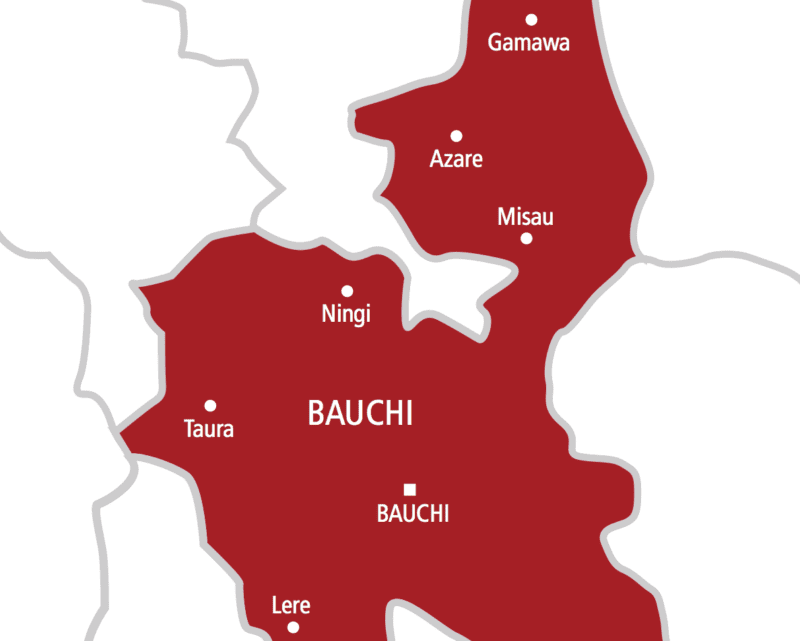
Silence Where It Matters: Bauchi’s Misplaced Priorities and Forgotten People -By Yasir Shehu Adam
A governor’s speech should reflect actual priorities. When basic human development sectors are absent from key policy messages, citizens have...


Thankfully, There’s None Like Prophet Ebo Noah in Nigeria; Is There? -By Ugochukwu Ugwuanyi
Mysteries in the Old Testament can only be decoded through the light of the New Testament. Mercifully, the Holy Spirit...


The Ripples From The Tinubu’s Tax Reform And The Future Of Nigerian Economy -By Hajia Hadiza Mohammed
The most worrisome issue in the whole tax reform debacle is the intention of the government and its fixation on...


Africa’s Crisis of Military Coups and Insecurity -By Safiya Zakari Muhammad
The erosion of democracy has also weakened regional and international security cooperation. In some cases, juntas have expelled traditional partners...