
Life And People
The Segun Awolowo I Knew: He Carried His Pedigree Lightly -By Osita Chidoka
Of our numerous interactions, one moment stands out for me: his visit to the FRSC with Saratu Umar, then CEO of the NIPC. Both shared a strong commitment to road safety. During the visit, I decorated them as Special Marshals, and together they signed Nigeria’s commitment to the Decade of Action on Road Safety. That was Segun—serious about service, yet never loud about it.

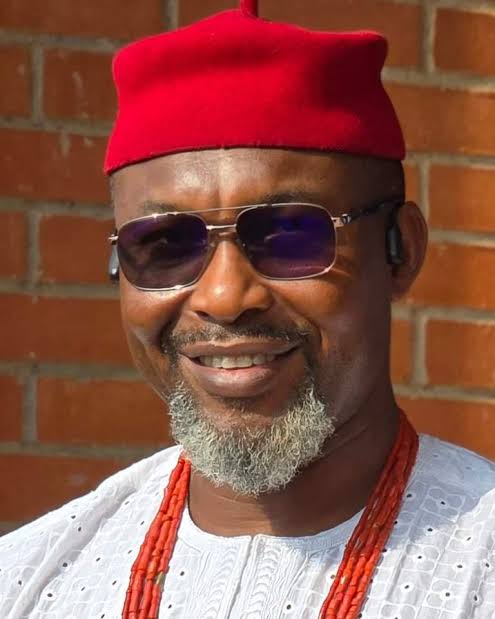
I first “met” Olusegun Awolowo in 1987 through the pages of Newswatch Magazine’s special edition on the passing of the Sage, Chief Obafemi Awolowo. That moment ignited a lifelong curiosity about one of Nigeria’s greatest political philosophers.
As a secondary school student, I bought every book I could find about Awo, fascinated by the depth of his ideas and the imprint he left on our national life.
From 1986 to the early 1990s, Nigeria underwent seismic change as General Babangida’s structural adjustments opened banking, aviation, media, and other sectors to private participation. Those were years of rising hope for a new business elite and deep frustration for those at the bottom.
The rise of Prime People, Vintage People, Weekend Concord, Classique, and other soft-sell magazines created a new celebrity class, children of political and business titans whose lives dominated the social pages.
Segun was the undisputed crown prince of that set. For anyone who lived through the late 80s and early 1990s, Segun Awolowo embodied a kind of Nigerian royalty.
His wedding was a national spectacle. Ikenne was overwhelmed by traffic; Chief MKO Abiola flew in by helicopter; and the country’s elite converged on the small town. In those days, week after week, the magazines regaled us with tales of Segun, Lanre Tejuoso, Kola Abiola, Oscar Ibru, and others partying to the rhythm of Shina Peters—Shinamania, as Weekend Concord famously called it.
When Segun and I finally met in 2007 or 2008, we connected instantly. He was always amazed by how deeply I understood the politics of his grandfather’s era and the dynamics of the First Republic. What struck me most was not his pedigree but how effortlessly he carried it: lightly, graciously, without the weight or arrogance pedigree often produces.
Segun was thoughtful, deep, cultured. He had an easy humility that made him approachable despite his background. We shared a love for classical music, and he became a regular at Amemuso’s Opera Abuja.
We even planned to see Andrea Bocelli and Hauser in Europe, an outing that will now never happen. I remember him telling his daughter, with childlike excitement, that I was travelling to Washington, DC, to watch Bocelli in December 2022.
Our paths crossed professionally as well. His work as FCT Transport Secretary overlapped with my time as Corps Marshal. At NEPC, he brought passion and dedication to promoting Nigeria’s non-oil exports.
Of our numerous interactions, one moment stands out for me: his visit to the FRSC with Saratu Umar, then CEO of the NIPC. Both shared a strong commitment to road safety. During the visit, I decorated them as Special Marshals, and together they signed Nigeria’s commitment to the Decade of Action on Road Safety. That was Segun—serious about service, yet never loud about it.
Yesterday, he was laid to rest in Lagos. We have lost a patriot, a cultured gentleman, a loyal friend, a dutiful son, husband, and father. The Awolowo dynasty has lost a crown prince. And all of us have lost a man whose life was a quiet symphony—graceful, steady, and deeply human.
His life was a song to his Creator; his death, the end of one stanza and the beginning of another.
Together with the departed, we pray for the Lord’s mercy and grace as he journeys to his Creator. Amen.
Osita Chidoka


The ECOWAS Democracy Paradox: A Flawed Arbiter in an Era of Autocratic Drift -By Jeff Okoroafor
As ECOWAS condemns Guinea-Bissau's coup, I analyze how its failure to address "constitutional coups" by elected leaders has eroded credibility...

South Africa Takes A Break From G20 -By Kestér Kenn Klomegâh
The United States this month took over the year-long presidency of the group of leading economies after largely boycotting South...


Did America Happen to Ademiluyi? -By Zayd Ibn Isah
If we must fix Nigeria, it will not be by glorifying foreign lands or demonising our own, but by confronting...


The Children We Hide: Why Society Must Stop Shaming Special Needs Children -By Bello Humulkhair
A small boy sits at the corner of his classroom not because he cannot play, not because he does not...
International Day of Persons with Disabilities 2025: Addressing Africa’s Disability Divide -By Prof. Uche Ofodile
The 2018 Protocol to the African Charter on Human and Peoples’ Rights on the Rights of Persons with Disabilities in...