
Breaking News
‘There was never an Igbo coup’ — Ralph Obioha speaks on 1966 uprising and Nigeria’s future
Elder statesman Ralph Obioha says the 1966 Nigerian coup was wrongly labelled an “Igbo coup,” highlights ongoing Igbo marginalisation, and reflects on Biafra aspirations and Nigeria’s need for unity and equal opportunity.

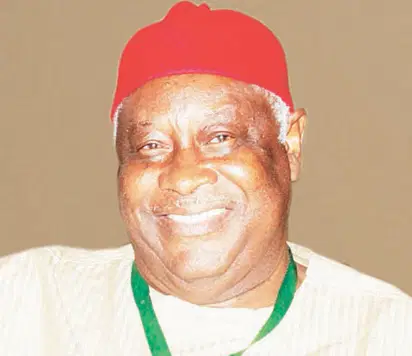
Chief Ralph Obioha, elder statesman and former National Democratic Coalition (NADECO) chieftain, has dismissed claims that the January 15, 1966 coup in Nigeria was an “Igbo coup,” insisting the label has unfairly tarnished the Igbo community for decades.
“It is just a language that has been conceived by those who wish to put the Igbo down, to label that coup as an Igbo coup. It was not an Igbo coup,” Obioha said, recalling that officers involved were from multiple ethnic groups, including Igbo, Yoruba, and even Hausa. He explained that the prominence of Igbo officers in the army led to a mistaken perception that the Igbo organised the coup.
Obioha described the coup as unnecessary, attributing it to the restlessness of young officers eager to enact change, rather than any ethnic agenda.
On the ongoing challenges facing the Igbo in Nigeria, Obioha acknowledged that the community continues to face marginalisation and discrimination: “The way they have been treating the Igbo in Nigeria has hindered the growth of Nigeria. Whether they want to accept it or not, it has hindered Nigeria.”
He also touched on the enduring aspiration for Biafra among Igbo people: “In the spirit and the core heart of the Igbo, they still want to have their Biafra. Never mind whatever anybody will tell you. They still want it any day. Ninety percent of the Igbo will tell you, give them Biafra.”
Obioha argued that the approach of some separatist movements has created more problems than solutions, but he believes eventual global consensus may recognise Biafra: “It’s only a matter of time when there is a consensus in the world to say, let Biafra be. I believe that.”
Reflecting on Nigeria’s broader socio-economic challenges, Obioha stressed the need for national unity and equal opportunity: “If there is a meeting of like minds, then things will be done the way it should be done, equal rights for everybody, irrespective of where they come from… Nigeria will kick off very quickly because we have resourceful people.”
He also defined marginalisation as the unequal distribution of resources, rather than cultural or social differences: “The marginalisation is in some people keeping their own natural resources and taking those of another region to be exploited for the national cake. That’s what marginalisation means.”
Obioha concluded that while coups may remain possible in Nigeria, addressing marginalisation, entitlement, and inequality through dialogue and unity could provide lasting solutions.
Opinion Nigeria News


The New York Times Misses the Forest for the Trees in Nigeria -By Nnamdi Prince
If the Times is so concerned about accurate data, perhaps it should direct its considerable resources toward independently investigating and...


The Pragmatism of Principle: Redefining Loyalty in an Age of Change -By Florence Ozor
While I do not endorse political nomadism, one must acknowledge that strategic realignment can be expedient. Take Peter Obi: after...


Lessons for Today: MLK for Continental African Leadership – A Psychoafricalytic Mirror for Power, Dignity, and Continental Renewal -By Psychologist John Egbeazien Oshodi
When African leaders abandon indigenous wisdom, they often adopt the colonial logic of control. Citizens become subjects. Protest becomes treason....


The Poverty Crisis: A Global Challenge to Human Dignity and Development -By Jennifer Joab
The poverty crisis is not just an economic problem but a profound human tragedy that affects the social, political, and...

Good Governance as a Tool for National Development -By Blessing Matthew
Good governance prioritizes the interests and welfare of the people above personal or sectional interests. It encourages transparency, accountability, rule...