
Political Issues
Toxic Ambassadors: How Tinubu Rewards Nigeria’s Political Arsonists -By Jeff Okoroafor
An op-ed dissecting why nominating Reno Omokri, Femi Fani-Kayode, and Mahmood Yakubu as ambassadors rewards electoral malpractice, falsehoods, and corruption, undermining Nigeria’s global standing and moral fabric.

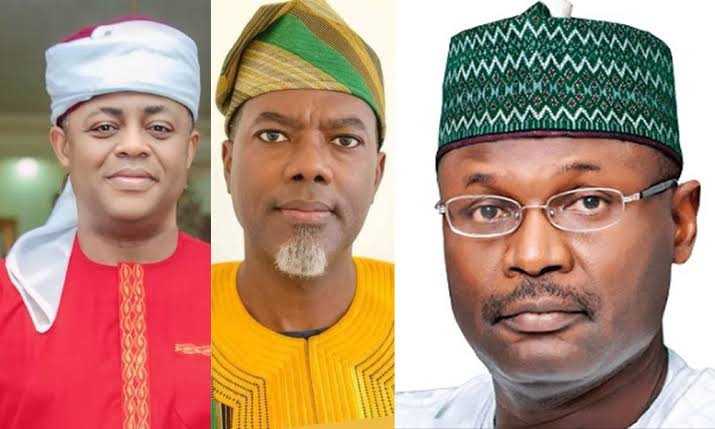
The announcement of President Bola Tinubu’s ambassadorial nominees has, once again, exposed the cynical calculus at the heart of Nigerian politics. Among the names submitted for national service are individuals whose public records are not just controversial, but antithetical to the very essence of diplomacy: integrity, credibility, and the peaceful advancement of national interests. The inclusion of Reno Omokri, Femi Fani-Kayode, and Prof. Mahmood Yakubu is not a merit-based selection; it is a brazen reward system for services rendered in the dark arts of political warfare, electoral manipulation, and toxic discourse. It signals that under this administration, the architects of national division can expect a plush diplomatic passport as their bounty.
To understand the profound irresponsibility of these nominations, one must examine the empirical evidence against each man, evidence that disqualifies them from representing Nigeria in any capacity, let alone as ambassadors.
1. Reno Omokri: The Merchandiser of Falsehood
Reno Omokri’s nomination is perhaps the most personally galling to anyone who values truth in public discourse. Omokri has built a lucrative brand and a massive social media following not on thoughtful analysis, but on the industrial-scale production of misinformation, hateful rhetoric, and malicious propaganda.
- Empirical Evidence of Dishonesty: His career is a case study in deception. He notoriously propagated the “Atiku is a Cameroonian” narrative without a shred of credible evidence, a claim repeatedly dismissed by courts. He has consistently pushed polarising religious and ethnic narratives, including baseless claims about political opponents. His role during the 2023 elections was that of a digital foot soldier, using his platform not to inform, but to inflame, spreading falsehoods about electoral results and inciting distrust. An ambassador is the chief image-maker of a nation abroad. What image does Nigeria project when its representative is a man whose signature tactic is the viral lie? No foreign government will respect a diplomat whose word cannot be trusted. Diplomacy is built on credibility; Omokri’s currency is its opposite.
2. Femi Fani-Kayode: The Apostle of Chaos and Incitement
If Omokri is the propagandist, Femi Fani-Kayode is the rabble-rouser. His nomination rewards a career marked by inflammatory statements that have repeatedly brought him to the brink of legal sanction for hate speech and incitement.
- Empirical Evidence of Toxicity: Recall his infamous 2021 Twitter tirade where he threatened a Daily Trust journalist, saying, “We will take you for a ride… you will die like a dog.” He has repeatedly made statements widely condemned as ethnically divisive. During the 2023 election cycle, he served as a chief attack dog, using vitriol and threats to intimidate opposition and journalists. The Department of State Services (DSS) has previously invited him for questioning over statements capable of destabilising the country. An ambassador’s core duty is to foster peaceful international relations. How can a man who cannot foster peaceful relations within his own country, who thrives on controversy and verbal violence, be entrusted with this delicate task? His nomination tells the world Nigeria values loud aggression over quiet, skilled negotiation.
3. Prof. Mahmood Yakubu: The Custodian of a Tainted Electoral Legacy
The inclusion of the immediate past Chairman of the Independent National Electoral Commission (INEC) as a non-career ambassador is the most politically tone-deaf of all. It directly fuels the allegation that his handling of the 2023 elections was not an independent exercise but a service rendered to the ruling party.
- Empirical Evidence of Compromised Trust: The 2023 presidential election was arguably the most disputed in Nigeria’s recent history. Under Yakubu’s watch, INEC failed catastrophically to meet its own promised standard of real-time electronic transmission of results (IReV), a failure that shattered public confidence and became the central plank of opposition challenges in court. Widespread reports of violence, logistical failures, and opaque collation processes marred the exercise. While the courts upheld the outcome, the perception of impartiality was irreparably damaged. Nominating Yakubu now is widely interpreted as a quid pro quo for delivering an election result that, however legally validated, was born in chaos and public distrust. It makes a mockery of the independence of the electoral body and suggests that presiding over a contentious election is a career path to diplomatic reward. What message does this send to democratic institutions?
The Unifying Thread: Rewarding the Poisoners of the Well
The common denominator among these three men is their role in making Nigeria’s political space more toxic, divisive, and unstable. Omokri and Fani-Kayode weaponised misinformation and hate speech, polluting the national discourse and deepening societal fractures. Yakubu, through the controversies surrounding the election he oversaw, presided over an event that severely tested the nation’s unity and faith in democracy.
President Tinubu’s nomination of these individuals answers a painful question: what is the price for compromising Nigeria’s democratic integrity and social cohesion? The answer, according to this list, is a diplomatic posting. It is a signal to future political operatives that ethical bankruptcy is no barrier to preferment, if one is loyal to the victor.
Conclusion: A Diplomacy of Shame, Not Honour
An ambassador is more than an administrator; they are a symbol of their nation’s values. They must command respect, embody trust, and possess the temperament to build bridges. Reno Omokri, with his documented lies, Femi Fani-Kayode, with his record of incitement, and Mahmood Yakubu, with his legacy of a disputed election, embody none of these qualities. Instead, they symbolise the very ills—corruption of truth, erosion of institutional trust, and politics of bitterness—that hold Nigeria back.
The Ijaw National Congress’s Prof. Benjamin Okaba is correct to question the integrity of these nominees. To send these men abroad as Nigeria’s face is to voluntarily downgrade our international standing. It tells the world we do not take the dignity of diplomacy seriously. It tells our citizens that character does not count.
The Senate must, for once, rise above partisan patronage and exercise its constitutional duty of screening with rigour and conscience. To confirm these nominations would be to ratify the notion that in Nigeria, toxicity is a credential and electoral chaos is a career milestone. The nation deserves better. It deserves ambassadors who are bridges, not arsonists.

Jeff Okoroafor
Jeff Okoroafor is a social accountability advocate and a political commentator focused on governance, accountability, and social justice in West Africa.



The Pragmatism of Principle: Redefining Loyalty in an Age of Change -By Florence Ozor
While I do not endorse political nomadism, one must acknowledge that strategic realignment can be expedient. Take Peter Obi: after...


Lessons for Today: MLK for Continental African Leadership – A Psychoafricalytic Mirror for Power, Dignity, and Continental Renewal -By Psychologist John Egbeazien Oshodi
When African leaders abandon indigenous wisdom, they often adopt the colonial logic of control. Citizens become subjects. Protest becomes treason....


The Poverty Crisis: A Global Challenge to Human Dignity and Development -By Jennifer Joab
The poverty crisis is not just an economic problem but a profound human tragedy that affects the social, political, and...


Good Governance as a Tool for National Development -By Blessing Matthew
Good governance prioritizes the interests and welfare of the people above personal or sectional interests. It encourages transparency, accountability, rule...


Role of Youths in Nation Building -By Kusompwa Lazarus Motiyedi
It is true that today’s youth did not experience the horrors of the Nigerian Civil War or the severe economic...