
Breaking News
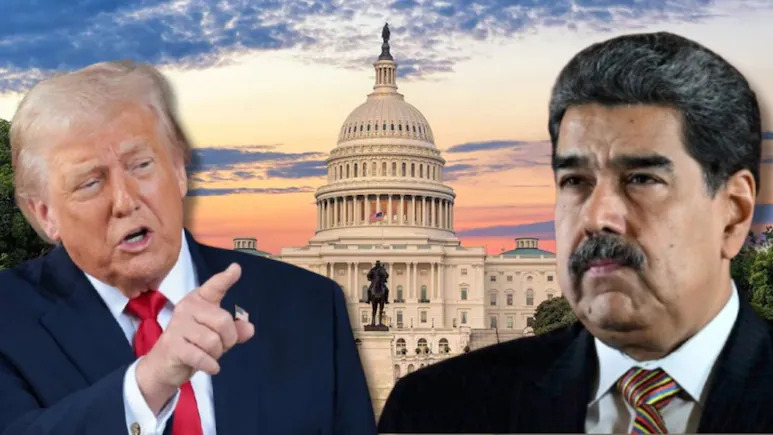
Trump Says US ‘In Charge’ of Venezuela as Maduro Appears in New York Court
President Donald Trump says the US is “in charge” of Venezuela as ex-leader Nicolas Maduro faces drug charges in New York, drawing global backlash and calls for his release.

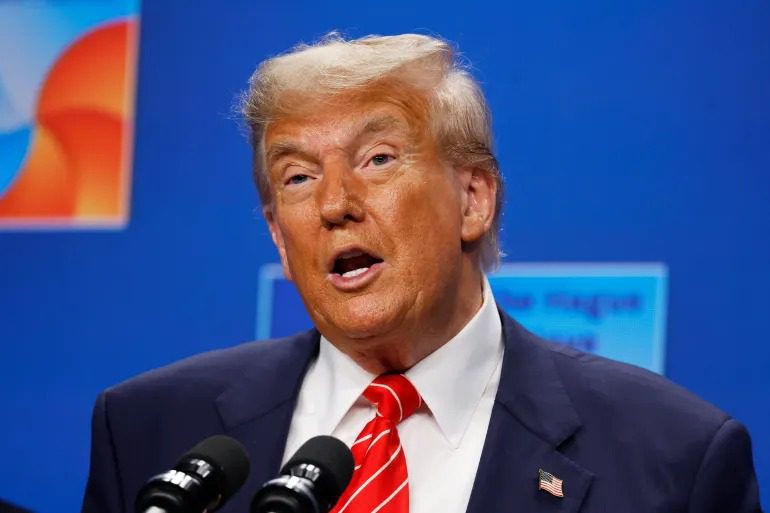
President Donald Trump’s assertion that the United States is now “in charge” of Venezuela is set to be highlighted on Monday as the country’s ousted leader, Nicolás Maduro, is brought before a New York court, while his interim successor signals readiness to cooperate with Washington.
Maduro, 63, is facing narcotrafficking charges alongside his wife after both were seized in Caracas during a surprise US operation on Saturday. The operation reportedly involved special forces, air strikes and a large naval deployment off Venezuela’s coast.
At Venezuela’s request, the United Nations Security Council will hold an emergency meeting on Monday, offering a forum for international concern over US actions in the oil-rich nation of about 30 million people.
Despite the backlash, Trump appeared undeterred as his administration moved to assert control over Venezuela and its vast oil resources.
“We’re in charge,” Trump declared late Sunday.
In a development seen as a possible diplomatic win for Washington, Maduro’s successor and interim leader, Delcy Rodriguez, softened her earlier tone and offered cooperation with the United States.
“We extend an invitation to the US government to work together on an agenda for cooperation,” Rodriguez, the former vice president, said in a statement late Sunday.
Her remarks came hours after Trump warned that she would pay a “very big price, probably bigger than Maduro,” if she failed to comply with US demands.
Asked what Washington wants from Rodriguez, Trump said: “We need total access. We need access to the oil and other things in their country that allow us to rebuild their country.”
Although US officials say there are no American ground forces currently inside Venezuela, a significant US naval presence, including an aircraft carrier, remains stationed off the country’s coastline.
The Trump administration has said it is exerting economic pressure by blocking Venezuelan oil tankers and has warned that further military action remains an option.
Uncertain future, no regime change — for now
What lies ahead for Venezuela after more than two decades of left-wing rule under Maduro and his late predecessor, Hugo Chavez, remains unclear.
US Senate Democratic leader Chuck Schumer told ABC News that Americans were left “scratching their heads in wonderment and in fear.”
The White House indicated on Sunday that it is not pursuing full regime change, but rather Maduro’s removal and the installation of a cooperative government, even if it includes some of his former allies.
Secretary of State Marco Rubio emphasised that Washington is not seeking a radical political overhaul or an immediate return to democracy.
“Rather than seek to topple the entire Maduro government, we’re going to make an assessment on the basis of what they do,” Rubio told CBS News.
This stance has sidelined Venezuela’s opposition, which the Trump administration says was denied victory by Maduro in recent elections.
Opposition leader Edmundo Gonzalez Urrutia described the US intervention as “important” but “not enough,” insisting that political prisoners must be freed and that his claimed victory in the 2024 election be recognised.
International backlash grows
The US action has drawn sharp criticism from countries aligned with Maduro, including China, Russia and Iran, as well as concern from some US allies.
China called for Maduro to be “immediately released,” with its foreign ministry describing the US operation as a “clear violation of international law.”
Colombian President Gustavo Petro labelled the move an “assault on the sovereignty” of Latin America and warned it could trigger a humanitarian crisis.
By contrast, Italy and Israel, whose leaders are strong supporters of Trump, expressed more supportive positions on the US action.
Opinion Nigeria News


Why African Leaders Must Fix Governance Before Crying Sovereignty -By Isaac Asabor
One of the great contradictions of African leadership today is selective morality. Leaders speak passionately about international law while violating...

Baba Has Entered The Classroom -By Isaac Asabor
If what Trump is doing is walking into a noisy global classroom and insisting on discipline, then let us be...

As Trump Exposes Why Tinubu Must Go Sooner -By SKC Ogbonnia
The Nigerian president is not only culpable of heinous crimes, but he is also weakened beyond redemption. His continued stay...


How Lavrov’s Philosophy of “Ubuntu” Reflects on the Level of Africa’s Media Presence in Russia -By Kestér Kenn Klomegâh
The December 19–20 Ministerial Conference reaffirmed commitments to fully implement the Russia–Africa Partnership Forum Action Plan (2023–2026), adopted at the...
Why Trump’s Move Against Maduro Makes Sense -By Isaac Asabor
Trump’s decision also invites other nations to step up, to reconsider their passive complicity in the face of egregious abuse....