
Breaking News
Ugandan court sentenced 24-year old Tiktoker to 6 years imprisonment for insulting President
The presiding magistrate, Stella Maris Amabilis, saw Awebwa’s lack of regret and the coarseness of his words even though he admitted guilt and begged for pardon.

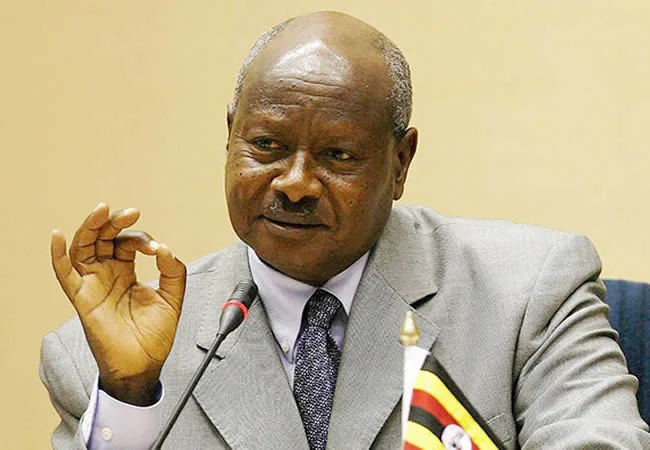
Edward Awebwa, 24, a tiktoker, was given a six-year prison sentence by a Ugandan court for derogating President Yoweri Museveni, First Lady Janet Museveni, and their son Muhoozi Kainerugaba in a TikTok video.
According to the BBC, the accusations included hate speech and disseminating “misleading and malicious” material about the first family.
Awebwa had posted content claiming that President Museveni’s administration had increased taxes.
The presiding magistrate, Stella Maris Amabilis, saw Awebwa’s lack of regret and the coarseness of his words even though he admitted guilt and begged for pardon.
She emphasized the need for a punitive measure that would teach him to respect the president and his family.
“The accused deserves a punishment which will enable him to learn from his past so that next time he will respect the person of the president, the first lady, and the first son,” said Magistrate Amabilis.
Awebwa received a six-year sentence for each of the four charges, to be served concurrently.
This case has drawn attention from rights groups, who frequently criticize Ugandan authorities for human rights violations and curbing freedom of expression.
In a similar case, award-winning author Kakwenza Rukirabashaija was charged in 2022 with “offensive communication” after making unflattering remarks about the president and his son on Twitter.
Rukirabashaija fled to Germany after a month in jail, claiming he was tortured.
Activist and writer Stella Nyanzi, who is also in exile, faced imprisonment after publishing a critical poem about President Museveni.
President Museveni, who has been in power since 1986, signed a law against hate speech in 2022, which rights groups argue is designed to suppress online freedom of speech.
While the constitutional court later ruled a section of the law penalizing “offensive communication” unconstitutional, Awebwa was charged under the broader law still under challenge.
Ugandan human rights lawyer Michael Aboneka argued that the president and his family should expect criticism from the public.
“Unless they are saying that they are going to arrest every Ugandan for criticizing them at every point,” Aboneka told the BBC Newsday program.



Poor, Poor, Maduro -By IfeanyiChukwu Afuba
Little wonder his ouster elicited celebrations. The ease of his capture is telling. There is only one explanation for the...


Why African Leaders Must Fix Governance Before Crying Sovereignty -By Isaac Asabor
One of the great contradictions of African leadership today is selective morality. Leaders speak passionately about international law while violating...


Baba Has Entered The Classroom -By Isaac Asabor
If what Trump is doing is walking into a noisy global classroom and insisting on discipline, then let us be...

As Trump Exposes Why Tinubu Must Go Sooner -By SKC Ogbonnia
The Nigerian president is not only culpable of heinous crimes, but he is also weakened beyond redemption. His continued stay...


How Lavrov’s Philosophy of “Ubuntu” Reflects on the Level of Africa’s Media Presence in Russia -By Kestér Kenn Klomegâh
The December 19–20 Ministerial Conference reaffirmed commitments to fully implement the Russia–Africa Partnership Forum Action Plan (2023–2026), adopted at the...