
Breaking News
UPDATE: CBN and new measures to boost forex supply
Also speaking on the benefits, Ayo Teriba, CEO of Economic Associates, said: “On the benefits, he said that the savings from unified exchange rates would improve the government’s fiscal situation, discourage people with frivolous demands in the I&E windows and end the regime of round tripping.

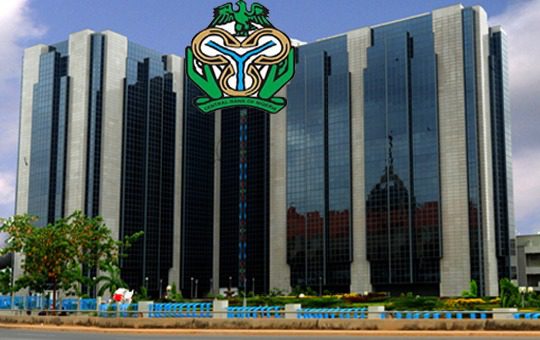
The nation’s financial markets came alive last week following positive sentiments and renewed confidence generated by the new measures announced by the Central Bank of Nigeria, CBN to boost foreign exchange inflow into the country.
The stock market posted record gains, as the total value of shares listed on the NGXchange, or market capitalization, rose by N998 billion to N32.662 trillion on Wednesday when the measures were announced.
In the official forex market, the Investors and Exporters, I&E window, the new measures triggered increased transactions, prompting the exchange rate to rise, and converged with the parallel market exchange rate around N756 per dollar within one week of the new measures.
Presidential pronouncement
The measures announced by the CBN, were aimed at injecting new life into the official forex market, represented by the Investor and Exporters, I&E window, and were largely inspired by the pronouncement of President Bola Tinubu that CBN must work towards a unified exchange rate.
“The Central Bank must work towards a unified exchange rate. This will direct funds away from arbitrage into meaningful investment in the plant, equipment and jobs that power the real economy”, the President said in his inaugural speech.
Consequently, the CBN in a circular signed by Director, Financial Markets, Dr. Angela Sere-Ejembi, unveiled “Operational Changes to the Foreign Exchange Market.”
One Official Forex window
“Abolishment of segmentation. All segments are now collapsed into the Investors and Exporters (I&E) window. Applications for medicals, school fees, Business Travel Allowance/Personal Travel Allowance, BTA/PTA, and Small, and Medium Enterprises, SMEs would continue to be processed through deposit money banks, the CBN said.
This means all eligible FX transactions in the market shall only be done via the I&E window, all other windows cease to exist.
Willing Buyer, Willing Seller
The CBN also announced, “Re-introduction of the “Willing Buyer, Willing Seller” model at the I&E Window. All eligible transactions are permitted to access foreign exchange at this window.”
The I & E market functions by a willing buyer, willing seller system, where an entity with demand for FX seeks out another entity with FX to sell at an agreed price through an authorised dealer.
A willing buyer, willing seller system model means that exchange rates are mutually agreed by both parties.
Government-Related Transactions
According to the apex bank, “The operational rate for all government-related transactions shall be the weighted average rate of the preceding day’s executed transactions at the I&E window, calculated to two (2) decimal places.”
Government related transactions are transactions with Ministries, Departments and Agencies (MDAs).
On the weighted average rate, and how is will calculated to two decimal places, the CBN explained, “This is a summation of volume of FX traded multiplied by the various rates at which the deals are consummated, divided by total volume of trade.”
BTA/PTA, others
Addressing concerns on how forex end-users will access forex for BTA/PTA, medical and school fees under the new measures, CBN said: “PTA, BTA, and other invisible transactions continue to be accessed through the banks at the prevailing market rate.”
It also added that “There are no changes in the application process. All applications shall be through the banks and all documentation requirements remain the same.
Order-Based Two-Way Quote
The new measures also include, “Re-introduction of order-based two-way quotes, with bid-ask spread of N1. All transactions shall be cleared by a Central Counter Party (CCP).
“Reintroduction of Order Book to ensure transparency of orders and seamless execution of trades.
“The operational hours of trades shall be from 9am to 4pm, Nigeria time.”
The CBN explained that the Order-Based Two way quote is a two-way quote trading in which all transactions are trade backed.
Elaborating on how the order book will ensure transparency of orders and seamless transactions, the apex bank said: “The order book is an electronic trading system where demand can be matched to supply on any given trading day and is visible to the entire market.”
Other measures
Other measures announced by the CBN are: “Proscription of trading limits on oversold FX positions with permission to hedge short positions with Over-The Counter-futures. Limits on overbought positions shall be zero.
“Cessation of RT200 Rebate Scheme and the Naira4Dollar Remittance Scheme, with effect from 30 June 2023.
Unfettered Access to Domiciliary Account
To complement the above measures, the CBN also removed restrictions on domiciliary accounts directing that banks should allow unfettered access to funds in these accounts. Domiciliary accounts are bank accounts for deposit and withdrawal of foreign currencies.
Consequently, domiciliary account holders can now transfer up to $10,000 per day cash deposits into their domiciliary accounts.
Announcing the removal of the restrictions, Director, Corporate Communications, Department, CBN, Dr. Isa Abdulmumin, disclosed this in a press statement titled: “CBN Issues Further Guidance on Operational Changes to Foreign Exchange Market”.
He said: “Following the Central Bank of Nigeria (CBN) press statement of June 14, 2023, on new guidelines in the foreign exchange market, an extraordinary Bankers’ Committee meeting was held on Friday, June 16, 2023, to discuss its implementation and implications for the banking public.
These policy changes aim to promote transparency, liquidity and price discovery in the FX market in order to improve FX supply, discourage speculation, enhance customer confidence and ensure overall stability in the FX market.
“In line with deliberations at the meeting, provided further guidance to Deposit Money Banks (DMBs) as follows:
“All visible and invisible transactions (medicals, school fees, BTA/PTA, airline and other remittances) are eligible for the Investors’ and Exporters’ (I & E) window.
“DMBs shall ensure expeditious processing of all eligible invisible transactions on behalf of their customers using the applicable rate at the I & E window.
“Ordinary domiciliary account holders shall have unfettered and unrestricted access to funds in their accounts. Domiciliary account holders are permitted to utilize cash deposits not exceeding USD$ 10,000 per day or its equivalent via telegraphic transfer. DMBs shall provide returns to the CBN, including the “purpose” for such transactions.
“Cash deposits into domiciliary accounts will not be restricted, subject to DMBs conducting proper KYC, due diligence and adhering to the spirit and letter of extant AML/CFT laws and other relevant rules and regulations.
“The CBN will prioritize orderly settlement of any committed FX forward transactions as they fall due in order to boost market confidence further.
“The Bank will normalize its CRR maintenance processes and ensure equity in its implementation across the banking industry.
The CBN will continue to engage stakeholders and issue further guidance as it implements the ongoing reforms.”
Implications
While noting that the new measures in the short term, will lead to depreciation of the naira in the I&E window, and added to the inflationary pressures, as well as push up the debt profile of the government, analysts generally commended the new measures, stressing that it will bring transparency, boost confidence in the foreign exchange market, which will in turn lead to increase in supply of foreign exchange into the country.
Investment banker and the Co-founder, Comercio Partners, Nnamdi Nwizu, said, “First of all we are going to see the I&E rate go up aggressively from N475. I expect over the next few days, it should settle maybe at around N730/$. Above N700 anyway.
“What they have tried to do is to create liquidity in the FX market because when the I & E exchange rate goes up, you will start to see foreign investors who are more comfortable coming into the country, because a lot of them have said the naira is overpriced. If that starts to happen you will start to see inflows coming back in, you will start to see the naira eventually start to appreciate.”
On his part, Dr. Muda Yusuf, Chief Executive Officer, Centre for the Promotion of Private Enterprise (CPPE), said the new measures would unlock the huge potentials for investment and boost government revenue by N4 trillion through additional remittance of exchange rate surplus to the federation account by CBN.
“The liberalization of the foreign exchange (forex) market would unlock the huge potentials for investment, jobs and capital flows. Investors’ confidence would be positively impacted.
“Meanwhile, it should be clarified that this is not a devaluation policy, but a pricing mechanism that reflects the demand and supply fundamentals in the forex market.
“It is a framework which allows for flexible rate adjustments as and when necessary. It is a model that is predictable, equitable, transparent and sustainable. It is a policy regime that would reduce uncertainty and inspire the confidence of investors. It would minimize discretion and arbitrage in the forex allocation mechanism.
Also speaking on the benefits, Ayo Teriba, CEO of Economic Associates, said: “On the benefits, he said that the savings from unified exchange rates would improve the government’s fiscal situation, discourage people with frivolous demands in the I&E windows and end the regime of round tripping.
“If there are no two rates, it will shut the door to people that make frivolous demands in the I&E Window; the government will get its revenue, it will reduce demand and, therefore, strengthen the exchange rate.
“Thirdly, it will also increase supply because as the CBN subsidizes some people at the expense of the government, some suppliers are forced to surrender their forex at that unfavourable rate. If multiple exchange rates are scrapped, the government makes money; the suppliers also make money and have more incentives to increase supply,” he said.



Poor, Poor, Maduro -By IfeanyiChukwu Afuba
Little wonder his ouster elicited celebrations. The ease of his capture is telling. There is only one explanation for the...


Why African Leaders Must Fix Governance Before Crying Sovereignty -By Isaac Asabor
One of the great contradictions of African leadership today is selective morality. Leaders speak passionately about international law while violating...


Baba Has Entered The Classroom -By Isaac Asabor
If what Trump is doing is walking into a noisy global classroom and insisting on discipline, then let us be...


As Trump Exposes Why Tinubu Must Go Sooner -By SKC Ogbonnia
The Nigerian president is not only culpable of heinous crimes, but he is also weakened beyond redemption. His continued stay...


How Lavrov’s Philosophy of “Ubuntu” Reflects on the Level of Africa’s Media Presence in Russia -By Kestér Kenn Klomegâh
The December 19–20 Ministerial Conference reaffirmed commitments to fully implement the Russia–Africa Partnership Forum Action Plan (2023–2026), adopted at the...