
Breaking News
[UPDATE] Senegalese protests: Family demands justice for son killed
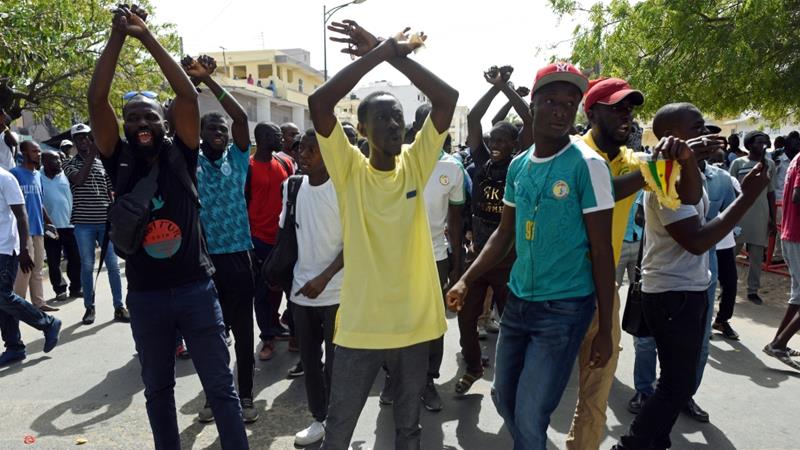
The fishing village of Bargny, around 30 kilometres (18 miles) from the capital Dakar, was one of the sites hit by angry protests after firebrand opposition leader Ousmane Sonko was sentenced to two years in prison on charges of “corrupting” a young woman.

In a small fishing village outside of the Senegalese capital, Ismaila Diene and his wife on Tuesday said goodbye to their youngest son, killed last week during protests that have shaken the country.
The grieving couple don’t want to lay the blame on anyone, and as for many of the 16 people killed in Senegal’s worst spasm of political violence in years, the circumstances of 33-year-old Doudou Diene’s death is shrouded in mystery.
Ismaila, a retired teacher, says the family got the call late on Friday that their son was in hospital and had been shot. He died about six hours later.
They spoke to Doudou on the phone and, as is tradition in Senegal before dying, “he asked his mother and I for forgiveness. I don’t know under what circumstances he was shot,” said Ismaila.
Doudou was married, with a 14-month-old baby, and had two brothers and a sister.
The fishing village of Bargny, around 30 kilometres (18 miles) from the capital Dakar, was one of the sites hit by angry protests after firebrand opposition leader Ousmane Sonko was sentenced to two years in prison on charges of “corrupting” a young woman.
The verdict is likely to make Sonko ineligible to run in the 2024 presidential elections, and the former tax inspector alleges the charges were a conspiracy to halt his rising political star.
Bargny, with its sandy paths weaving between faded homes, paid a heavy price, with three killed in the protests, according to several municipal
officials.
“Doudou didn’t take part in the protests, or in politics,” said his weeping mother, Mbene Mbeye, dressed in a white headdress and flowing robes.
The government and opposition blame each other for the deaths.
The opposition points to harsh repression of the protests, while the government denounced a planned destabilisation effort by “dark forces,” foreigners, and armed men.
When the police asked Ismaila what he plans to do, he said he would file a complaint.
“I hope that there will be justice, because there are things that cannot go unpunished,” he said.
“Losing a child is a terrible emotional shock. Either way, justice will be done, if it is not at the hands of men, it will be in the afterlife.”
“Let justice be done. Innocent people are dying. It’s not normal,” said Doudou’s mother, also a retired teacher, shortly before leaving for the mosque for the funeral prayer.
Hundreds of relatives and neighbours gathered at a green mosque where the coffin was laid.
After about ten minutes of tributes, the silent procession of men took the path to the cemetery, on the edge of the town.
The women will visit the grave later.
AFP


Why African Leaders Must Fix Governance Before Crying Sovereignty -By Isaac Asabor
One of the great contradictions of African leadership today is selective morality. Leaders speak passionately about international law while violating...


Baba Has Entered The Classroom -By Isaac Asabor
If what Trump is doing is walking into a noisy global classroom and insisting on discipline, then let us be...


As Trump Exposes Why Tinubu Must Go Sooner -By SKC Ogbonnia
The Nigerian president is not only culpable of heinous crimes, but he is also weakened beyond redemption. His continued stay...


How Lavrov’s Philosophy of “Ubuntu” Reflects on the Level of Africa’s Media Presence in Russia -By Kestér Kenn Klomegâh
The December 19–20 Ministerial Conference reaffirmed commitments to fully implement the Russia–Africa Partnership Forum Action Plan (2023–2026), adopted at the...

Why Trump’s Move Against Maduro Makes Sense -By Isaac Asabor
Trump’s decision also invites other nations to step up, to reconsider their passive complicity in the face of egregious abuse....