
National Issues
Urology, Myth and the Nigerian Condition -By Patrick Iwelunmor
The consequences are severe. Medicine, unlike politics or public commentary, does not tolerate guesswork. Errors are paid for in pain, complications and sometimes irreversible loss. Takure’s call for proper referrals and respect for specialisation is therefore not bureaucratic pedantry; it is an ethical demand. A functioning society depends on knowing who is qualified to do what and enforcing those distinctions without apology. Where boundaries collapse, excellence becomes accidental and safety negotiable.


There are moments when a professional conversation unexpectedly opens a wider window into the soul of a nation. An interview with Dr. Augustine Takure, President of the National Association of Urological Surgeons of Nigeria, offered such a moment. What began as a discussion on prostate disease, Peyronie’s condition and surgical practice gradually unfolded into a sober reflection on Nigeria’s relationship with knowledge, expertise and institutional responsibility. The insights that emerged were not merely medical; they were civic, cultural and deeply revealing.
Nigeria is a society where myths often travel faster than evidence. In matters of health, this tendency is particularly dangerous. Dr. Takure’s insistence on science as the only honest language of medicine stands in quiet opposition to a culture that prefers comfort to correctness. The popular belief that frequent sexual activity can prevent prostate disease is one such myth, repeated with confidence but unsupported by evidence. Against this narrative, his explanation is disarmingly simple: prostate disease is tied to biology, hormones and ageing. If a man lives long enough and possesses the relevant anatomy, prostate issues are not a moral failure or lifestyle punishment; they are a biological likelihood.
This clarity matters because myth thrives where fear and shame are allowed to flourish. Many Nigerian men delay seeking medical help not because treatment is unavailable, but because discussion itself has been culturally discouraged. Urological conditions are whispered about, moralised or framed as personal inadequacies. In this environment, silence becomes a form of suffering. By describing Peyronie’s disease as a scar that is surgically correctable rather than a life-defining sentence, Takure quietly dismantles the inflated drama surrounding men’s health. His tone is not sensational; it is clinical, calm and reassuring. In a society addicted to exaggeration, such restraint is almost radical.
Yet the deeper significance of his reflections lies beyond anatomy. They reveal a persistent Nigerian paradox: the coexistence of competence and chaos. Nigerian urologists, as Takure observed, are not waiting for miracles from the state. Many have invested personal resources to acquire advanced equipment, undergo specialised training and offer services that once required travel abroad. Procedures that were previously considered foreign are now being carried out locally with documented success. And yet, public perception often lags behind reality. The instinctive distrust of local capacity pushes patients outward, even when expertise exists at home.
This distrust, however, did not emerge in a vacuum. It is the product of years of institutional decay, regulatory weakness and blurred professional boundaries. One of the most troubling issues raised during the interview was the ease with which non-specialists present themselves as urologists. In a country where titles are loosely worn and enforcement is weak, expertise becomes diluted. Patients are left vulnerable, unsure of who is properly trained and who is merely improvising. Urology, in this sense, becomes a diagnostic tool for the Nigerian condition itself. Just as untreated scar tissue distorts function, weak regulation distorts professional practice, producing outcomes that damage trust and cause avoidable harm.
The consequences are severe. Medicine, unlike politics or public commentary, does not tolerate guesswork. Errors are paid for in pain, complications and sometimes irreversible loss. Takure’s call for proper referrals and respect for specialisation is therefore not bureaucratic pedantry; it is an ethical demand. A functioning society depends on knowing who is qualified to do what and enforcing those distinctions without apology. Where boundaries collapse, excellence becomes accidental and safety negotiable.
Perhaps most striking is Takure’s refusal to surrender to fashionable despair. At a time when national conversations are saturated with cynicism, his belief that Nigeria’s healthcare system is improving feels almost unfashionable. Yet it is not naïve. It is grounded in comparative realism. Countries admired for their healthcare outcomes did not achieve them through sentiment or slogans. They did so through structure: taxation, insurance systems and disciplined private-sector participation. Nigerians’ enthusiasm for foreign hospitals often has less to do with superior doctors than with predictable organisation.
Here lies another uncomfortable truth. Many Nigerians resist taxation and insurance contributions while demanding world-class services. This contradiction sits at the heart of the Nigerian condition. Health insurance is not a favour bestowed by the government; it is a collective investment. You cannot refuse to contribute to the pool and still expect its benefits. Takure’s reflections cut through the emotional fog that often surrounds discussions of public policy. Societies that work do so because citizens accept shared responsibility, not because governments perform magic.
On pharmaceuticals, his position is equally revealing. Doctors prescribe; systems supply. When drugs are unavailable or expensive, the failure is structural, not clinical. Local pharmaceutical manufacturers, burdened by import dependence and bureaucratic hostility, struggle to compete. Supporting them is not an act of patriotic sentiment but of strategic necessity. A country that cannot reliably supply its own medicines remains permanently exposed, regardless of how skilled its doctors may be.
What ultimately emerges from these insights is a portrait of Nigeria caught between capacity and credibility. Talent exists, often in abundance. What is missing is the discipline to protect standards, the humility to trust evidence and the courage to submit personal convenience to collective order. Urology, viewed through this lens, becomes more than a medical specialty. It becomes a metaphor for how Nigeria treats specialised knowledge, negotiates shame and balances myth against reason.
Dr. Takure’s voice is important precisely because it avoids hysteria. It does not shout. It does not flatter. It insists quietly on process, evidence and responsibility. In a nation enamoured with grand declarations and instant solutions, such insistence can feel subversive. Yet it may be the only honest path forward.
Nations rarely fail for lack of talent. They fail when talent is misused, mistrusted or left unprotected. The reflections drawn from this conversation remind us that Nigeria’s challenges are not metaphysical curses. They are correctable failures of organisation, trust and discipline. Whether the country is willing to confront these failures remains an open question. But as long as professionals continue to speak with clarity and restraint, and society is willing to listen, the possibility of self-correction remains alive.

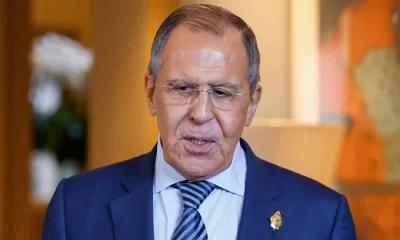

Africa Experiencing New Stage of Reawakening -By Kestér Kenn Klomegâh
The Russia-Africa summits earlier took place in Sochi (October 2019) and St. Petersburg (July 2023). Russia and Africa are currently...


The New York Times Misses the Forest for the Trees in Nigeria -By Nnamdi Prince
If the Times is so concerned about accurate data, perhaps it should direct its considerable resources toward independently investigating and...


The Pragmatism of Principle: Redefining Loyalty in an Age of Change -By Florence Ozor
While I do not endorse political nomadism, one must acknowledge that strategic realignment can be expedient. Take Peter Obi: after...


Lessons for Today: MLK for Continental African Leadership – A Psychoafricalytic Mirror for Power, Dignity, and Continental Renewal -By Psychologist John Egbeazien Oshodi
When African leaders abandon indigenous wisdom, they often adopt the colonial logic of control. Citizens become subjects. Protest becomes treason....


The Poverty Crisis: A Global Challenge to Human Dignity and Development -By Jennifer Joab
The poverty crisis is not just an economic problem but a profound human tragedy that affects the social, political, and...