
Forgotten Dairies
When Journalists Become Cheerleaders: The Softball Questions Of Wike’s Monthly Media Chat -By Isaac Asabor
If senior journalists cannot summon the courage to move from softball to hardball, if they cannot transition from praise-friendly questions to probing inquiries, then they should stop pretending to represent the public interest. Journalism that fears accountability is already defeated.

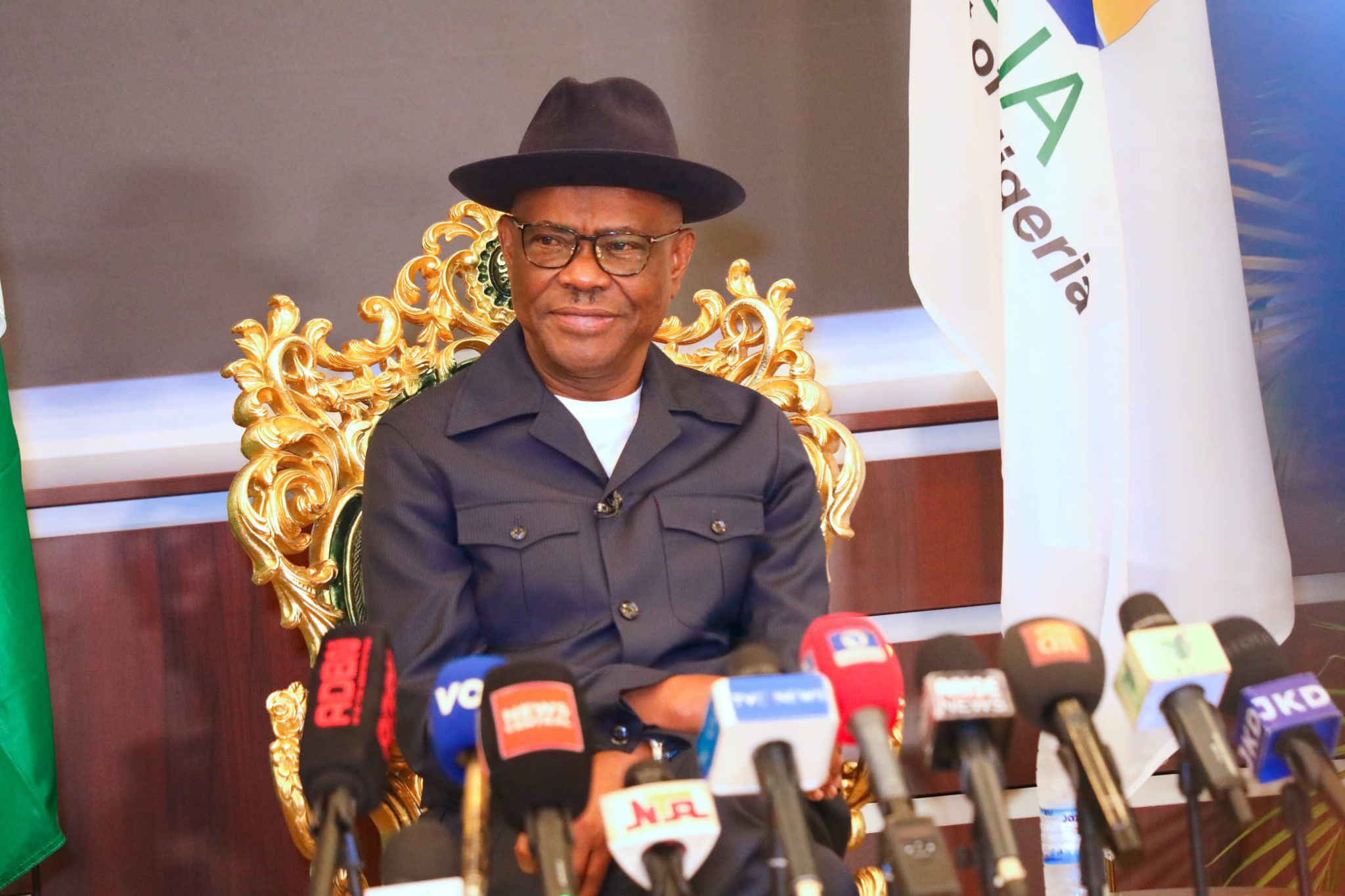
There is something deeply unsettling about watching senior journalists, men and women, who should know better, reduce themselves to cheerleaders at Nyesom Wike’s so-called Monthly Media Chat. What is presented as an engagement with the press has, over time, degenerated into a predictable theatre of praise-singing, grievance-airing and political bare-knuckle fighting, with journalists supplying the soft balls instead of the hard questions.
A media chat, by its very name and democratic intent, is supposed to be a forum for public accountability. It is meant to interrogate power, not to massage it. Yet, each time Wike mounts the podium as Minister of the Federal Capital Territory, what Nigerians are served is not clarity on policy, governance or outcomes, but a rerun of his political battles, against perceived enemies, former allies, critics and imaginary foes. Worse still, some senior journalists sitting across from him appear perfectly comfortable with this distortion of purpose.
The problem is not merely that softball questions are asked. Softball questions have their place. In interviews, they can help set context or ease tension before tougher issues are broached. But when an entire media session is dominated by questions that are exceptionally easy, flattering, or deliberately non-threatening, then journalism has abdicated its responsibility. What we see at Wike’s Media Chat is not rapport-building; it is accountability-avoidance.
Instead of asking pointed questions about land administration in Abuja, the chaotic demolition exercises, the human cost of aggressive urban renewal, budgetary transparency, or the long-term vision for the FCT, journalists often hand Wike a microphone to relive his political grudges. He is allowed, sometimes even prompted, to boast, threaten, dismiss and insult, while the core mandate of his office is left largely untouched. This is not accidental. It is enabled.
A reporter who asks a public official, in essence, “How have you managed to remain strong despite criticism?” is not doing journalism; he is offering therapy. A journalist who frames every question in a way that allows the minister to “look good” without scrutiny is not neutral; he is complicit. And when such conduct comes from senior journalists, editors, veterans, agenda-setters, it sends a damaging signal to younger reporters watching closely: that access matters more than integrity.
Let us be blunt. These are not rookies who do not understand the difference between a hardball question and a softball one. They are experienced professionals who know that probing questions can strain relationships, cost invitations, and shut doors. Yet journalism was never designed to be comfortable for those in power. Once journalists begin to trade rigor for relevance, they stop being watchdogs and start acting as courtiers.
The tragedy is that Wike does not lack the temperament to answer tough questions. He is combative, verbose, and politically astute. If anything, he thrives on confrontation. So the decision to lob him easy questions cannot even be defended as fear of hostility. It is a choice, a deliberate lowering of the bar, that allows him to hijack a governance platform and turn it into a political boxing ring.
This conduct also insults the intelligence of the public. Nigerians do not tune in to media chats to hear recycled political insults or self-congratulatory narratives. They want explanations. They want numbers, timelines, justifications and accountability. They want to know what is being done, how it is being done, who benefits, who suffers, and why. When journalists refuse to ask these questions, they rob citizens of their right to be informed.
There is also a reputational cost. Every time a media chat dissolves into a session of soft questions and political ranting, public trust in journalism erodes further. The audience begins to see journalists not as independent interrogators of power but as accessories to it. And once that trust is lost, it is painfully difficult to regain.
Wike, like every public official, will do what power allows him to do. He will dominate the space if given the room. The greater blame, therefore, lies with those who are supposed to set the agenda and enforce professional boundaries. A media chat is not a campaign rally. It is not a war room. It is not a personal grievance court. Journalists are duty-bound to insist on that distinction.
If senior journalists cannot summon the courage to move from softball to hardball, if they cannot transition from praise-friendly questions to probing inquiries, then they should stop pretending to represent the public interest. Journalism that fears accountability is already defeated.
In the end, the real casualty of these media charades is not Wike’s opponents; it is the credibility of the profession itself. And that is a price Nigerian journalism cannot afford to keep paying.



Manduro: How nations lose territories in peacetime – Lessons for Nigeria -By Ebuka Ukoh
Manduro reflects the same logic. Developing countries do not lose territory because their citizens suddenly change. They lose it because...

Abebe Selassie to Retire as Director of African Department at IMF -By Kestér Kenn Klomegâh
Concessional financing to counter rising borrowing costs, with Africa paying up to 5 times more in interest than advanced economies...


Singapore’s Leaders Built An Economy; Nigeria’s Keep Building Excuses -By Isaac Asabor
Singapore paired economic growth with social stability. Through the Housing Development Board, the government built large-scale public housing, providing affordable...


Tax Considerations for CFD Traders in South Africa: What Experienced Traders Should Know
What looks like a sweet profit on your platform screen can shrink fast once the tax bill hits. When you're...

Russia–India Dialogue Provides Platform for Strengthening Bilateral Entrepreneurship -By Kestér Kenn Klomegâh
The Dialogue was organized by the Indian Business Alliance, the Business Council for Cooperation with India, the Government of Moscow,...