
Sports
Why FIFA Should Introduce Eligibility Rules For Coaches -By Ayobami Okerinde
Despite the success foreign coaches have recorded in different national teams, the all-African cast at the World Cup and the fact that no foreign coach has ever won the World Cup is a testament that it’s high time for FIFA to introduce eligibility rules for national team coaches.

In football, FIFA has national team eligibility criteria which bother on the eligibility of a player to represent a national team or not. The eligibility rules for players have undergone different modifications over the years.
The FIFA eligibility rules state that a player can represent a country as long as he holds the citizenship of the country he chooses to represent. The rule had modifications later on with FIFA stating that a player must show he has connections with a country he chooses to represent (if he is eligible for more than one). Unlike the player’s eligibility rules, FIFA does not have an eligibility rule for coaches.
For coaches, it is often a norm in football to represent and coach a team other than the country where the coach holds citizenship. This practice is common among national teams around the world and mostly in Africa where foreign coaches are hired to lead teams to continental and FIFA competitions. Most notably, African teams have paraded foreign coaches like Gernot Rohr, Berti Vogts, Valid Halilhodzic, Clemens Westerhoff, Herve Renard, Jo Bonfere, and others. These coaches have recorded some victories winning the Nations Cup, and Olympic gold in football for African teams.
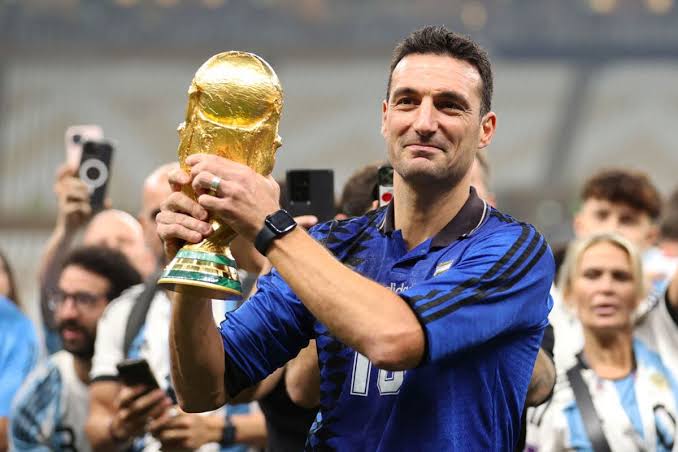
At the 2022 World Cup, out of the 32 teams that qualified, 69% of the teams paraded coaches from their country. This means that 22 teams out of the 32 teams were coaches from the same country, examples are Didier Deschamps of France, Lionel Scaloni of Argentina, Gareth Southgate of England, and others. The African contingent at the World Cup made history as all coaches who took respective teams to the tournament were all Africans and from the country. Rigobert Song (Cameroon), Aliou Cisse (Senegal), Otto Addo (Ghana), Walid Regragui (Morroco), and Jalel Kadri (Tunisia).
This decision paid off for Morocco as the team became the first African side in history to qualify for the semi-final. The Atlas Lions were drawn in Group F alongside Belgium, Croatia, and Canada. The team finished the group stage with an unbeaten run after wins against Belgium & Canada, and a draw against Croatia. The team defeated Spain 3-0 on penalties in the round of 16, before beating one of the tournament’s favorites, Portugal, 1-0 in the Quarter-final. The team however lost 2-0 to France in the Semi-final, before a 2-1 loss to Croatia in the third-place game to finish fourth.
Furthermore, in the history of the World Cup, all winning coaches are all from the country that won. In recent times, Lionel Scaloni (Argentina) in 2022, Didier Deschamps (France) in 2018, Joachim Low (Germany) in 2014, Vicente Del Bosque (Spain) in 2010, and Marcelo Lippi (Italy) in 2006. This is proof that a coach who leads his national team, understands the pattern and style of play much more than a foreigner.
Also, if FIFA decides to introduce an eligibility rule for coaches, it will help in improving the quality of coaching in less prominent football Nations. This rule will help national teams to look inward towards their coaching programs and chart a way forward to improve the quality as they know that only coaches from their country will be eligible to qualify and take teams to tournaments. In a similar vein, it will help stop the practice of using ‘local’ coaches to qualify for tournaments and using foreign coaches at the tournament.
Despite the success foreign coaches have recorded in different national teams, the all-African cast at the World Cup and the fact that no foreign coach has ever won the World Cup is a testament that it’s high time for FIFA to introduce eligibility rules for national team coaches.

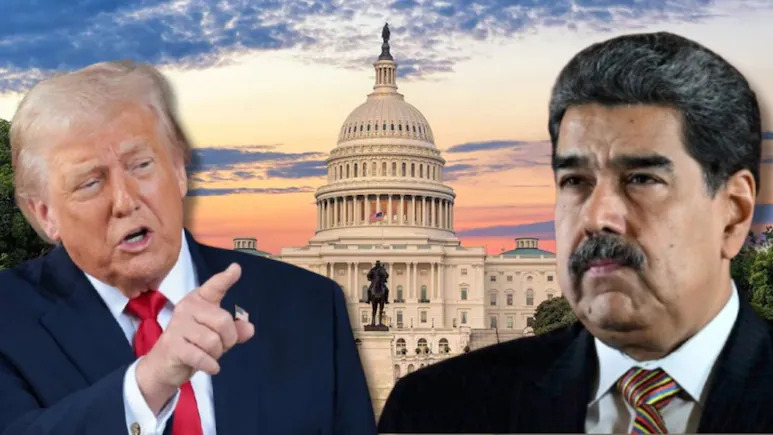
Why Trump’s Move Against Maduro Makes Sense -By Isaac Asabor
Trump’s decision also invites other nations to step up, to reconsider their passive complicity in the face of egregious abuse....

From Aso Rock To The People: Governance Is Alive -By Danjuma Lamido
Nigerian politics is not for jesters or perpetual protesters; it is for serious-minded people with depth, experience, and a clear...

Bauchi Needs Governance, Not Distractions, as EFCC Does Its Job -By Yasir Shehu Adam
Bauchi State deserves progress, not distraction. Governance must take precedence over allegations, and service must outweigh self-defence. History will judge...

Game of Power: Throne Reclaim -By Abba Dukawa
Most Kwankwasiyya members are youths . Where were they when Kwankwaso parted ways with Hamisu Musa, Musa Gwadabe, and Dauda...
Silence Where It Matters: Bauchi’s Misplaced Priorities and Forgotten People -By Yasir Shehu Adam
A governor’s speech should reflect actual priorities. When basic human development sectors are absent from key policy messages, citizens have...