
Forgotten Dairies
Why State Police Is Not the Answer To Nigeria’s Security Challenges -By Adewole Kehinde
Rather than multiplying structures, Nigeria would be better served by reforming, properly funding, and professionalising the existing Nigeria Police Force to serve all citizens fairly and effectively.


A disciplined and alert police force is the strongest pillar of a peaceful society.
In recent years, the call for the establishment of a national police force has grown louder, driven by frustration over Nigeria’s persistent security challenges. Proponents argue that policing should be taken closer to the grassroots and that the state-controlled troops would better understand local dynamics than a centrally managed Nigeria Police Force (NPF).
While these arguments may sound appealing on the surface, a deeper examination reveals that state police could create more problems than solutions for Nigeria.
One of the gravest concerns is the high risk of political misuse. In a political environment where institutions are often weak and personalised, governors could easily deploy state police for personal or partisan interests.
Rather than serving as neutral protectors of citizens, state police could become tools for intimidating political opponents, silencing dissent, and oppressing perceived enemies of those in power. Nigeria’s history of political interference in public institutions makes this fear far from hypothetical.
Closely linked to this is the danger of ethnic bias and discrimination. Many Nigerian states are dominated by particular ethnic groups, and a state-controlled police force could easily reflect and reinforce these local power structures.
Non-indigenes or minority groups might face discrimination, selective enforcement of laws, or outright victimisation. Instead of enhancing security, such bias could fuel resentment, social disorder, and inter-communal tension, further fragmenting an already divided society.
A politicised state police system could also deepen ethnic and regional divisions across the country. Security forces that owe loyalty primarily to state governments may act in ways that undermine national cohesion.
In extreme cases, rival state police commands could challenge federal authority, creating parallel centres of power that threaten national stability, especially during elections or periods of political crisis.
Beyond political and social risks, there are serious financial implications. Policing is capital-intensive. Many states already struggle to pay salaries and meet basic obligations.
Expecting them to fund, equip, and maintain professional police forces with modern technology, training facilities, welfare packages, and logistics would impose a heavy burden. Poorly funded state police could end up underpaid, ill-equipped, and demoralised, conditions that often breed corruption and abuse.
The absence of a unified federal command structure would further complicate national security. Crimes in Nigeria rarely respect state boundaries, and effective law enforcement depends on seamless coordination and intelligence sharing.
Multiple autonomous police forces could lead to jurisdictional conflicts, duplication of efforts, and confusion over authority. Disputes between federal and state police over who has control in specific cases could delay investigations and allow criminals to exploit institutional gaps.
Ensuring uniform standards of training, professionalism, and respect for human rights across 36 states would also be extremely difficult. Even under a single national police force, Nigeria struggles with issues of misconduct, excessive force, and weak accountability.
Replicating these challenges at the state level, often with weaker oversight mechanisms, could result in widespread abuse. Without strong, independent oversight, state police could become just as corrupt as, or even worse than, the current federal system.
Ironically, the creation of state police could weaken rather than strengthen federalism. True federalism requires clear roles, cooperation, and loyalty to the Constitution. Parallel security structures with conflicting jurisdictions and allegiances risk undermining this balance, replacing cooperation with competition and confusion.
In conclusion, while Nigeria’s security challenges are real and urgent, state police is not a silver bullet. A multiplicity of police forces could lead to fragmentation, confusion, and weakened national coordination.
Without robust, independent oversight and strong institutions at the state level, state-controlled police forces risk becoming instruments of oppression and corruption.
Rather than multiplying structures, Nigeria would be better served by reforming, properly funding, and professionalising the existing Nigeria Police Force to serve all citizens fairly and effectively.
Adewole Kehinde is a public affairs analyst based in Abuja. 08166240846. @kennyadewole kennyadewole@gmail.com



Game of Power: Throne Reclaim -By Abba Dukawa
Most Kwankwasiyya members are youths . Where were they when Kwankwaso parted ways with Hamisu Musa, Musa Gwadabe, and Dauda...
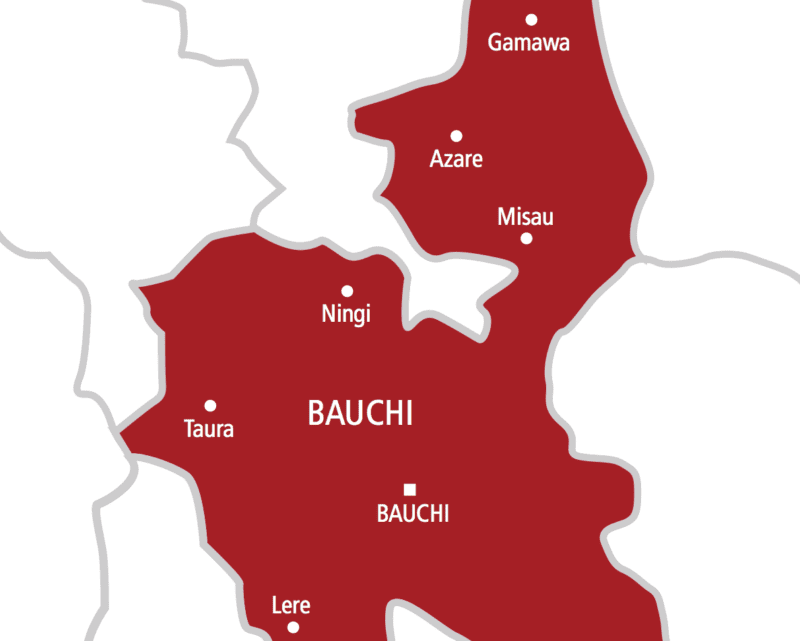
Silence Where It Matters: Bauchi’s Misplaced Priorities and Forgotten People -By Yasir Shehu Adam
A governor’s speech should reflect actual priorities. When basic human development sectors are absent from key policy messages, citizens have...


Thankfully, There’s None Like Prophet Ebo Noah in Nigeria; Is There? -By Ugochukwu Ugwuanyi
Mysteries in the Old Testament can only be decoded through the light of the New Testament. Mercifully, the Holy Spirit...


The Ripples From The Tinubu’s Tax Reform And The Future Of Nigerian Economy -By Hajia Hadiza Mohammed
The most worrisome issue in the whole tax reform debacle is the intention of the government and its fixation on...


Africa’s Crisis of Military Coups and Insecurity -By Safiya Zakari Muhammad
The erosion of democracy has also weakened regional and international security cooperation. In some cases, juntas have expelled traditional partners...