
Forgotten Dairies
Why Trump’s Move Against Maduro Makes Sense -By Isaac Asabor
Trump’s decision also invites other nations to step up, to reconsider their passive complicity in the face of egregious abuse. Accountability should not rely solely on America, but America’s intervention can catalyze broader international enforcement. In this sense, the arrest of Maduro is not an act of unilateral dominance; it is a call to global responsibility, a reminder that power is not a shield for impunity.

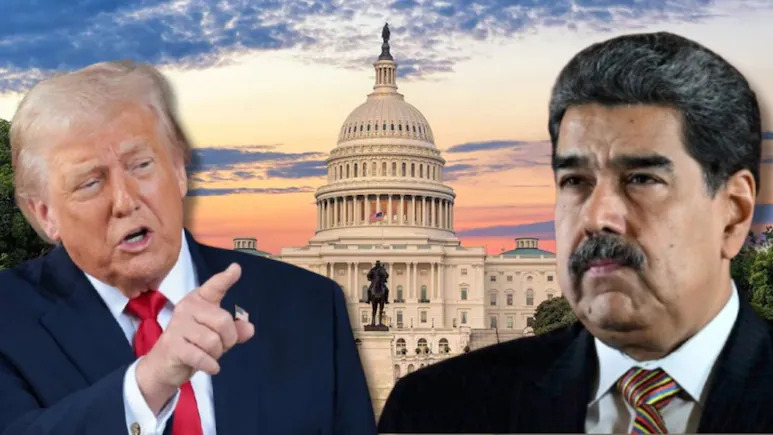
In an era when global governance is often debated as a matter of moral responsibility versus national sovereignty, former U.S. President Donald Trump’s arrest of Venezuelan President Nicolás Maduro and his wife raises questions that go far beyond domestic politics. Critics are quick to denounce it as overreach, a blatant act of imperialism by a nation notoriously comfortable with intervening abroad. But to those who believe in the ideals of good governance, accountability, and the protection of human rights, this controversial move could be seen as a logical, even necessary, extension of America’s longstanding role as a global enforcer of democratic norms.
For decades, Venezuela has been emblematic of what happens when unchecked power meets systemic corruption. Maduro’s tenure has been marked by a relentless consolidation of authority, widespread suppression of dissent, and a staggering economic collapse that has left millions in poverty and forced an exodus of Venezuelans into neighboring countries. While governments worldwide have issued condemnations, imposed sanctions, and occasionally recognized opposition leaders, tangible enforcement against the Maduro regime has remained largely symbolic. Given the foregoing backdrop of arrant impunity, Trump’s bold intervention is no doubt a clear signal that prolonged inaction on human rights abuses and corruption is no longer acceptable.
From a purely moral standpoint, the arrest of Maduro is hard to dispute. Leadership carries responsibility. When a head of state systematically deprives citizens of basic needs, starving a nation, silencing opposition, and eroding democratic institutions, international accountability becomes not just justifiable but urgent. Many argue that sovereign immunity should protect sitting heads of state from prosecution or arrest. Yet history teaches us that when governments fail their people, external intervention, especially by countries wielding significant global influence, can serve as a last line of defense for oppressed populations. America, by virtue of its military, economic, and diplomatic reach, has long assumed this role. To claim that intervention is overreach ignores the practical reality that no other nation has the capacity to impose consequences on leaders like Maduro in a meaningful way.
Critics will undoubtedly paint this as “American imperialism” or an abuse of global policing power. But let us be frank: the idea of America as the “world police” is not inherently nefarious. It is a mantle that carries tremendous responsibility, yes, but also tremendous opportunity. When wielded judiciously, this influence can save lives, preserve democracy, and maintain international norms. Consider instances in recent decades where inaction would have spelled catastrophe in Rwanda, Syria, and Myanmar among others. In these situations, the absence of decisive intervention allowed authoritarian excess and mass suffering to fester. America’s role has never been merely to react but to prevent the systematic abuse of human rights where possible. By targeting Maduro, Trump is not asserting dominance for dominance’s sake; he is leveraging America’s unique position to enforce accountability where local mechanisms have repeatedly failed.
It is also worth considering the symbolic value of the move. Arresting a sitting president on charges of corruption, human rights abuses, and destabilization sends a message not only to Maduro but to authoritarian leaders everywhere: power is not a free pass to exploit your people. Governance is not a private enterprise; it is a public trust. When that trust is violated egregiously, the world cannot, and should not, stand idle. After all, the present age is not that of Idi Amin of cursed memory. Trump’s decision, controversial as it may be, reaffirms the principle that leaders must answer for their actions, even beyond their national borders.
Some may argue that such action risks destabilizing an already fragile region, potentially exacerbating crises rather than resolving them. Yet history demonstrates that prolonged impunity often worsens instability. Authoritarian regimes thrive in the absence of accountability, and populations under oppressive rule endure further suffering the longer international action is delayed. By removing, or at least holding Maduro accountable, the U.S. sets the stage for a legitimate transfer of power, one that could allow Venezuela to rebuild institutions, restore economic stability, and re-engage with the international community.
Detractors might also claim that such moves violate the norms of sovereignty, that one nation has no right to act against the leader of another. This is a convenient moral shield for tyrants. Sovereignty, in this sense, becomes a tool for shielding egregious wrongdoing. True sovereignty is not the right to exploit your people with impunity; it is the responsibility to govern in accordance with the welfare and dignity of citizens. When leaders betray that responsibility, the moral obligation of the global community to intervene becomes unavoidable. Trump’s decision, while radical, aligns with the broader principles of international justice: sovereignty is earned through the ethical and effective governance of one’s citizens, not by mere title or geographic borders.
Of course, the execution of such an intervention must be careful, lawful, and strategic. America cannot act recklessly, and the consequences of missteps could be severe. Yet the principle remains: global power, when wielded responsibly, can serve as a check against corruption and oppression. Trump’s move is not a reckless display of dominance; it is a calculated assertion that human rights and governance matter above the convenience of political neutrality.
The broader implication of this action is perhaps even more important: it challenges the world to reconsider its tolerance for authoritarianism. Too often, governments and international organizations issue condemnations without backing them with action, leaving populations trapped under rulers who exploit their nations for personal gain. By acting decisively against Maduro, Trump is signaling that words are no longer enough. There must be consequences. Leaders who oppress their citizens cannot expect global indifference. Accountability must transcend borders when the lives and well-being of millions hang in the balance.
To some, America’s “world police” role is a burden, an uncomfortable reminder of the nation’s unilateral influence. But let us not confuse discomfort with immorality. True leadership on the world stage demands difficult decisions. Confronting a sitting dictator, even at the risk of criticism or geopolitical backlash, demonstrates a commitment to values that transcend political expediency. For those who champion democracy, human rights, and accountability, this is not imperial overreach, it is principled action in service of a higher standard of governance.
Trump’s decision also invites other nations to step up, to reconsider their passive complicity in the face of egregious abuse. Accountability should not rely solely on America, but America’s intervention can catalyze broader international enforcement. In this sense, the arrest of Maduro is not an act of unilateral dominance; it is a call to global responsibility, a reminder that power is not a shield for impunity.
In conclusion, while the optic of arresting a foreign leader is bound to provoke debate, the underlying rationale aligns with a long-standing moral imperative: leaders must govern with integrity, or they must answer for their failings. Trump’s intervention in Venezuela is controversial, yes, but it is also defensible, even commendable, from the perspective of good governance and human rights. If America is to act as the world’s enforcer of accountability, then so be it. The alternative, inaction in the face of tyranny, is far costlier, measured not in dollars or politics, but in human lives and the erosion of justice.
Trump’s move may be historic, but its implications are clear: in a world where power too often shields corruption, decisive action is not only justified, it is necessary. If standing for justice requires crossing borders, then the U.S. must not hesitate. Maduro and his wife are now emblematic of a simple, yet profound truth: no leader is above the law, and no suffering can be ignored indefinitely. In the end, America’s role as global enforcer, for all its controversy, is validated not by ambition, but by necessity.


Why African Leaders Must Fix Governance Before Crying Sovereignty -By Isaac Asabor
One of the great contradictions of African leadership today is selective morality. Leaders speak passionately about international law while violating...

Baba Has Entered The Classroom -By Isaac Asabor
If what Trump is doing is walking into a noisy global classroom and insisting on discipline, then let us be...

As Trump Exposes Why Tinubu Must Go Sooner -By SKC Ogbonnia
The Nigerian president is not only culpable of heinous crimes, but he is also weakened beyond redemption. His continued stay...


How Lavrov’s Philosophy of “Ubuntu” Reflects on the Level of Africa’s Media Presence in Russia -By Kestér Kenn Klomegâh
The December 19–20 Ministerial Conference reaffirmed commitments to fully implement the Russia–Africa Partnership Forum Action Plan (2023–2026), adopted at the...
Why Trump’s Move Against Maduro Makes Sense -By Isaac Asabor
Trump’s decision also invites other nations to step up, to reconsider their passive complicity in the face of egregious abuse....