
Political Issues
Wike, Why Not Just Resign And Leave The President Alone? You Have Abused Him Enough, Treated Him Like A Child, Whatever Was The Dark Deal In 2023, And His Fear About 2027: A Sentimental Reflection on the End of a Psychological Siege and the Restoration of Leadership Dignity -By Psychologist John Egbeazien Oshodi
A Federal Minister is not a local warlord. A Federal Minister is not a personal empire. A Federal Minister is meant to support a national leader, not compete with him. Yet what Nigerians watched was a Minister who behaved like power itself belonged to him. His words carried ownership. His tone carried entitlement. His public posture carried the arrogance of a man who believes the President’s seat is incomplete without his approval.

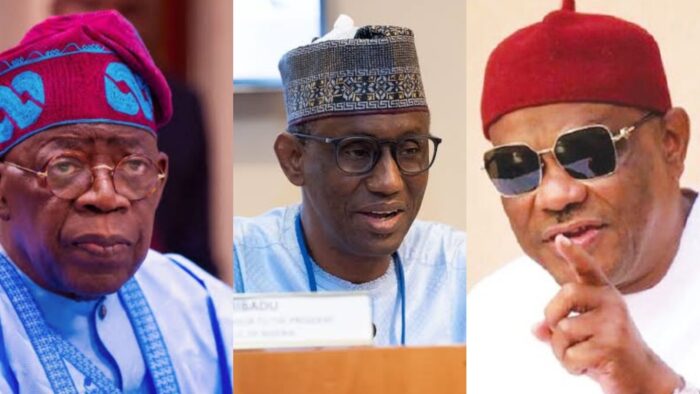
On Saturday night, January 17, 2026, as the Presidential jet taxied down the Abuja runway, a heavy cloud of psychological tension finally began to lift. For 20 days, the President had been away, and for 17 of those days, FCT Minister Nyesom Wike hijacked the national psyche. While the capital city sat in a security vacuum, the Minister used his media machinery to treat the Presidency, the APC, and the Rivers State Government like his private Village classroom. But as President Bola Ahmed Tinubu stepped onto the tarmac, greeted by his NSA, the IGP, and the Chief of Staff while the Minister was pointedly absent, the message was tearfully clear, the indirect Presidency is over.
And Nigerians know something else, as the Minister of Abuja, the host of the nation’s capital, he is usually there to receive the President. That is the public ritual of leadership. That is the symbolism of office. That is part of his identity as the custodian of the Federal Capital Territory. So when he was absent, Nigerians did not see coincidence. Nigerians saw separation. Nigerians saw distance. Nigerians saw a quiet refusal, or a quiet instruction, as if those closest to the President did not want him there. As if the abuse had become too much.
It looked like a quiet rejection of the all powerful man who has been treating Tinubu like a child, as if the President must always be reminded of who helped him, who made him, and who must be feared. It looked like the Presidency saying without drama that the era of psychological bullying has reached its limit. Some rejections do not need microphones. They only need positioning. They only need power returning to the center. And in that moment, with the NSA, the IGP, and the Chief of Staff standing as the visible gatekeepers of authority, Wike’s absence became a sentence without words, enough is enough.
And perhaps that absence carried another message too, the kind of message that reveals a deeper sickness of entitlement. It was as if the Minister was saying, if you can be out for 20 days, I too can be out. If the President can travel and be away, then I too can disappear from Abuja and still remain powerful. If the country can survive without you physically present, then I too can abandon my duty post and still dominate the national atmosphere. Whether he got excused or not, whether he was permitted or not, whether he was invited or not, the symbolism remains painful, because Abuja is not a private playground. Abuja is not a local stage. Abuja is the capital, and the Minister of the capital does not get to perform absence as a form of ego.
For 17 days, Nigerians watched a disturbing national distortion where one Minister behaved like the constant narrator of government, the loudest voice in the room, the man who had the privilege of dominating the airwaves while the actual President was physically absent. It was like a prolonged political captivity, a 17 day media lockdown where every headline, every performance, every planted message, and every calculated insult carried the same underlying message, I am the one in control here.
This is what made it painful. This is what made it humiliating. This is what made it feel dangerous for the national psyche. The Minister did not just speak. He performed power. He staged control. He displayed ownership of political space the way an emperor parades territory. He treated the Federal Cabinet like an audience that must endure his dominance. He treated the APC like a household that must accept his threats as normal. He treated the Rivers State Government like a toy that must not move without his permission. And he treated the nation like a captive audience that must listen, watch, absorb, and submit.
That is why the Kingmaker story became unbearable. Because it was no longer political memory. It became psychological terrorism. It became a daily reminder that a Minister could behave like the owner of a sitting Governor, the controller of party leadership, and the distributor of insults without consequence. It became a daily lesson in intimidation, where power was not exercised with dignity but with mockery, with threats, with emotional blackmail, and with the loud confidence of a man who believes he is untouchable. It was not just a conflict. It was a siege. It was a carefully sustained siege of national attention, designed to produce one outcome, submission.
THE 17 DAY MEDIA CAPTIVITY: A NATION TRAPPED INSIDE ONE MAN’S EGO
The tragedy of this moment is not only what was said or done, but what Nigerians were forced to sit through. For 17 days, one Minister turned national attention into a hostage room. He kept the country trapped in his daily media appearances, his local dominance rituals, his public threats, and his emotional warfare. He acted like the cabinet must wait for him, like the party must fear him, and like the Governor must be broken publicly before loyalty can be declared complete. This was not governance. This was psychological captivity dressed as politics. It was domination culture, the kind that survives only by exhausting the dignity of others until they surrender.
A MINISTER WHO REFUSED TO BE A SERVANT: WHATEVER WAS THE DARK DEAL OF 2023 AND THE FEAR OF 2027
A Federal Minister is not a local warlord. A Federal Minister is not a personal empire. A Federal Minister is meant to support a national leader, not compete with him. Yet what Nigerians watched was a Minister who behaved like power itself belonged to him. His words carried ownership. His tone carried entitlement. His public posture carried the arrogance of a man who believes the President’s seat is incomplete without his approval.
That is why Nigerians began to ask the painful question. What exactly happened in 2023. What was the arrangement. What was the private understanding. What was the dark deal. Because when one Minister acts as if he can bully a President through media noise, then the nation knows there is a debt somewhere. There is a fear somewhere. There is a bargain somewhere. There is an unspoken contract somewhere.
And when Nigerians mention 2027, they are not guessing for entertainment. They are reading the psychology of political survival. They are reading the fear of succession. They are reading the anxiety of ambition. They are reading the uncertainty of loyalty. They are reading the possibility that the same loud man preparing the ground in Rivers is also preparing the ground for national bargaining power, using intimidation as leverage, using media dominance as blackmail, and using party tension as a weapon.
Not even any official statement from the Presidency was offered to explain why this Minister remained in Rivers for 17 days, as if Rivers belongs to him. And who truly knows why the Presidency was silent. Who knows what calculations were being made behind closed doors. Who knows what debts were being managed quietly. Who knows what invisible pressures were at play. In Nigeria, silence is rarely empty. Silence can be protection. Silence can be fear. Silence can be negotiation. Silence can be the sound of a nation watching one man behave as though discipline does not apply to him.
And who knows what holds people psychologically in place. Who knows who he gifts. Who knows who he rewards. Who knows who benefits from Abuja land allocations, from access, from contracts, from private privileges that do not come with public explanations but come with quiet loyalty. Abuja land is not just land. Abuja land is power. Abuja land is profit. Abuja land is silence. It is a chain that can hold even strong people down, because once a person has benefited, fear of losing that benefit becomes the new discipline. Who knows who was given land, who was promised land, who was protected with land, and who was made to fear exposure. This is how political captivity is built, not only through threats, but through rewards that turn institutions into obedient spectators.
GO HOME AND STAY WITH YOUR WIFE: A PSYCHOLOGICAL DAGGER TO THE HOME
The most agonizing moment of this siege came through the mouth of the Minister’s aide, Lere Olayinka, acting as the voice of his master. In an act of pure psychological emasculation, he publicly mocked Governor Siminalayi Fubara, telling the leader of millions:
“If you can’t play politics, go home and stay with your wife.”
To suggest that a Governor, a man of stature, a husband, and a father, belongs in the bedroom rather than the Government House is an insult to every Nigerian household. It reveals a toxic God Complex where the Minister believes that because he made the Governor, he now owns the man’s dignity and his family’s peace. Wike, why not just leave the Governor and his family alone. Is the hunger for control so great that you must humiliate a man’s wife to feel powerful.
This was not ordinary political insult. It was a psychological dagger aimed at the home, the place where a man’s identity should be protected, not weaponized. It was the language of domination, not correction. It was humiliation meant to crush spirit, not resolve conflict. And it is dangerous because once a Governor is reduced publicly to a man who should go home and stay with his wife, then leadership itself becomes something that can be mocked, stripped, and broken in the public square.
THE ABUSE OF THE CABINET AND THE NSA: THEY COME TO COLLECT
The Minister’s disrespect did not stop at the Governor, it climbed the very ladder of the Federal Government. When the National Security Adviser, Nuhu Ribadu, visited Rivers to deliver a message of Presidential support for Fubara, Wike did not show respect, he showed contempt. He mocked the President’s highest security officer, suggesting the visit was a mere financial transaction:
“Everybody who comes to Rivers State today must say, ‘the President is happy with you,’ and they collect… for you to be able to suck part of that money, you must say ‘Wike’s time is over’.”
By accusing the NSA of being a money sucker who sells the President’s happiness for money, Wike has devalued the office of the President. He has made the Commander in Chief look like a man whose endorsements are for sale. He has dragged the Presidency into the marketplace of suspicion with one reckless statement. That is not political rivalry. That is institutional humiliation. That is a Minister treating the President’s authority like a product that can be bought and sold.
This is what it means to treat Tinubu like a child, to speak as if the President’s representatives can be insulted publicly without consequence, to behave as if the Presidency must absorb disrespect like a parent tolerating a stubborn child who refuses correction.
BULLYING THE PARTY: IF YOUR HAND BURNS, NO BE ME BURN AM O
The Minister’s psychological war extended to the President’s own party machinery. He issued a chilling, thuggish warning to the National Secretary of the APC, Ajibola Basiru, telling him to stay out of Rivers State:
“I say it here, take this message to your National Secretary: leave Rivers State alone… If your hand burns, no be me burn am o.”
To threaten the high leadership of the President’s own party with burnt hands is the height of insubordination. It is the posture of a man who believes Rivers State is his private kingdom and party authority must take instructions from him. He has abused the cabinet and the party enough. He has made the President look powerless in his own house for too long.
ABUJA WEEPS: A LADY DIED, A LAWYER DIED, AND THE CAPITAL BLED WHILE HE PERFORMED
While the Minister was 600 kilometers away playing Emperor and mocking his colleagues, the city he was sworn to protect was bleeding. The tragic death of Princess Nwamaka Mediatrix Chigbo, a lady, a brilliant lawyer, killed by one chance criminals on the Kubwa Expressway, is the blood on the hands of this neglect.
Yes he might not be the police, but as the Chief Security Officer of the FCT, his first duty was to the safety of Abuja. Leadership is not only about carrying a rifle. Leadership is about coordination, urgency, seriousness, and the visible protection of human life. Instead, he was busy with 7 minute Executive Council performances for the cameras, treating Rivers like theater and Abuja like an afterthought.
Abuja is not a stage. Abuja is not a camera set. Abuja is a living city of families, workers, students, lawyers, traders, civil servants, and ordinary Nigerians trying to survive each day without becoming the next headline of horror. Yet while Abuja wept, the Minister performed. While the capital mourned, he danced. While citizens feared the roads, he amplified his political war. It is impossible to separate this negligence from the psychology of power addiction, because a man intoxicated by dominance eventually abandons responsibility, and what is left behind is grief, blood, and helplessness.
CONCLUSION: A PLEA FOR PEACE AND RESIGNATION
Minister Wike, you have said it yourself: “If my appointor believes that I cannot offer anything again, he has the right to sack me.” But a man of honor does not wait for a sack letter after he has insulted his boss, bullied his colleagues, threatened party leadership, mocked the families of his peers, and treated the national psyche like a hostage room.
You have abused the President enough. You have humiliated the Governor enough. Why not just resign and leave the President alone to lead in peace.
Welcome back, Mr. President. The tarmac has spoken. The golden handcuffs are off, the media siege is broken, and the throne of Nigeria is finally, unequivocally, yours alone.
About the Author
Prof. John Egbeazien Oshodi is an American psychologist, an expert in policing and corrections, and an educator with expertise in forensic, legal, clinical, and cross-cultural psychology, including public ethical policy. A native of Uromi, Edo State, Nigeria, and son of a 37-year veteran of the Nigeria Police Force, he has long worked at the intersection of psychology, justice, and governance. In 2011, he helped introduce advanced forensic psychology to Nigeria through the National Universities Commission and Nasarawa State University, where he served as Associate Professor of Psychology.
He teaches in the Doctorate in Clinical and School Psychology at Nova Southeastern University; the Doctorate Clinical Psychology, BS Psychology, and BS Tempo Criminal Justice programs at Walden University; and lectures virtually in Management and Leadership Studies at Weldios University and ISCOM University. He is also the President and Chief Psychologist at the Oshodi Foundation, Center for Psychological and Forensic Services, United States.
Prof. Oshodi is a Black Republican in the United States but belongs to no political party in Nigeria—his work is guided solely by justice, good governance, democracy, and Africa’s development. He is the founder of Psychoafricalysis (Psychoafricalytic Psychology), a culturally grounded framework that integrates African sociocultural realities, historical awareness, and future-oriented identity. He has authored more than 500 articles, multiple books, and numerous peer-reviewed works on Africentric psychology, higher education reform, forensic and correctional psychology, African democracy, and decolonized models of clinical and community engagement.


Good Governance as a Tool for National Development -By Blessing Matthew
Good governance prioritizes the interests and welfare of the people above personal or sectional interests. It encourages transparency, accountability, rule...


Role of Youths in Nation Building -By Kusompwa Lazarus Motiyedi
It is true that today’s youth did not experience the horrors of the Nigerian Civil War or the severe economic...

Putin Receives Newly Appointed Foreign Ambassadors in Bolshoi Kremlin Palace -By Kestér Kenn Klomegâh
According to him, the foundations of these relationships were laid back during the struggle of African peoples for freedom and...


Why Obi Cubana Shouldn’t Have Given His Life to Jesus (Part 1) -By Ugochukwu Ugwuanyi
But then, why the fuss about Obi Cubana's repentance, what with the American Rap King, Snoop Dog, repenting from gangsterism...


Invincible Defence Technology: Consciousness-Based Solutions to Interstate and Intrastate Violence -By Dr. David Leffler
Technology refers to the systematic application of knowledge and tools. In the case of IDT, this brain-based “technology” is the...