
Democracy & Governance
With the BVAS, not having a PVC shouldn’t disenfranchise Registered Voters -By Timipere Felix Allison
Unless INEC makes a U-turn, a sizeable number of Nigerians eager to vote will have to wait for another opportunity.

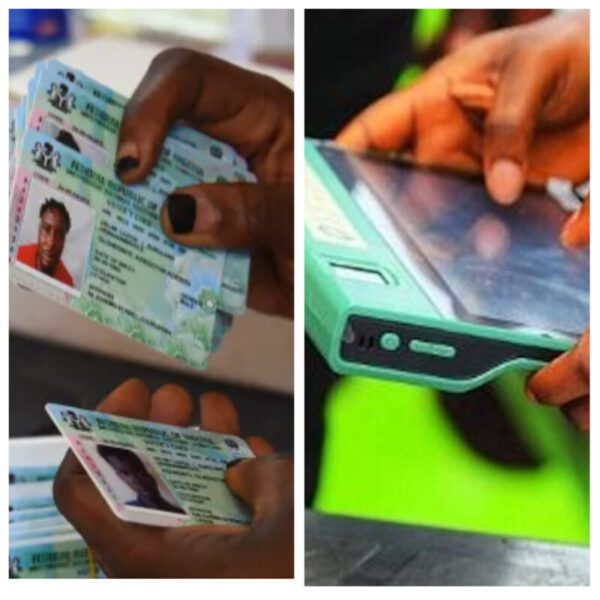
To appreciate why the plastic PVC may no longer be obligatory, it is necessary to understand how the BVAS works… In essence, reading a chip is not a functionality known with the BVAS, but a distinguishing feature of the now-discarded Card Reader Machine.
It is less than two weeks to the 2023 General Elections in Nigeria. Barring any final-minute postponement, Nigerians will on February 25, head to their polling units to elect a new president and members of the twin-chamber federal legislative assembly. On March 11, they will be voting for governors in 28 states and for members of state houses of assembly across the country. The indicators point to a tightly contested Presidential Election. For the first time in the current democratic experience, three candidates are head-to-head in the race to be Nigeria’s next president.
While the past three Presidential Elections saw poor voter turnouts, that of this year has generated so much interest, especially among young Nigerians who dominate the electorate, to expect a low turnout. The election comes amid a backdrop of near-state collapse: high levels of nationwide insecurity, corruption in government, high unemployment, double-digit inflation, and lingering acute petrol and naira scarcity. For many Nigerians, this year’s Presidential Election is a fight for their very existence – a main reason for a likely large voter turnout.
Coming off the successes of off-cycle elections in the last two years, Nigeria’s election umpire – INEC – has been working round the clock to meet great expectations of free and credible 2023 General Elections. A component of INEC’s responsibility to ensure trustworthy elections is the maintenance and update of the Voter Register and validation of potential voters. In the performance of this duty, the electoral umpire organised the mandatory Continuous Voter Registration exercise to add to the Register, Nigerians who attained the voting age of 18 years by August 2022. However, to be eligible to vote, registered voters must be issued a Permanent Voter Card (PVC) by INEC.
Registered voters face disenfranchisement for not having a PVC
INEC ended the distribution of PVCs on the 5th of February. According to its National Commissioner and Chairman of the Information and Voter Education Committee, Festus Okoye, there would be no further extension of PVC collection as the electoral body needs ‘to get right into the election and do some other things’. This decision is amid complaints by many registered voters that despite spending long hours and many days at designated collection points, and for faults not of their own, they could not collect their PVC.
A coalition of civil society organisations which feared that many voters would be disenfranchised for INEC’s failures cited the late arrival of PVCs, lack of standard operating procedures for PVC collection, refusal to authorise collection by proxy, and refusal to utilise volunteers, as reasons many Nigerians will be denied their right to vote. In Lagos state, INEC faced allegations of deliberately withholding PVCs bearing the names of voters from a particular ethnic group.
Unless INEC makes a U-turn, a sizeable number of Nigerians eager to vote will have to wait for another opportunity.
In the era of the BVAS, should any registered voter be disenfranchised because of PVC?
The 2022 Electoral Act allows INEC to deploy technology to enhance the credibility of elections. This has cleared the path for the deployment of the BVAS (Bimodal Voter Accreditation System) in the elections of this year following the successful deployment of the device in the recent off-cycle elections. The BVAS is the answer to calls for solutions to large-scale voter fraud and manipulation of the election day process. To appreciate why the plastic PVC may no longer be obligatory, it is necessary to understand how the BVAS works.
The BVAS authenticates voters by matching their fingerprints or facial features with stored biometric data obtained during the voter registration process. However, to proceed with biometric verification, a voter presents their PVC to the poll officials for confirmation as duly registered in the polling unit. To confirm the authenticity of the PVC and if the voter is at the right polling unit, poll officials do one of three things: use the BVAS to scan the barcode or QR code at the back of the PVC; input into the BVAS, the last 6 digits of the Voter Identification Number (VIN) on the PVC; use the voter’s last name as shown on the PVC to verify their registration.
None of these actions involves or requires reading the chip believed to be embedded in the PVC. In essence, reading a chip is not a functionality known with the BVAS, but a distinguishing feature of the now-discarded Card Reader Machine. With the Card Reader Machine, the PVC was placed in the device which read the chip and displayed the details of the voter. With the chip now redundant, questions arise as to why INEC would disenfranchise any registered voter.
INEC can also create the e-PVC
INEC can create for each voter, a digital copy of the PVC showing the same information – voter name, barcode, QR code and VIN – needed for processing by the BVAS. This virtual copy can be accessible in the voter’s password-protected online account on the Commission’s portal. During elections, the voter can go online to download, screen capture, or print the e-PVC and present the same before poll officials for verification. In today’s world, a growing number of organisations are utilising digital copies of employee or client identity cards with scannable QR codes or bar codes. Airlines do the same with boarding passes. Covid-19 curbs saw the scanning of QR codes printed on papers to verify the vaccination status of international travellers, irrespective of the jurisdiction of their vaccination. This means that QR codes or barcodes printed on paper can be read without challenges.
There are obvious benefits
A digital copy of the PVC will prevent the disenfranchisement of voters as they can go online to access the card when needed. The e-PVC will save time and money for the government and INEC. As the demand for the plastic PVC reduces, especially among young voters who show a preference for online alternatives to almost everything, so will the cost of printing PVCs. Increasingly, fewer Nigerians will demand the plastic copy of the PVC, making it possible for INEC to put its personnel to other uses. Also, the challenges on INEC’s end that undermined the distribution of PVCs will gradually be eliminated. Furthermore, by giving voters direct access to their PVC online, INEC can eliminate the likelihood of feelings of deliberate disenfranchisement.
Timipere Felix Allison (PhD) is a political analyst with decades of election and governance experience in Nigeria and across West Africa.



When Nations Break Their Reformers: Why EFCC Cannot Carry Nigeria’s Burden Alone — And Why Power Must Fear God -By Prof. John Egbeazien Oshodi
Public frustration with the EFCC over perceived selective enforcement is understandable. Nigerians see some arrests carried out suddenly and forcefully,...


Poor, Poor, Maduro -By IfeanyiChukwu Afuba
Little wonder his ouster elicited celebrations. The ease of his capture is telling. There is only one explanation for the...


Why African Leaders Must Fix Governance Before Crying Sovereignty -By Isaac Asabor
One of the great contradictions of African leadership today is selective morality. Leaders speak passionately about international law while violating...


Baba Has Entered The Classroom -By Isaac Asabor
If what Trump is doing is walking into a noisy global classroom and insisting on discipline, then let us be...


As Trump Exposes Why Tinubu Must Go Sooner -By SKC Ogbonnia
The Nigerian president is not only culpable of heinous crimes, but he is also weakened beyond redemption. His continued stay...