
Economic Issues
2025 Composite PMI: Sustaining Robust Growth Momentum -By Isah Aliyu Chiroma
The Central Bank of Nigeria at this moment represents more than just competent monetary management; it embodies a vision of resilience, adaptability, and ambition for Nigeria’s future. The stable growth outlook is not a fleeting achievement but a milestone on the road to long-term prosperity. The CBN’s leadership in economic stewardship offers a blueprint not just for Nigeria, but for other emerging economies seeking stability in a turbulent world.


Nigeria’s economic landscape has often been characterized by volatility, uncertainty, and the daunting challenge of achieving sustainable growth. In December 2025, a remarkable development signaled a shift in this narrative. The Central Bank of Nigeria (CBN), through its most recent Composite Purchasing Managers’ Index (PMI) report, delivered a resounding message: Nigeria’s economic activity is not just recovering, it is thriving. With the PMI surging to 57.6 index points, the highest in five years, the CBN’s stewardship stands out as a beacon of effective policy, driving the nation toward a stable and promising growth trajectory.
The PMI, long regarded as a trusted barometer of economic momentum, speaks volumes when it decisively crosses the 50-point threshold. December’s 57.6 reading does not merely mark expansion; it signals robust, broad-based growth across Nigeria’s core employment-generating sectors. Looking at the sectorial indices, Agriculture, the backbone of rural livelihoods, posted an impressive 58.5 points, which is driven by general farming activities. Industry, often weighed down by infrastructural bottlenecks, recorded 57.0 points. The services sector, despite global headwinds, maintained positive momentum with 56.4 points. These figures are not mere statistics; they are a testament to the efficacy of the CBN’s macroeconomic management.
Why is this moment particularly significant? In recent years, Nigeria has grappled with twin shocks: the global pandemic and persistent oil market volatility. The CBN’s ability to guide the economy through these storms and now catalyze a broad-based recovery underscores a new era of central banking in the country. The December PMI report reveals that 32 of 36 monitored subsectors expanded in key indicators such as production, new business orders, and employment. Such breadth in economic resurgence is rare and points to a carefully orchestrated policy environment.
At the heart of this turnaround are the CBN’s macroeconomic stabilization measures. These reforms have not only calmed inflationary pressures but have also restored business confidence, a critical driver of private sector investment and job creation. By enhancing the operating environment and providing targeted support to key sectors, the CBN has fostered conditions where businesses can thrive. The focus on the non-oil economy, in particular, demonstrates a commitment to diversification, reducing Nigeria’s vulnerability to external shocks, and laying the groundwork for resilient growth.
Importantly, the impact of these policies is felt on the ground. The sustained improvement in employment figures, as highlighted by the PMI, translates to real opportunities for millions of Nigerians. Production efficiency gains mean that businesses are not just growing in number but also in quality and competitiveness. New business orders reflect resurgence in domestic demand, signaling that Nigerians themselves are regaining confidence in their economy.
This peak moment for the CBN is not an accident; it is the result of deliberate, data-driven policy choices. The Bank’s decision to maintain a strategic balance between monetary tightening and targeted support for growth sectors has paid dividends. By staying ahead of inflation while ensuring that credit flows to productive enterprises, the CBN has managed to walk the tightrope that many central banks struggle with in emerging markets.
Most importantly, the CBN’s transparent communication and regular data releases, such as the PMI survey, have played a pivotal role in anchoring expectations. Market participants, investors, and ordinary citizens now have access to timely, credible information, reducing uncertainty and fostering a more predictable economic environment. This transparency has enhanced the effectiveness of policy transmission, further strengthening the foundation for stable growth.
The broader implications of the December PMI surge are profound. The strong finish of 2025 sets the stage for sustained momentum. The positive outlook is not just a function of current numbers but of the structural reforms and policy discipline that underpin them. The CBN’s actions have demonstrated that with the right mix of tools and determination, even the most challenging economic environments can be transformed.
The path to inclusive, sustained growth will require ongoing vigilance against inflation, continued investment in infrastructure, and a relentless focus on improving the ease of doing business. The CBN must remain agile, ready to adjust policies as global and domestic conditions evolve. But if the December 2025 PMI is any indication, the Bank has earned the trust to chart this course.
The Central Bank of Nigeria at this moment represents more than just competent monetary management; it embodies a vision of resilience, adaptability, and ambition for Nigeria’s future. The stable growth outlook is not a fleeting achievement but a milestone on the road to long-term prosperity. The CBN’s leadership in economic stewardship offers a blueprint not just for Nigeria, but for other emerging economies seeking stability in a turbulent world.
As the country transitions into a new year, optimism is grounded not in wishful thinking, but in real, measurable progress. The CBN’s performance at this critical juncture proves that with the right leadership, stable growth is not only possible, it can be achieved.



Game of Power: Throne Reclaim -By Abba Dukawa
Most Kwankwasiyya members are youths . Where were they when Kwankwaso parted ways with Hamisu Musa, Musa Gwadabe, and Dauda...
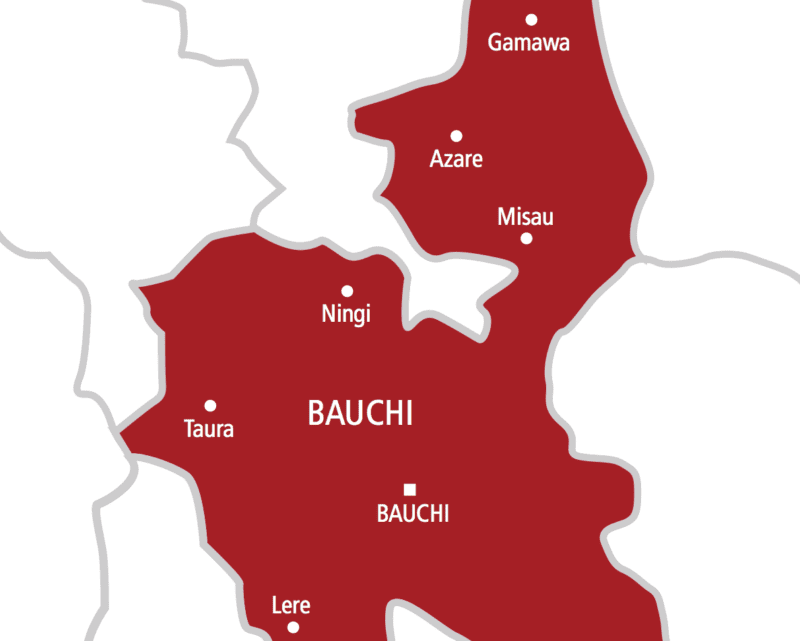
Silence Where It Matters: Bauchi’s Misplaced Priorities and Forgotten People -By Yasir Shehu Adam
A governor’s speech should reflect actual priorities. When basic human development sectors are absent from key policy messages, citizens have...


Thankfully, There’s None Like Prophet Ebo Noah in Nigeria; Is There? -By Ugochukwu Ugwuanyi
Mysteries in the Old Testament can only be decoded through the light of the New Testament. Mercifully, the Holy Spirit...


The Ripples From The Tinubu’s Tax Reform And The Future Of Nigerian Economy -By Hajia Hadiza Mohammed
The most worrisome issue in the whole tax reform debacle is the intention of the government and its fixation on...


Africa’s Crisis of Military Coups and Insecurity -By Safiya Zakari Muhammad
The erosion of democracy has also weakened regional and international security cooperation. In some cases, juntas have expelled traditional partners...