
Political Issues
Akume and Alia: Reconciliation Is Not a Boxing Match -By Leonard Karshima Shilgba
If reconciliation succeeds, Benue State stands to gain political stability, improved governance, and renewed confidence from investors and citizens alike. President Tinubu’s broader reform agenda gains traction. Nigeria gains another example of conflict managed through dialogue rather than attrition.

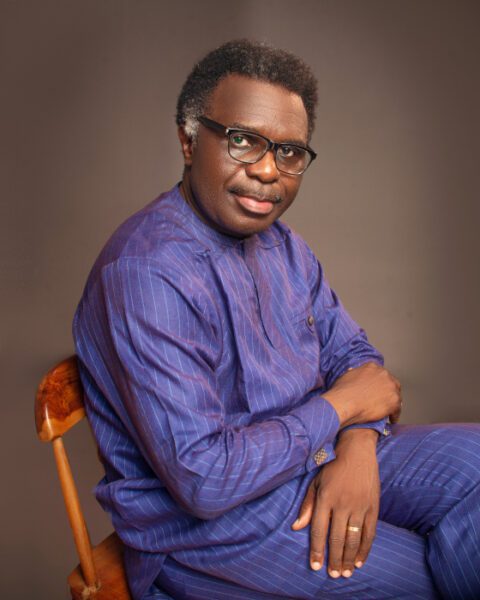
The renewed focus on reconciliation between the Governor of Benue State, Rev. Fr. Dr. Hyacinth Iormem Alia, and the Secretary to the Government of the Federation, Senator George Akume, is both timely and necessary. It reflects the sobering recognition that prolonged political estrangement within the ruling party has consequences far beyond personal rivalries; it weakens governance, destabilizes institutions, and ultimately punishes the people.
President Bola Ahmed Tinubu’s decision to mandate a high-level reconciliation committee, chaired by the Speaker of the House of Representatives, Rt. Hon. Abbas Tajudeen, is therefore a strategic intervention deserving of collective goodwill and restraint. It is an effort to heal, not to enthrone; to stabilize, not to reallocate dominance.
Unfortunately, some recent commentaries have already begun to frame this reconciliation process as a contest with inevitable winners and losers. Such narratives are not only premature; they are profoundly counterproductive. Reconciliation is not a boxing match, and it is not a zero-sum game. It is a disciplined political process that demands humility, compromise, and a willingness by all sides to subordinate private ambitions to public good.
Predicting in advance who will emerge with the “upper hand” hardens positions and encourages brinkmanship. It emboldens political loyalists to dig in rather than soften, to escalate rather than de-escalate. In fragile political environments like Benue, words do not merely describe reality; they help create it. Careless analysis can easily become a self-fulfilling prophecy.
The truth is that neither Governor Alia nor Senator Akume can afford a prolonged cold war. Benue State needs stability to confront insecurity, economic stagnation, and social dislocation. The APC needs internal cohesion to govern effectively and remain electorally viable. The President needs a united party structure in a strategic North Central state. Above all, the people of Benue need leadership that prioritizes outcomes over supremacy.
Reconciliation does not require silence on truth, nor does it excuse poor governance or political exclusion. But it does require restraint. It demands that grievances be addressed through dialogue rather than spectacle, and that power be exercised with a sense of proportion and shared responsibility.
This responsibility does not rest on the two principal actors alone. Political loyalists, opinion writers, intellectuals, traditional rulers, religious leaders, and members of the business community all shape the atmosphere within which reconciliation either succeeds or fails. When these groups amplify divisive narratives or project partisan certainties, they risk sabotaging a process whose success serves everyone.
History is unkind to those who profit from division while society bleeds. It remembers not only the leaders who failed to reconcile, but also the voices that discouraged peace and normalized conflict.
If reconciliation succeeds, Benue State stands to gain political stability, improved governance, and renewed confidence from investors and citizens alike. President Tinubu’s broader reform agenda gains traction. Nigeria gains another example of conflict managed through dialogue rather than attrition.
This is not the moment to take sides.
It is the moment to take responsibility.
Reconciliation, properly understood, is not about who yields more power. It is about who shows greater wisdom.


Lavrov Assesses Media Contributions Toward Developing Russia-Africa Relations During Cairo Ministerial Conference -By Kestér Kenn Klomegâh
During the previous two summits: in Sochi (2019) and in St Petersburg (2023), the theme on media was reviewed and...


It Is Christmas! -By Gabriel Agbo
You see, they did not celebrate Christ's birth at all. To them it was insignificant. They were far more concerned...

Why 2026 Must Be About Obeying God’s Word, Not Recycling Resolutions -By Isaac Asabor
Now, it is expedient to urge fellow Nigerians to stop pretending. The hard truth is this: many people enjoy making...

Russia Promoting Dialogue with Africa on Implementing 2023-2026 Strategic Action Plan -By Kestér Kenn Klomegâh
On December 19-20, the Second Ministerial Conference of the Russia-Africa Partnership Forum was held in Cairo, Egypt. It was held...
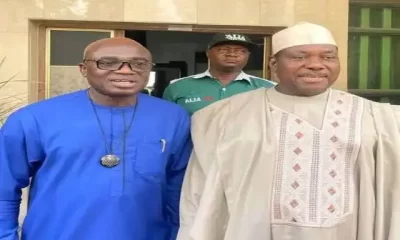

At 72, A Father’s Embrace: Akume, Alia, And The Future Of Benue -By Leonard Karshima Shilgba
As our leader turns 72 in December 2025—a significant and symbolic age—I humbly call on the Benue State Government and stakeholders to initiate...