
National Issues
‘Altered’ Tax Laws: FG Defends January Implementation, Says Delay Will Harm Economy -By Muhammad Abdullahi Bashir
The controversy began when Hon. Abdulsamad Dasuki, a member of the House of Representatives, claimed discrepancies between the versions of the tax laws debated in the National Assembly and those later gazetted by the government. This sparked calls from civil society organisations and prominent political figures — including Atiku Abubakar and Peter Obi — for the suspension of the rollout until the discrepancies are resolved.


The Federal Government of Nigeria has firmly defended the scheduled implementation of its newly signed tax reform laws from January 1, 2026, insisting that any delay would worsen the nation’s economic challenges. The comments come amid intense national debate over allegations that parts of the tax legislation were altered after approval by the National Assembly — a claim the government has dismissed as unsubstantiated.
At the centre of the government’s defence is Mr. Taiwo Oyedele, Chairman of the Presidential Fiscal Policy and Tax Reforms Committee. Speaking on Channels Television’s The Morning Brief, Oyedele warned that postponing the implementation of the tax laws beyond January 1 would continue to burden workers and businesses under the existing, flawed tax regime.
“The implication of not implementing the new tax laws … is that the bottom 98 per cent of workers remain overtaxed,” Oyedele said, adding that businesses would miss out on exemptions and simplified compliance structures under the reforms.
According to officials, the four cornerstone pieces of legislation — the Nigeria Tax Act, Nigeria Tax Administration Act, Nigeria Revenue Service (Establishment) Act, and Joint Revenue Board (Establishment) Act — are intended to modernise Nigeria’s tax framework, centralise administration under the strengthened Nigeria Revenue Service, and broaden the tax base.
The controversy began when Hon. Abdulsamad Dasuki, a member of the House of Representatives, claimed discrepancies between the versions of the tax laws debated in the National Assembly and those later gazetted by the government. This sparked calls from civil society organisations and prominent political figures — including Atiku Abubakar and Peter Obi — for the suspension of the rollout until the discrepancies are resolved.

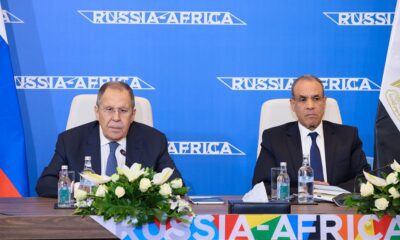

Lavrov Assesses Media Contributions Toward Developing Russia-Africa Relations During Cairo Ministerial Conference -By Kestér Kenn Klomegâh
During the previous two summits: in Sochi (2019) and in St Petersburg (2023), the theme on media was reviewed and...


It Is Christmas! -By Gabriel Agbo
You see, they did not celebrate Christ's birth at all. To them it was insignificant. They were far more concerned...

Why 2026 Must Be About Obeying God’s Word, Not Recycling Resolutions -By Isaac Asabor
Now, it is expedient to urge fellow Nigerians to stop pretending. The hard truth is this: many people enjoy making...
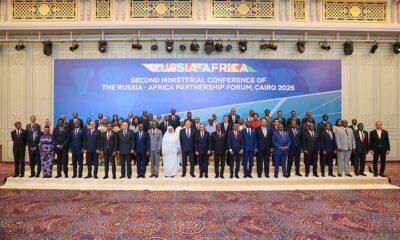

Russia Promoting Dialogue with Africa on Implementing 2023-2026 Strategic Action Plan -By Kestér Kenn Klomegâh
On December 19-20, the Second Ministerial Conference of the Russia-Africa Partnership Forum was held in Cairo, Egypt. It was held...

At 72, A Father’s Embrace: Akume, Alia, And The Future Of Benue -By Leonard Karshima Shilgba
As our leader turns 72 in December 2025—a significant and symbolic age—I humbly call on the Benue State Government and stakeholders to initiate...