
Educational Issues
Beyond The Scores: Who Is Failing Nigeria’s Students? -By Ibrahim Aliyu Gurin
The UTME 2025 result is not just a statistic — it reflects the state of our nation’s education. These students are not just numbers. They are future doctors, teachers, engineers, and leaders. When they struggle, we all do.

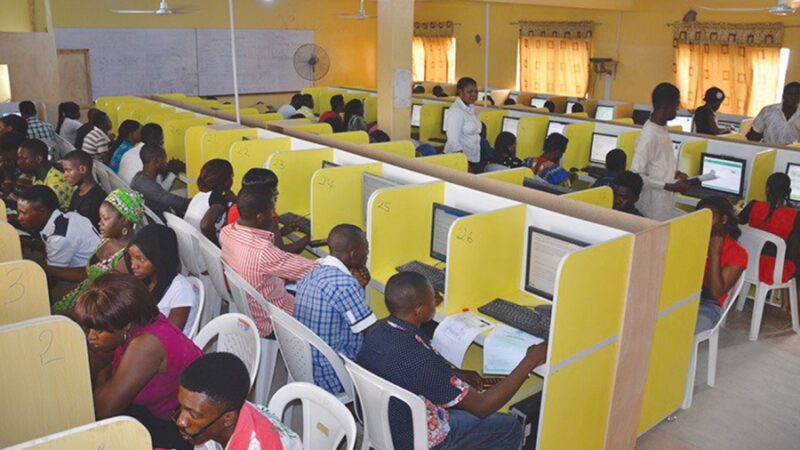
Across Nigeria, over 1.9 million young people recently sat for the 2025 UTME, full of dreams and high expectations. But when the results were released, many homes fell into silence. Not the joyful noise of celebration, but the quiet pain of disappointment. More than 1.5 million students scored below 200 out of 400 — that’s about three out of every four candidates. Only 420,415 students scored above 200, and fewer than 1% got over 300. (JAMB, 2025)
The figures, released by the Joint Admissions and Matriculation Board (JAMB), should be a wake-up call to parents, teachers, leaders, and every citizen. But sadly, this isn’t new. According to StatiSense, between 2018 and 2024, over 9 million students failed the UTME, with only about 2 million passing.
This raises an important question: Are students really failing — or are there deeper problems affecting their performance?
In many schools across Nigeria, students learn in overcrowded classrooms, sharing old textbooks and being taught by underpaid or sometimes unqualified teachers. Some schools lack basic items like chairs, chalk, or toilets. According to UNICEF, Nigeria has over 10.5 million out-of-school children. And even many of those who are “in school” are not truly learning.
This is not just an educational gap — it’s a national crisis. Yet in 2023, the government allocated only 6% of the national budget to education, far below the 15–20% recommended by UNESCO. How can we expect better results without proper investment?
But it’s not only the government that should be held responsible. Social media and television also play a role. Many students spend hours on these platforms, often distracted by entertainment rather than learning. While social media and TV can be useful tools, without proper guidance, they become major sources of distraction.
Parents, too, must play their part. Some do not check on their children’s academic progress, either because of their own struggles or lack of awareness. Without proper guidance and encouragement from home, many students lack motivation and focus.
To change this story, Nigeria must act. We need:
Better funding for schools to provide learning materials and improve infrastructure.
Well-trained, motivated, and fairly paid teachers.
Wider access to digital learning, especially for students in rural areas.
More mentorship programs for students in low-income communities.
Active parental involvement — monitoring their children’s studies, limiting TV time, and guiding how they use social media.
The UTME 2025 result is not just a statistic — it reflects the state of our nation’s education. These students are not just numbers. They are future doctors, teachers, engineers, and leaders. When they struggle, we all do.
Maybe the real problem is not that they failed — but that we keep asking for success from a system that isn’t built to support it. If we keep ignoring the roots of the problem, we will keep tasting bitter fruits.
The question is no longer “Who failed the exam?”— it is “When will we stop failing our children?”
Ibrahim Aliyu Gurin is a student of Mass Communication, Bayero University, Kano.



The Double-edged Sword: Social Media’s Impact On Teen Girls Mental Health -By Ibrahim Isa Muhammad
Social media itself is not entirely good or bad—its impact depends on how it’s used. Healthy habits include setting time...


India’s Priorities At BRICS Presidency Amid Rising Geopolitical Challenges -By Kestér Kenn Klomegâh
Since its inception, BRICS has undergone a transformation and has gone through several stages of qualitative change. The organizers are...


Jesus: Born In Judea, Fled To Egypt; Thank God Not To Maga America -By Vitus Ozoke, PhD
So today – Christmas – watch carefully. Watch as MAGA Republicans who champion mass deportations attend church. Watch as they...


Lavrov Assesses Media Contributions Toward Developing Russia-Africa Relations During Cairo Ministerial Conference -By Kestér Kenn Klomegâh
During the previous two summits: in Sochi (2019) and in St Petersburg (2023), the theme on media was reviewed and...


It Is Christmas! -By Gabriel Agbo
You see, they did not celebrate Christ's birth at all. To them it was insignificant. They were far more concerned...