
Breaking News
Gazette Controversy: NBA, Atiku Demand Suspension of Tax Reform Laws
The Nigerian Bar Association and former Vice-President Atiku Abubakar have urged the suspension of Nigeria’s new tax reform laws over alleged post-passage alterations, calling for investigations and warning of constitutional and economic risks.

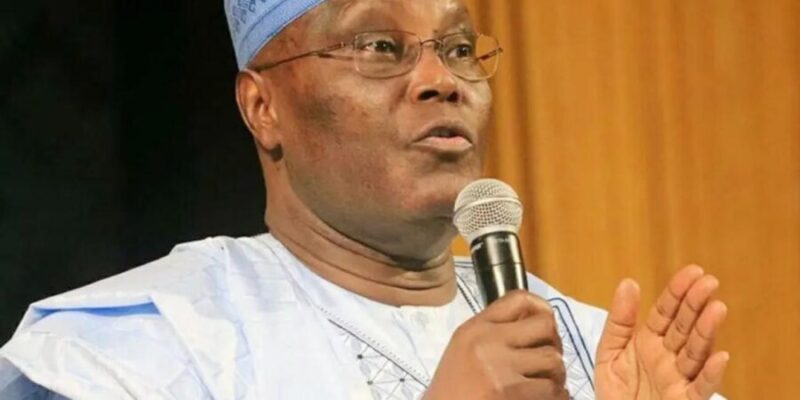
The Nigerian Bar Association (NBA) and former Vice-President Atiku Abubakar have called for the immediate suspension of the newly enacted Tax Reform Acts over allegations that key sections of the laws were altered in the gazetted version, contrary to what was passed by the National Assembly.
Atiku also urged the Economic and Financial Crimes Commission (EFCC) to investigate what he described as “illegal and unauthorised alterations” to the laws, warning that the alleged changes amount to “a brazen act of treason against the Nigerian people and a direct assault on our constitutional democracy.”
The former vice-president accused the executive arm of government of engaging in a “draconian overreach” that undermines legislative supremacy and prioritises revenue generation over the welfare of citizens.
The calls came as both chambers of the National Assembly proceeded on their Christmas and New Year recess, despite the controversy surrounding the tax reform laws scheduled to take effect on January 1, 2026. Lawmakers adjourned plenary until January 27, 2026, after approving the repeal and re-enactment of the 2024 and 2025 budgets, endorsing revised figures of ₦43.561 trillion for 2024 and ₦48.316 trillion for 2025, and extending the implementation of the 2025 budget to March 31, 2026. Meanwhile, the ₦58 trillion 2026 Appropriation Bill passed second reading in the Senate.
The tax controversy was triggered last week when a member of the House of Representatives, Abdulsamad Dasuki, raised concerns over discrepancies between the tax laws passed by the National Assembly and the versions published in the official gazette.
Reacting, the NBA said the development raises “grave concerns about the integrity, transparency, and credibility of Nigeria’s legislative process,” calling for “a comprehensive, open, and transparent investigation” into the circumstances surrounding the enactment of the laws.
“Until these issues are fully examined and resolved, all plans for implementation of the Tax Reform Acts should be immediately suspended,” the association said in a statement signed by its president, Afam Osigwe.
Osigwe added that the allegations “strike at the very heart of constitutional governance and call into question the procedural sanctity that must attend law-making in a democratic society.” The NBA also warned of potential economic fallout, noting that such “legal and policy uncertainty of this magnitude have far-reaching consequences” that could unsettle the business environment, erode investor confidence, and create unpredictability for individuals and institutions.
President Bola Tinubu had signed the four tax reform bills into law in June after months of debate. The laws include the Nigeria Tax Bill, Nigeria Tax Administration Bill, Nigeria Revenue Service (Establishment) Bill, and the Joint Revenue Board (Establishment) Bill. The Federal Government fixed January 1, 2026, for their implementation, a move that has since drawn opposition from political leaders and groups, including Peter Obi of the Labour Party and the African Democratic Party (ADC).
While the chairman of the Presidential Fiscal Policy and Tax Reforms Committee, Taiwo Oyedele, has defended the reforms, insisting that no new laws were introduced, Atiku maintained that provisions granting arrest powers, property seizure, and enforcement sales without court orders were inserted without legislative approval.
According to him, such measures “transform tax collectors into quasi-law enforcement agencies” and strip citizens of due process protections deliberately preserved by lawmakers. He further alleged that other changes increased the financial burden on Nigerians through mandatory security deposits, compound interest on tax debts, stricter reporting requirements, and foreign currency computation for petroleum operations.
Atiku also claimed that accountability provisions, including reporting obligations to the National Assembly and ministerial oversight, were removed from the laws, warning that expanding executive powers while weakening oversight is “a hallmark of authoritarian governance.”
He argued that the controversy reflects a government more focused on imposing tax burdens than tackling poverty, unemployment, and inflation, adding that sustainable revenue generation comes from empowering citizens and expanding the tax base, not through “punitive taxation and erosion of legal protections.”
Opinion Nigeria News


Lavrov Assesses Media Contributions Toward Developing Russia-Africa Relations During Cairo Ministerial Conference -By Kestér Kenn Klomegâh
During the previous two summits: in Sochi (2019) and in St Petersburg (2023), the theme on media was reviewed and...


It Is Christmas! -By Gabriel Agbo
You see, they did not celebrate Christ's birth at all. To them it was insignificant. They were far more concerned...


Why 2026 Must Be About Obeying God’s Word, Not Recycling Resolutions -By Isaac Asabor
Now, it is expedient to urge fellow Nigerians to stop pretending. The hard truth is this: many people enjoy making...

Russia Promoting Dialogue with Africa on Implementing 2023-2026 Strategic Action Plan -By Kestér Kenn Klomegâh
On December 19-20, the Second Ministerial Conference of the Russia-Africa Partnership Forum was held in Cairo, Egypt. It was held...

At 72, A Father’s Embrace: Akume, Alia, And The Future Of Benue -By Leonard Karshima Shilgba
As our leader turns 72 in December 2025—a significant and symbolic age—I humbly call on the Benue State Government and stakeholders to initiate...